4. How to Tell Whether Your Lettuce Needs Washing
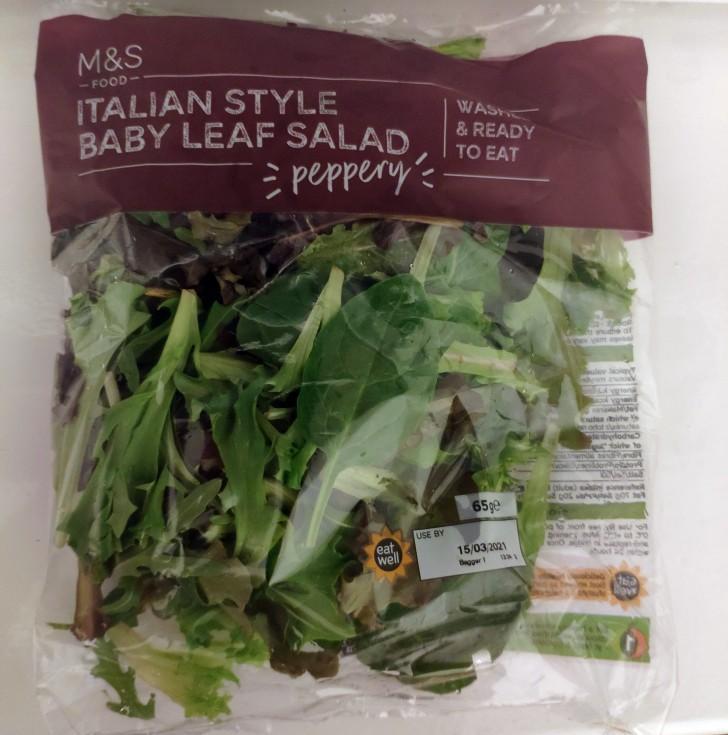
Not all lettuce sold in bags is ready to eat. The packaging is your first guide.
Situation 1: The package says “Ready to Eat”
You can generally eat the lettuce directly from the bag without rinsing it again.
Check that the packaging is intact, that the product has been stored according to the label, and that it is within its use-by date.
Situation 2: The package says “Pre-Washed” or “Triple-Washed”
These terms indicate that the lettuce has already been washed. Unless the package gives different instructions, additional washing is generally unnecessary.
Situation 3: The Package Does Not Say It Has Been Washed
If the lettuce is not labelled as washed or ready to eat, rinse the leaves under clean, running water before eating them.
Remove damaged or spoiled leaves, and gently rub the surfaces with your hands to help remove dirt.
Situation 4: The Package Is Damaged or the Lettuce Looks Spoiled
Do not assume that rinsing will make the product safe.
If the bag is leaking, the leaves are slimy, the lettuce has an unusual smell, or the product shows obvious spoilage, discard it. Also follow any relevant food recalls and the storage instructions on the package.
Remember that appearance alone cannot guarantee safety. Proper handling and refrigeration remain important even when lettuce looks fresh. U.S. Food and Drug Administration
5. The Right Way to Wash Lettuce That Is Not Pre-Washed
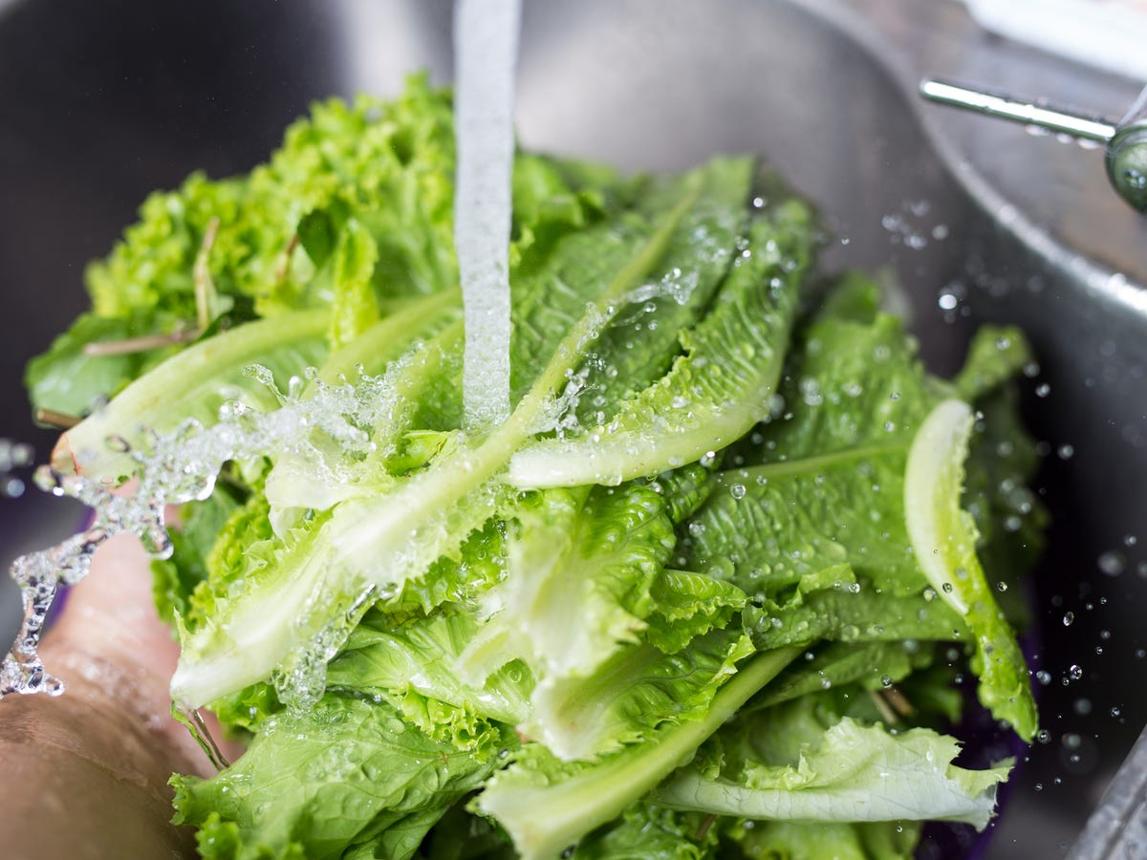
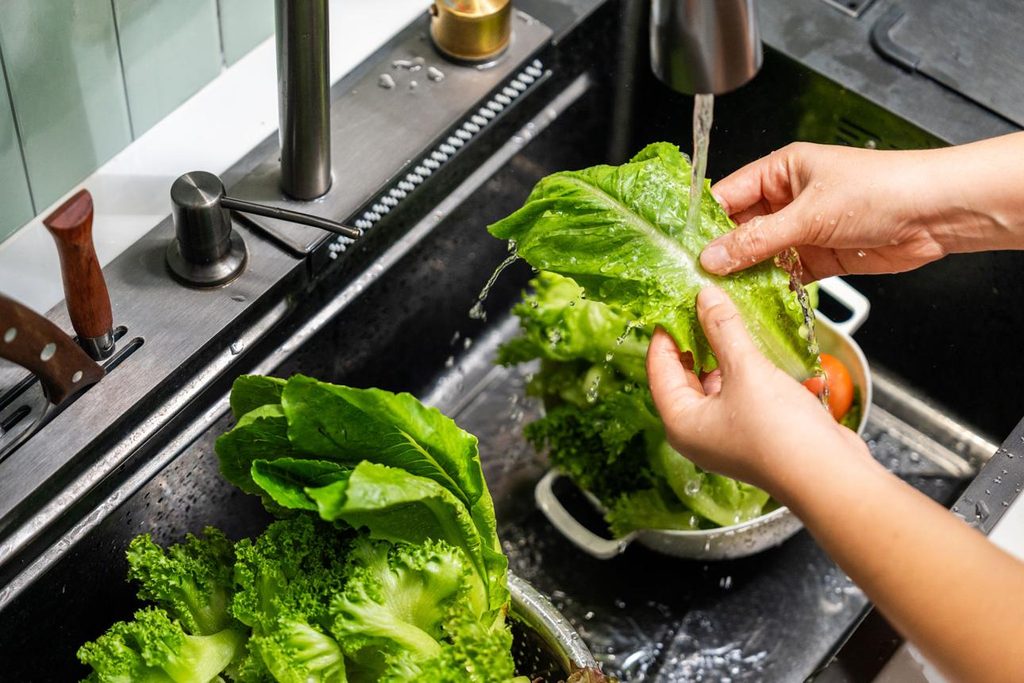
If your lettuce needs washing, a few simple steps can help you prepare it safely.
Step 1: Wash your hands.
Wash your hands thoroughly with soap and water before handling the lettuce. This helps prevent germs from transferring from your hands to the leaves.
Step 2: Remove damaged leaves.
Discard any leaves that are wilted, bruised, slimy, or spoiled. If you are preparing a whole head of lettuce, remove the outer leaves when appropriate.
Step 3: Rinse under running water.
Separate the leaves and rinse them under clean, cool, running water. Gently rub the surfaces with your hands to help remove dirt and other debris.
Step 4: Avoid soap and household cleaning products.
Never wash lettuce with dishwashing liquid, household detergent, bleach, or ordinary surface cleaners. These products are not intended for washing food and may leave harmful residues. Special fruit and vegetable washes are generally unnecessary. U.S. Food and Drug Administration
Step 5: Dry the leaves.
Use a clean salad spinner or clean paper towels to remove excess water. If using a cloth towel, make sure it is clean and has not been used to wipe other surfaces.
Step 6: Serve or refrigerate promptly.
Prepare the lettuce using clean utensils and surfaces. If you are not serving it immediately, refrigerate it promptly.
Washing can reduce some contamination, but it does not reliably eliminate every harmful microorganism. Proper storage and handling are just as important as rinsing.
6. How to Store Bagged Lettuce to Keep It Fresh
Even correctly washed lettuce can become unsafe if it is stored improperly.
Follow these simple habits to help keep your salad fresh:
- Refrigerate it promptly. Follow the temperature and storage instructions on the package.
- Keep the package sealed when appropriate. Close it properly after taking out the portion you need.
- Use clean hands or utensils. Avoid touching the remaining lettuce with utensils that have contacted raw meat or other potentially contaminated foods.
- Check the use-by date. Do not assume that lettuce is safe simply because it still looks fresh.
- Avoid leaving lettuce at room temperature for extended periods. As a general food-safety rule, perishable foods should not remain unrefrigerated for more than two hours, or more than one hour when temperatures exceed 90°F (32°C). CDC
If you take a bag of lettuce to a picnic or leave groceries in a hot car, remember that heat can shorten the time during which the product can be safely stored.
Refrigeration slows the growth of many microorganisms, although it does not destroy all harmful germs.
7. Is It Safe to Eat Bagged Lettuce Every Day?
For most people, leafy greens are a valuable part of a balanced diet.
Lettuce provides water, fiber, and varying amounts of vitamins and minerals, depending on the variety. Darker leafy greens, such as spinach and some types of romaine, can provide more of certain nutrients than lighter-colored varieties.
Eating salads regularly can also make it easier to include a variety of vegetables in your meals.
You can enjoy bagged lettuce in many ways:
- Add it to sandwiches and wraps.
- Combine it with tomatoes, cucumbers, carrots, and other vegetables.
- Serve it alongside fish, chicken, beans, or eggs.
- Use it as a base for a meal-sized salad.
- Add it to grain bowls for extra freshness and texture.
The key is to handle it correctly, follow the package instructions, and refrigerate it properly.
If a food-safety recall affects a particular brand or batch of lettuce, follow the official instructions rather than relying on washing to make the product safe.
8. What If You Still Do Not Trust the Label?
It is understandable to feel uneasy about eating something that has already been washed and packaged by someone else.
If you prefer to wash your lettuce again, you can do so, but take precautions to avoid introducing contamination.
- Wash your hands thoroughly.
- Clean the sink, colander, and any utensils you plan to use.
- Rinse the lettuce under fresh, cold running water.
- Avoid placing the leaves on an unclean counter or cutting board.
- Dry them with clean equipment.
- Refrigerate the lettuce promptly if you are not eating it immediately.
However, keep in mind that additional rinsing does not guarantee greater safety. If harmful bacteria remain on the leaves after commercial processing, rinsing at home may not remove them. California Department of Public Health
If the package is clearly labelled “ready to eat,” the simplest approach is usually to follow those instructions rather than wash it again.
Final Verdict: Should You Rinse Pre-Washed Bagged Lettuce?
So, should you tell your husband to stop eating lettuce straight from the bag?
Not necessarily! If the package clearly says “pre-washed,” “triple-washed,” or “ready to eat,” he can generally eat it without rinsing it again.
The label does not mean that the lettuce is guaranteed to be completely free of harmful bacteria. It means that the product has already undergone a washing process and is intended to be eaten without further washing.
The most important habits are to:
- Read the package instructions carefully.
- Choose products with intact packaging.
- Keep lettuce refrigerated.
- Wash your hands before preparing food.
- Avoid cross-contamination from sinks, utensils, and raw meat.
- Discard lettuce that shows signs of spoilage or is subject to a relevant recall.
And if the lettuce is not labelled as pre-washed or ready to eat, rinse it under clean, running water before eating it.
The bottom line: You do not need to rinse every bag of lettuce twice. In fact, when it comes to properly packaged, ready-to-eat salad greens, following the label and handling the product safely is generally the better choice.