4. Why Washing Too Frequently Can Damage Older Skin
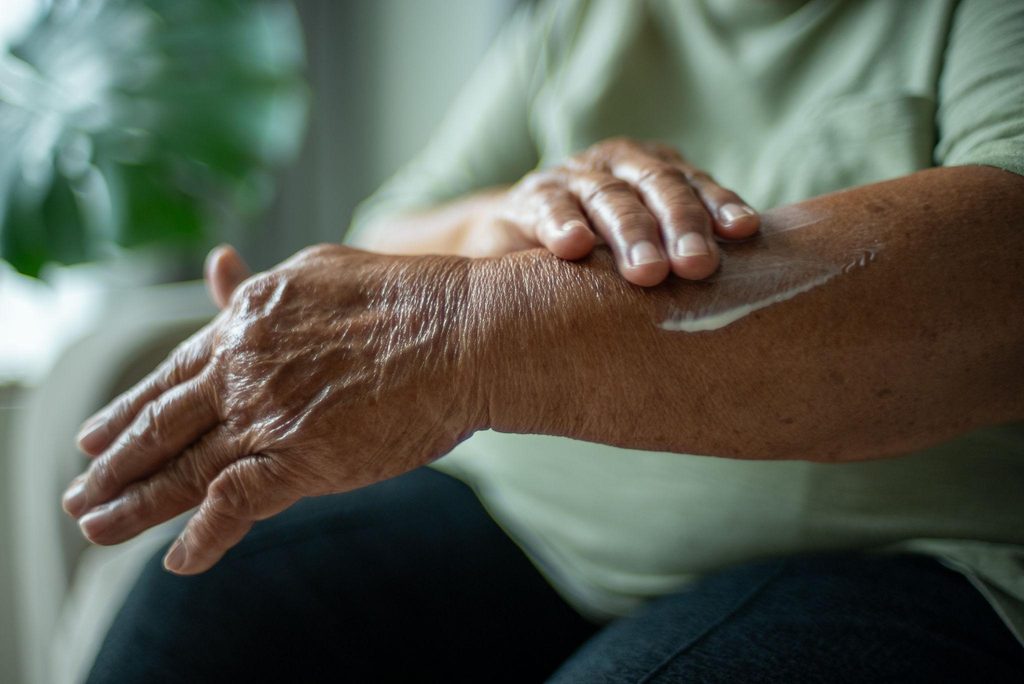
Although bathing removes dirt, sweat and impurities, frequent washing can also remove some of the natural oils that protect the skin.
This protective layer helps prevent moisture loss and reduces irritation caused by environmental factors.
When older adults shower too frequently, particularly with hot water and strong soaps, they may experience several problems.
Dryness and tightness
The skin may feel uncomfortable, rough or stretched after bathing.
Persistent itching
Dry skin can become extremely itchy, especially on the arms, legs and back.
Small cracks and irritation
When the skin loses moisture, it can become more fragile and develop tiny cracks.
Increased sensitivity
Perfumes, detergents and certain cleansing products may cause irritation more easily.
Slower recovery
Ageing skin can take longer to recover from injuries and irritation.
The National Institute on Aging explains that older skin produces less oil and sweat, becomes thinner and can be more vulnerable to dryness. National Institute on Aging+1
This is why a gentler bathing routine can make such a difference.
5. The Areas Seniors Should Wash Every Day
Reducing the frequency of full-body showers does not mean reducing personal hygiene.
Certain parts of the body should still be cleaned regularly, even on days without a complete shower.
Here are the areas that deserve particular attention.
1. The face
Wash the face gently every day to remove sweat, dirt and accumulated oils. Use lukewarm water and a mild cleanser if needed.
2. The armpits
This area naturally accumulates sweat and bacteria that contribute to unpleasant body odour. Daily gentle washing helps keep it fresh.
3. The intimate area
The external genital area should be cleaned daily with water and, if needed, a mild fragrance-free cleanser.
Avoid harsh products and internal washing. Women should avoid vaginal douching, which can disturb the natural balance of the vagina.
4. The buttocks
This area requires particular attention, especially for seniors who have limited mobility or experience incontinence.
Clean gently after using the toilet and whenever necessary.
5. The feet
Wash the feet regularly, including between the toes. Dry them carefully to reduce moisture accumulation and the risk of fungal problems.
6. The hands
Handwashing remains one of the most important hygiene habits at every age, especially after using the toilet, before preparing food and before eating.
Daily attention to these areas helps maintain good hygiene without requiring a complete shower every day. NHS+1
6. The Best Way for Seniors to Shower Without Drying Their Skin
The way an older person bathes can be just as important as how often they do it.
A few simple changes can make showering more comfortable and help preserve the skin’s natural protective barrier.
Here are some dermatologist-recommended habits.
Use lukewarm water instead of hot water.
Very hot water can remove natural oils and make dry skin worse. A comfortably warm shower is generally a better choice.
Keep showers short.
Try to limit bathing to approximately five to ten minutes.
Choose gentle cleansing products.
Look for fragrance-free, moisturising cleansers rather than strongly scented soaps or harsh antibacterial products.
Avoid vigorous scrubbing.
Use your hands or a soft washcloth. Rough sponges and stiff brushes can irritate fragile skin.
Dry the skin gently.
After showering, pat the body with a soft towel instead of rubbing vigorously.
Apply moisturiser immediately.
Dermatologists recommend applying a fragrance-free moisturiser while the skin is still slightly damp, ideally within three minutes of bathing.
These small adjustments can significantly improve comfort for people who experience age-related dryness. Académie Américaine de Dermatologie+1
7. Why Moisturising Is Essential for Older Adults
If there is one habit older adults should consider adding to their daily routine, it is regular moisturising.
As the skin ages, it becomes less effective at retaining water. Applying moisturiser helps reduce moisture loss and supports the skin’s protective barrier.
A good moisturiser can help:
- Reduce dryness and roughness.
- Relieve uncomfortable itching caused by dry skin.
- Improve skin softness.
- Reduce the likelihood of dryness-related cracking.
- Make the skin feel more comfortable after bathing.
When choosing a product, look for ingredients such as:
- Glycerin.
- Ceramides.
- Hyaluronic acid.
- Petrolatum.
- Shea butter.
- Mineral oil.
For very dry skin, thicker creams or ointments are often more effective than lightweight lotions.
It is also useful to apply moisturiser to the hands, arms, legs and other areas that frequently become dry.
People with persistent itching, painful cracks or unexplained skin changes should consult a healthcare professional rather than relying exclusively on moisturisers. Académie Américaine de Dermatologie+2
8. Hair Washing: Do Seniors Need to Wash Their Hair Every Day?
Hair care is another important part of personal hygiene that often changes with age.
As people grow older, their scalp may produce less natural oil, making their hair feel drier and more fragile.
Washing the hair every day is therefore unnecessary for many seniors.
The ideal frequency depends on several factors:
- Hair type and thickness.
- Scalp oil production.
- Physical activity and sweating.
- The presence of dandruff or other scalp conditions.
- Personal comfort and preference.
Some older adults may find that washing their hair once or twice a week is sufficient, while others may need more frequent washing.
Use a gentle shampoo, avoid excessively hot water and consider a suitable conditioner if the hair is dry.
If someone has a persistent itchy scalp, redness, scaling or unusual hair loss, it is worth seeking medical advice.
9. The Hidden Hygiene Problems That Can Affect Seniors
As people grow older, certain hygiene problems can become more difficult to manage, particularly when mobility, memory or physical strength declines.
These situations deserve special attention.
Incontinence
Older adults experiencing urinary or bowel incontinence should have soiled skin cleaned promptly and gently. Leaving urine or faeces against the skin for extended periods can cause irritation and increase the risk of skin damage.
Skin folds
Moisture can accumulate beneath the breasts, around the abdomen and between skin folds. These areas should be cleaned and dried carefully.
Pressure areas
People who spend long periods sitting or lying down may develop pressure injuries, particularly around the heels, hips and lower back.
Their skin should be checked regularly for redness, unusual warmth, pain or broken areas.
Foot hygiene
Older adults with diabetes or circulation problems need particular care when looking after their feet. Small cuts and blisters should not be ignored.
Oral hygiene
Personal hygiene is not limited to bathing. Brushing teeth twice daily, cleaning dentures properly and attending regular dental appointments are also essential.
If an older person has difficulty washing independently, assistance from a family member or professional caregiver can help maintain comfort, cleanliness and dignity.
10. How to Make Bathing Safer for Elderly People
Falls are an important concern for older adults, and bathrooms can be particularly dangerous because wet surfaces are slippery.
Fortunately, a few adjustments can make bathing considerably safer.
Consider these practical improvements:
- Install grab bars near the shower and toilet.
- Use a non-slip shower mat.
- Consider a shower chair for people who have difficulty standing.
- Install a handheld showerhead.
- Keep towels and toiletries within easy reach.
- Make sure the bathroom is adequately lit.
- Avoid locking the bathroom door if an older person needs assistance.
- Keep the floor dry and remove unnecessary obstacles.
Bath oils should also be avoided because they can make the bathtub or shower dangerously slippery.
If someone has balance problems, dizziness or difficulty standing, they should not attempt to shower without appropriate support.
11. Signs That an Older Person Needs Medical Attention
Although dry skin is common with ageing, not every skin problem should be attributed to getting older.
Certain symptoms may indicate an underlying condition or infection.
Pay attention to:
- Persistent or severe itching.
- Painful cracks or bleeding skin.
- Redness that spreads.
- Swelling or unusual warmth.
- Pus or discharge from a skin wound.
- New rashes that do not improve.
- Skin wounds that heal very slowly.
- Sudden changes in skin colour or texture.
Older adults with diabetes, circulation problems, kidney disease or weakened immune systems may require additional attention.
If a skin area becomes increasingly painful, hot, swollen or develops pus, medical advice should be sought promptly.
A doctor or dermatologist can determine whether the problem is related to dryness, eczema, infection, medication or another medical condition.
12. A Simple Daily Hygiene Routine for Seniors
Maintaining good hygiene does not have to involve complicated routines or long showers.
A simple daily schedule can help older adults stay comfortable, clean and confident.
| Time | Recommended routine |
|---|---|
| Morning | Wash face, hands and essential areas |
| After meals | Brush teeth and clean dentures if applicable |
| During the day | Wash hands regularly |
| After using the toilet | Clean intimate areas when necessary |
| Evening | Wash feet and other areas as needed |
| Before bed | Apply moisturiser to dry skin |
Full showers or baths can be scheduled according to individual needs, often around two or three times weekly for seniors who do not need more frequent bathing.
Clean clothing, fresh underwear and regular changes of towels and bedding are also important.
The goal is not to reduce hygiene but to make it gentler, safer and more appropriate for ageing skin.
Conclusion: Sometimes, Washing Less Can Be Better for Older Adults!
Good hygiene remains essential at every stage of life. However, the needs of our skin change as we get older, and our personal care routines should change with them.
For many seniors, taking a complete shower every day is not necessary. Two or three full showers per week may be a reasonable routine, provided that essential areas are cleaned daily and personal hygiene is maintained.
The most important things to remember are to avoid excessively hot water, choose gentle cleansing products, keep showers short and apply moisturiser regularly.
It is equally important to consider individual circumstances. Someone who sweats heavily, experiences incontinence or has particular medical needs may require more frequent washing.
Growing older does not mean giving up cleanliness or personal care. It simply means finding a healthier balance between staying fresh and protecting the skin.
Sometimes, the best approach is not to wash more often, but to wash more gently and intelligently.
What do you think? Should older adults really shower every day, or is two or three times a week enough? Have you noticed that your skin has become drier or more sensitive with age? Share your thoughts in the comments!