Basic method:
- Harvest tender stems and leaves.
- Remove damaged or discolored portions.
- Wash thoroughly.
- Dry the plant material well.
- Arrange it in a dehydrator in a single layer.
- Dry according to your dehydrator’s instructions until completely crisp.
- Allow it to cool.
- Crush or grind it.
- Store the dried herb in an airtight container.
You can then use the dried purslane as a seasoning.
Try sprinkling it into:
- Soups
- Rice
- Pasta
- Eggs
- Salads
- Vegetable dishes
- Homemade spice blends
The important point is that it must be thoroughly dried before long-term storage. Any remaining moisture can encourage mold.
🌼 What About the Flowers?
The small flowers are one of the most charming features of purslane.
And yes, the flowers of true edible purslane are generally considered edible as well, although they are small and don’t provide much food compared with the leaves and tender stems.
They can be used as a decorative edible garnish for salads and other dishes.
However, don’t let the statement “all parts are edible” encourage you to eat an unidentified plant.
Correct identification is essential.
⚠️ The Most Important Warning: Don’t Confuse Purslane With Spurge
This is something every person interested in eating wild plants should know.
Some species of spurge (Euphorbia) can look superficially similar to purslane, but they should not be eaten.
One useful clue is the stem.
When a spurge stem is broken, it typically releases a white, milky latex-like sap.
Purslane does not produce that characteristic milky sap.
But don’t rely on a single feature when identifying a wild edible.
If you’re unsure whether a plant is actually Portulaca oleracea, don’t eat it.
Use a reliable plant identification guide, compare several characteristics, and when necessary consult someone experienced in identifying edible wild plants.
🚿 Where You Harvest Matters
Even if you have correctly identified purslane, the location where it grows is extremely important.
Don’t harvest plants growing beside:
- Busy roads
- Areas treated with herbicides
- Lawns treated with pesticides
- Industrial areas
- Contaminated soil
- Places where animals regularly relieve themselves
- Areas exposed to unknown chemicals
A plant being edible doesn’t mean every specimen growing somewhere is safe to consume.
For the best results, harvest purslane from a known, clean location where you control what has been applied to the soil.
☀️ Why Purslane Can Survive So Much Heat
There’s a fascinating reason this little plant can thrive when many other plants struggle.
Purslane is a succulent-like plant with specialized water-storing tissues, and it has unusual adaptations for photosynthesis that help it cope with hot, dry environments.
In practical gardening terms, that means purslane can remain productive under conditions that would stress many ordinary leafy vegetables.
This is also part of the reason gardeners sometimes find it so difficult to eliminate.
You pull it out.
A few days later, another plant seems to have appeared.
And if pieces are left behind in suitable conditions, the plant can sometimes re-establish itself.
🌱 Should You Remove Purslane or Keep It?
That depends entirely on your garden.
If purslane is taking over a vegetable bed and competing with your crops for space, water and nutrients, removing it makes sense.
But if you have a clean area where you can allow a few plants to grow without interfering with your vegetables, you might decide to harvest it instead.
One practical approach is to control rather than completely eliminate it.
Keep a few plants in an appropriate area and remove the rest before they spread their seeds.
That way, you can enjoy the plant without allowing it to take over your garden.
🐝 What About Bees and Pollinators?
Purslane flowers can attract insects, including bees and other small pollinators.
The flowers are small, but they can provide a useful source of food when they’re open.
So the plant can have another role in the garden beyond being edible.
If you grow purslane intentionally, allowing some plants to flower can add a little ecological value while also giving you an opportunity to observe visiting insects.
🧺 Harvesting Purslane
For eating, young and tender growth is generally the most pleasant.
Use clean scissors or simply pinch off tender stems.
Harvest in the morning when the plant is fresh and hydrated.
After harvesting:
- Remove damaged leaves.
- Separate tough stems.
- Rinse thoroughly under clean running water.
- Drain well.
- Use immediately or refrigerate.
For salads, choose the youngest, most tender portions.
Older stems can become tougher, making them better suited to cooking.
💚 Is Purslane a “Superfood”?
Purslane is sometimes promoted online as a miracle food or “superfood.”
It’s better to be more realistic.
It is a nutrient-containing edible plant, and it has attracted attention for its omega-3 fatty acid content and various vitamins, minerals and plant compounds.
But that doesn’t mean eating purslane will cure diseases or replace medical treatment.
You may see dramatic claims online about purslane being a treatment for diabetes, cancer, inflammation or other medical conditions.
Those claims should be treated cautiously.
Purslane is food—not a substitute for prescribed medical care.
If you have a medical condition or take medication, particularly if you intend to consume large amounts regularly, it’s sensible to discuss dietary changes with a qualified healthcare professional.
⚠️ One More Reason Not to Overdo It
Purslane naturally contains oxalates, compounds that can be relevant for people who have certain kidney conditions or a history of calcium-oxalate kidney stones.
That doesn’t mean healthy people necessarily need to avoid purslane.
It simply means that “natural” doesn’t automatically mean “eat unlimited quantities.”
As with many foods, variety and moderation are sensible approaches.
🍃 From Garden Weed to Kitchen Ingredient
Perhaps the most interesting thing about purslane is how easily it changes your perspective on gardening.
One day you’re pulling it out of the vegetable bed.
The next day you’re looking at it differently.
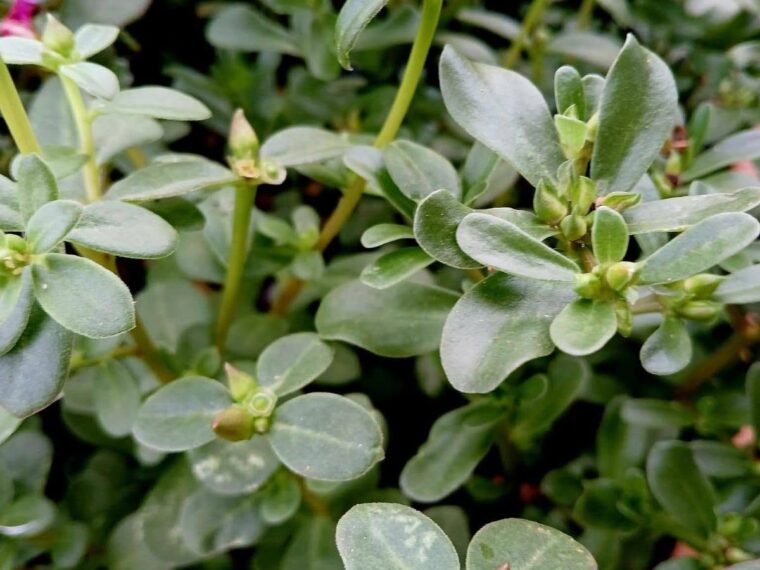
You notice those thick leaves.
You notice the succulent stems.
You notice the little flowers covered with visiting insects.
And suddenly you realize that the plant you’ve been fighting might actually have a place in your kitchen.
You can toss it into a salad.
Blend it into pesto.
Sauté it with bacon.
Add it to soup.
Dry it and turn it into a homemade seasoning.
That’s a pretty impressive résumé for a plant many people simply call a weed.
🌿 Final Thoughts
Purslane may be small, but it is remarkably versatile.
If you can positively identify true edible purslane, harvest it from a clean, untreated location, and prepare it properly, it can be a useful addition to the kitchen.
The biggest lesson is perhaps not about purslane itself.
It’s about taking a second look at the plants growing around us.
Some are genuinely troublesome weeds.
Others are valuable edible plants hiding in plain sight.
And purslane happens to be one of those fascinating plants that can be a garden nuisance, a pollinator-friendly flower, and a surprisingly useful food—all at the same time.