8. Be Careful With Fertilizer in September
Many gardeners think that giving a fruit tree more fertilizer automatically means more fruit.
That isn’t necessarily true.
Late-season applications of large amounts of nitrogen can encourage soft, vigorous new growth when the tree should gradually be slowing down.
If your fig tree is already growing vigorously and producing well, there may be no reason to give it a heavy fertilizer application.
Instead, focus on:
- Healthy soil
- Appropriate moisture
- Organic matter
- Good drainage
- Balanced long-term nutrition
If a soil deficiency is suspected, a soil test is a much better guide than simply adding fertilizer at random.
9. Mulch Around the Fig Tree
September is a useful time to improve the soil surface around your fig tree.
A layer of suitable organic mulch can help:
- Retain soil moisture
- Reduce weed competition
- Moderate soil temperature
- Add organic matter as it decomposes
- Protect the soil from drying out
Possible materials include:
- Compost
- Shredded leaves
- Straw
- Wood-based mulch
- Other suitable organic materials
However, don’t pile mulch directly against the trunk.
Leave a small gap around the trunk to reduce excessive moisture and improve airflow.
10. Give the Soil Some Attention
The soil around a fig tree can become compacted over time.
Avoid aggressively digging around the roots because fig trees can have an extensive root system.
Instead, keep the surface relatively free of heavy weed competition and add organic matter where appropriate.
A healthy soil environment can support better root function and water management.
11. Check the Tree for Pests and Disease
September is also a good time to inspect the leaves and fruit.
Look for:
- Discolored leaves
- Unusual spots
- Distorted leaves
- Insects underneath leaves
- Damaged fruit
- Weak or dying branches
- Unusual growths on the trunk
If you find a problem, identify it before applying a treatment.
Avoid spraying a random product simply because the tree looks slightly different.
Correct identification makes treatment much more effective.
12. Remove Rotten or Fallen Figs
Overripe and rotten fruit should not simply be left underneath the tree.
Fallen figs can attract:
- Flies
- Wasps
- Other insects
- Wildlife
Regularly collect fruit that has fallen and is beginning to rot.
If fruit shows obvious signs of disease, dispose of it appropriately rather than leaving it beneath the tree.
13. Protect Your Fig Harvest From Birds
Ripe figs are attractive to birds and other wildlife.
If birds are taking most of your harvest, you can consider appropriate protective measures such as:
- Bird-safe netting
- Regular harvesting
- Other non-harmful protective methods
If you use netting, install it properly and check it regularly so wildlife cannot become trapped.
14. September Is a Good Time to Think About Winter
If you live in a climate with cold winters, don’t wait until the first severe freeze to think about protecting your fig tree.
This is particularly important for:
- Young fig trees
- Recently planted trees
- Container-grown fig trees
- Cold-sensitive varieties
- Trees growing in regions with freezing temperatures
The amount of protection needed depends heavily on your climate and variety.
A mature fig tree in a mild Mediterranean climate may require very little winter protection, while a young tree in a colder region may need considerably more.
15. Container Fig Trees Are More Vulnerable to Cold
The roots of a potted fig tree have less protection from freezing temperatures than roots planted in the ground.
As winter approaches, gardeners in cold climates may consider:
- Moving the container to a sheltered location
- Protecting the container itself
- Placing it near a protected wall
- Moving the tree indoors or into an appropriate cold but protected space, depending on the climate and variety
Avoid placing a dormant fig tree somewhere excessively warm simply because you want to protect it from cold. The goal is appropriate winter protection, not forcing the tree into active growth.
16. Watch New Growth
The new shoots produced during the growing season can tell you a lot about your fig tree.
Very vigorous shoots may indicate:
- Plenty of water
- High nutrient availability
- Strong root growth
- Favorable growing conditions
Weak growth, on the other hand, may be associated with:
- Drought
- Poor soil
- Insufficient sunlight
- Root competition
- Disease
- Environmental stress
September is therefore a useful time to evaluate how your tree performed during the season and decide whether anything needs to change next year.
17. Why Mulching Can Be One of the Best September Jobs
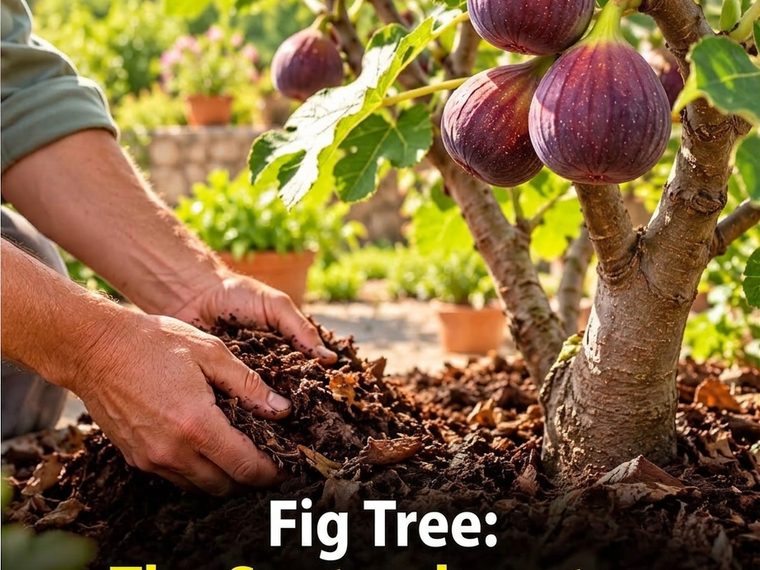
The image accompanying this article shows a gardener adding organic material around the base of a fig tree.
This is a useful practice when done correctly.
A good mulch layer can help stabilize soil moisture and reduce evaporation.
It can also gradually contribute organic matter to the soil.
However, avoid creating a thick, wet pile directly around the trunk.
Instead, spread the mulch around the root zone while keeping the immediate trunk area relatively clear.
18. Don’t Forget Sunlight
Figs need plenty of sunlight to develop properly.
Even in September, good exposure can help the remaining fruit mature.
Look around the tree and see whether surrounding plants have become large enough to create excessive shade.
You don’t necessarily need to remove everything around the fig tree, but reducing severe competition for light can be beneficial.
19. Don’t Make Major Changes Without Knowing Your Variety
This point deserves special attention.
A gardening recommendation that works for one fig variety may not work exactly the same way for another.
Before making major changes, try to determine:
- The variety
- How old the tree is
- Whether it is planted in the ground or a container
- Your local winter temperatures
- When it normally produces fruit
- Whether it produces breba or a main crop
This information can completely change how you should approach pruning and winter preparation.
A Simple September Fig Tree Checklist
If you want an easy routine, use this checklist.
✅ Inspect the tree
Look at leaves, branches and fruit.
✅ Harvest ripe figs
Pick fruit when it reaches the appropriate stage of ripeness.
✅ Remove rotten fruit
Don’t leave decaying figs underneath the tree.
✅ Check soil moisture
Water when necessary rather than following a rigid schedule.
✅ Add suitable mulch
Use organic material while keeping it away from the trunk.
✅ Inspect for pests
Look carefully beneath leaves and around fruit.
✅ Avoid excessive fertilizer
Especially avoid unnecessary late-season nitrogen.
✅ Avoid heavy pruning
Only remove clearly dead, broken or problematic wood unless there is a specific reason to prune.
✅ Prepare for winter
Consider your climate, variety and tree age.
Common Mistakes to Avoid in September
❌ Cutting away too much wood
This can potentially remove branches important for future fruit production.
❌ Watering every day automatically
Always consider rainfall and actual soil moisture.
❌ Using excessive nitrogen fertilizer
It can encourage unwanted late-season growth.
❌ Removing healthy leaves
Allow the tree to enter dormancy naturally.
❌ Leaving rotten figs on the ground
They can attract insects and create sanitation problems.
❌ Ignoring the trunk and branches
Diseases and damage aren’t always visible from a distance.
❌ Treating every fig tree the same
Variety and climate matter enormously.
What Is Your Fig Tree Really Doing in September?
While you are enjoying the last figs of the season, your tree is doing much more than simply finishing its harvest.
It is gradually transitioning toward dormancy.
It is managing its water and nutrient reserves.
It is responding to shorter days and cooler temperatures.
And depending on the variety, it may already be carrying or maintaining structures that contribute to the following year’s fruiting.
This is why September can be an important month for the future of your fig tree.
The One September Habit Every Fig Grower Should Adopt
If you do nothing else this month, observe before you cut.
Don’t automatically reach for the pruning shears.
Don’t automatically add fertilizer.
Don’t automatically increase watering.
Instead, look carefully at your tree.
Ask yourself:
- Is the soil actually dry?
- Are the leaves healthy?
- Are the branches damaged?
- Are there still fruits developing?
- Is the tree receiving enough sunlight?
- Is there evidence of pests or disease?
- Does my variety produce fruit on old wood?
- Will my tree need winter protection?
These simple questions can prevent many common gardening mistakes.
Final Thoughts
September is not simply the month when the fig harvest ends.
For the fig tree, it is part of the transition between one growing season and the next.
By maintaining appropriate moisture, caring for the soil, using mulch correctly, removing damaged fruit, monitoring pests and avoiding unnecessary heavy pruning, you can help your tree enter the colder months in good condition.
Most importantly, don’t assume that more pruning, more fertilizer or more water will automatically mean more figs next year.
The right care depends on your tree’s variety, age, growing conditions and local climate.
So before you put away your gardening tools for the season, take a close look at your fig tree.
The fruit you harvest next year may depend, in part, on how you care for it now.