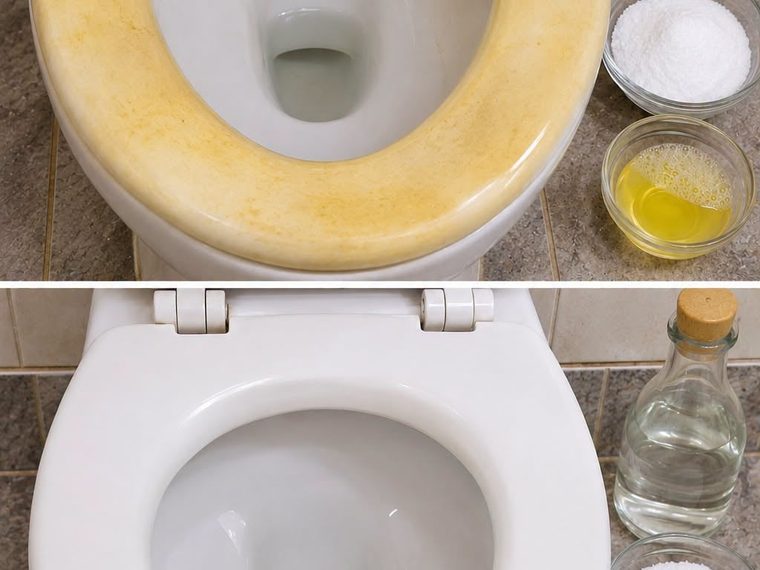
How to Deal with Stubborn Yellow Stains
If the yellow stains remain after gentle cleaning, the problem may be deeper than ordinary dirt.
First, check whether the manufacturer allows the use of a mild stain remover or baking soda. Baking soda is slightly abrasive, so it may scratch certain finishes.
If approved, test a small amount on an inconspicuous area before treating the entire surface. Apply gently with a soft damp cloth, rinse thoroughly, and dry.
Never use a rough scouring pad or steel wool. These materials can create tiny scratches that make the surface harder to clean in the future.
If the yellow color remains unchanged, the plastic itself may have aged or suffered chemical damage. In that situation, cleaning products may not restore its original white color.
Can White Vinegar Remove Yellow Stains?
White vinegar is often used for cleaning bathroom surfaces because its acidity can help dissolve mineral deposits.
However, it is not suitable for every toilet seat. Some manufacturers advise against acidic products because they can damage certain finishes, discolor plastic, or affect metal hinges.
For this reason, avoid applying vinegar directly to your toilet seat unless the manufacturer specifically confirms that it is safe.
Why You Should Avoid Using Bleach
Many people believe bleach is the best solution for whitening a yellow toilet seat. Unfortunately, it can sometimes make the problem worse.
Depending on the material, chlorine-based products may cause discoloration, weaken the surface, or damage the protective coating.
To protect your toilet seat:
- Avoid leaving strong cleaning products on the surface.
- Keep toilet bowl cleaners away from the seat.
- Rinse accidental splashes immediately.
- Never mix bleach with vinegar, ammonia, acids, or other cleaning products.
A gentle cleaner is usually a better choice for regular toilet-seat maintenance.
Don’t Forget the Hinges and Underside
The hinges and underside of a toilet seat often collect dirt, moisture, and residue. Even if the top looks clean, these areas can make the entire toilet appear neglected.
To clean them properly:
- Lift the toilet seat.
- Wipe the underside with a soft cloth and mild soapy water.
- Use a soft toothbrush to reach accessible corners.
- Clean around the hinges without soaking the mechanism.
- Wipe with a clean damp cloth.
- Dry everything thoroughly.
If your toilet seat has a quick-release mechanism, follow the manufacturer’s instructions before removing it.
How to Prevent Your Toilet Seat from Turning Yellow Again
Once your toilet seat is clean, a few simple habits can help keep it looking fresh.
Clean It Regularly: Wipe the seat frequently with a soft cloth and a suitable mild cleaner. Regular cleaning prevents dirt and residue from accumulating.
Avoid Harsh Chemicals: Strong acids, chlorine-based products, abrasive powders, and unsuitable disinfectants can damage certain surfaces.
Remove Splashes Immediately: Do not allow bathroom cleaning products, cosmetics, or other substances to remain on the seat.
Keep the Bathroom Ventilated: Good ventilation helps reduce excess moisture and keeps bathroom surfaces fresher.
Dry the Seat After Cleaning: Always remove leftover moisture, particularly around the hinges and fixing points.
Protect It from Direct Sunlight: If sunlight reaches your bathroom regularly, consider using a suitable window covering to reduce prolonged exposure.
When Is It Time to Replace a Yellowed Toilet Seat?
Unfortunately, not every yellowed toilet seat can be restored.
If the discoloration remains after gentle cleaning, the plastic itself may have changed color because of aging, sunlight, or chemical damage.
Consider replacing the seat if you notice:
- Deep yellow discoloration that does not improve.
- Cracks or rough patches.
- Peeling or damaged surface coatings.
- Persistent stains inside damaged areas.
- Loose, rusty, or deteriorating hinges.
A new toilet seat can be a simple and affordable way to refresh the appearance of an older bathroom.
Final Thoughts
A yellowed toilet seat does not always need to be replaced. In many cases, the discoloration comes from everyday dirt, grease, and residue that can be removed with a simple mixture of warm water and mild dishwashing liquid.
The secret is to clean gently, rinse away the residue, and dry the surface completely.
Avoid using bleach, vinegar, or aggressive scrubbing without checking whether they are suitable for your toilet seat. The wrong cleaning product can damage the finish and make discoloration worse.
With regular maintenance and the right cleaning method, you can keep your toilet seat looking fresh, clean, and bright for much longer.