6. 🧴 Traditional Benefits for the Skin
Mallow has a particularly interesting history in traditional skin care.
Its leaves and flowers have traditionally been applied to irritated skin and minor skin problems. The mucilage gives the plant a naturally softening and soothing character, while researchers have investigated antioxidant and anti-inflammatory compounds in the plant.
Experimental research has also investigated the possible role of Malva extracts in wound healing and skin repair.
These findings are promising, but they should not be interpreted as evidence that homemade mallow preparations can safely replace proper treatment for burns, infected wounds, deep cuts, or serious skin conditions.
7. 🌿 May Have Mild Laxative Properties
Traditional sources have used Malva sylvestris for constipation.
The plant’s mucilage and other constituents may contribute to its effects on the digestive tract. Reviews of the traditional and pharmacological literature describe laxative activity among the properties investigated for M. sylvestris.
For occasional mild constipation, dietary fiber, adequate fluid intake, physical activity, and a balanced diet remain important first-line measures.
Persistent constipation, blood in the stool, unexplained weight loss, or severe abdominal pain requires medical advice.
8. 🍃 It Can Also Be a Food Plant
One fascinating aspect of mallow is that certain species have traditionally been eaten as wild vegetables.
Historical evidence from the Mediterranean region indicates that Malva sylvestris has been consumed as food for a very long time. Leaves and other young plant parts have been incorporated into traditional dishes in different regions.
The young leaves can have a soft texture when cooked, while the mucilaginous quality can help thicken or enrich soups and other dishes.
However, correct identification is essential before consuming any wild plant.
Do not eat a plant simply because it resembles a photograph of edible mallow.
9. 🧪 What Makes Mallow Interesting to Researchers?
Scientists have identified a surprisingly diverse collection of compounds in Malva plants.
Studies of Malva sylvestris report the presence of:
Flavonoids
These plant compounds are widely studied for antioxidant and anti-inflammatory properties.
Phenolic compounds
Phenolics are another important group of plant chemicals associated with antioxidant activity.
Anthocyanins
These natural pigments contribute to the coloration of some mallow flowers.
Mucilage
These polysaccharide-rich substances are particularly important because they help explain the plant’s traditional soothing and demulcent applications.
Tannins and other compounds
Additional phytochemicals have also been identified and investigated for biological activity.
This combination makes mallow an interesting subject for continued phytochemical and pharmacological research.
🌸 Flowers, Leaves and Fruits
Different parts of the plant have different traditional uses.
Leaves are commonly associated with food use and traditional preparations.
Flowers are particularly well known in herbal preparations intended for the mouth, throat and dry cough.
Roots and other aerial parts have also appeared in traditional medicine, although their uses vary considerably between cultures and species.
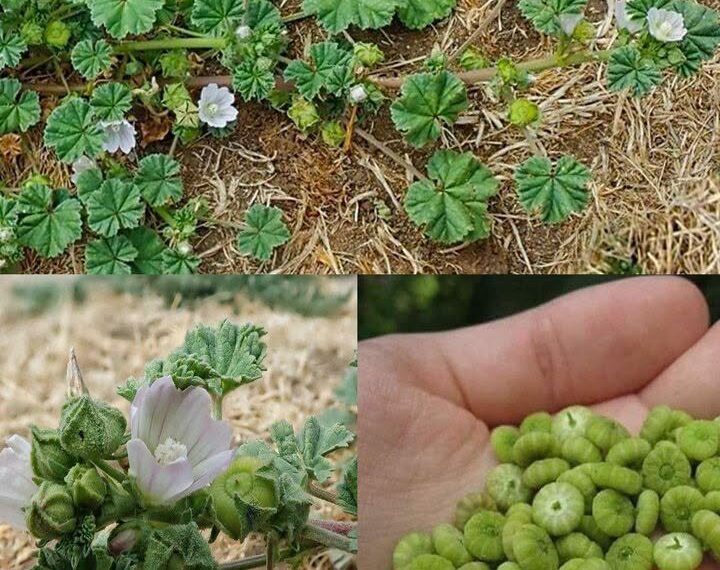
The small green segmented fruits visible on many mallow plants are also characteristic of the genus and are sometimes described as looking like miniature wheels or cheese wheels.
⚠️ Is Common Mallow Scientifically Proven to Treat Diseases?
This is where it is important to separate traditional herbal knowledge from modern clinical evidence.
There is considerable historical evidence for the use of mallow, and laboratory research has identified potentially useful compounds and biological activities. Reviews report antioxidant, anti-inflammatory, antimicrobial, wound-healing and other promising effects.
But this does not mean that mallow has been clinically proven to treat cancer, infections, chronic inflammatory diseases, diabetes, or other serious illnesses.
Researchers themselves emphasize the need for additional clinical and toxicological studies.
The strongest practical conclusion is that mallow has a long history of traditional use and promising preliminary scientific evidence, while many therapeutic claims still require better human studies.
⚠️ Safety and Identification Matter
Before using wild mallow medicinally or as food, make sure the plant has been correctly identified.
The Malva genus contains several similar-looking species, and the photograph alone may not be enough to determine the exact species.
Also consider where the plant was collected. Avoid plants growing:
- Beside heavily trafficked roads
- In areas treated with herbicides or pesticides
- Near polluted water
- In contaminated soil
- Where animals regularly urinate or defecate
Pregnant or breastfeeding individuals, children, and people taking medications should consult a healthcare professional before using concentrated herbal preparations.
And if symptoms are serious or persistent, a medicinal herb should never delay appropriate medical care.
🌿 Final Thoughts
Common mallow may look like an ordinary weed, but its history is anything but ordinary.
For centuries, Malva species have been valued as wild foods, soothing herbs and traditional remedies. Modern research has identified mucilage, flavonoids, phenolic compounds and other phytochemicals that may help explain some of these traditional applications.
Its most credible traditional applications include soothing irritated throat tissues, supporting relief from dry cough, easing mild digestive discomfort and providing a gentle mucilaginous effect. The plant also shows interesting antioxidant, anti-inflammatory and skin-related potential in laboratory and preclinical research.
The key is to keep expectations realistic: mallow is an interesting traditional medicinal plant, not a miracle cure. Its history is impressive, but more high-quality human research is needed before many of its proposed medicinal effects can be considered firmly established.