Signs That May Indicate an Active Infestation
After finding swarmers, inspect your home for additional warning signs.
Look for:
Mud Tubes
Subterranean termites often build narrow mud tunnels on:
- Foundations
- Crawl spaces
- Basement walls
- Concrete surfaces
These tubes protect them while traveling.
Hollow Wood
Tap wooden trim or beams.
Damaged wood may sound hollow or papery.
Bubbling Paint
Paint that bubbles or peels without obvious water damage can sometimes indicate termite activity beneath the surface.
Sagging Floors or Doors
Severe termite damage may cause:
- Soft floors
- Doors that stick
- Windows that become difficult to open
Discarded Wings
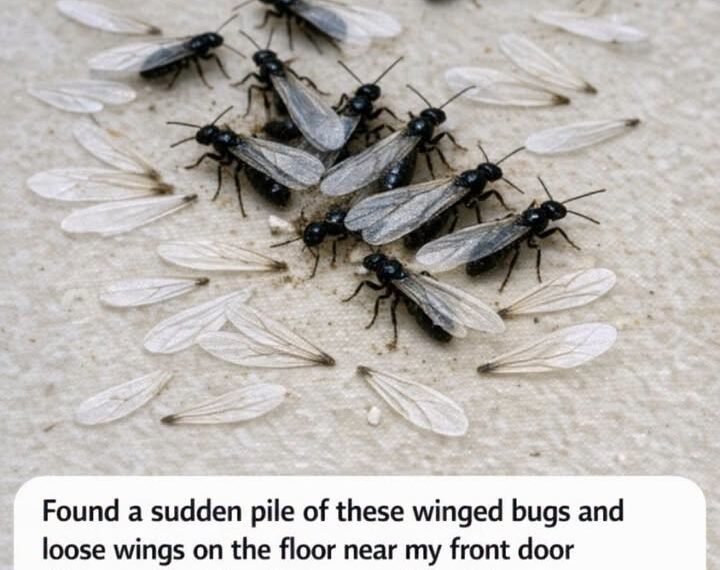
Small piles of transparent wings near windows, doors, or light fixtures are one of the clearest signs that swarmers have recently emerged.
Why Do Termites Lose Their Wings?
Winged termites use their wings only for one purpose: finding a mate and starting a new colony.
Once they land, they intentionally break off their wings.
The insects then pair up and begin searching for moist wood or soil where they can establish a new nest.
That’s why homeowners often find far more wings than insects.
What Should You Do If You Find Them?
Stay Calm
A single swarm does not necessarily mean your home is seriously damaged.
However, it should never be ignored.
Collect a Sample
If possible, place a few insects or wings into a sealed container or plastic bag.
This can help a pest professional identify the species.
Inspect Around the House
Carefully examine:
- Foundation walls
- Wooden decks
- Porch supports
- Basement
- Crawl space
- Window frames
- Door frames
Look for mud tubes, damaged wood, or additional insects.
Reduce Moisture
Termites thrive in damp environments.
Fix:
- Leaking pipes
- Poor drainage
- Standing water
- Overflowing gutters
Keeping wood dry makes your home less attractive to termites.
Remove Wood Contact
Avoid storing:
- Firewood
- Lumber
- Cardboard
- Tree branches
directly against your home’s foundation.
Consider a Professional Inspection
If swarmers appeared inside your home or if you notice other warning signs, a professional termite inspection is highly recommended.
Early detection is far less expensive than repairing structural damage later.
How to Help Prevent Future Problems
Good home maintenance can reduce the risk of termite activity.
Helpful practices include:
- Keep mulch several inches away from the foundation.
- Trim shrubs to improve airflow.
- Repair roof and plumbing leaks quickly.
- Seal foundation cracks.
- Ensure gutters direct water away from the house.
- Inspect wooden structures annually.
These simple habits make your property less inviting to termites.
Common Myths About Winged Termites
“They only appear in old houses.”
False.
Termites can infest both new and old homes if conditions are favorable.
“If they’re outside, I don’t need to worry.”
Not necessarily.
Outdoor colonies can eventually move toward nearby structures.
“One swarm means my house is ruined.”
Fortunately, that’s not true.
A swarm is a warning sign—not proof of severe structural damage.
A proper inspection is the best way to determine whether termites are actually attacking your home.
Final Thoughts
Finding a pile of winged insects and discarded wings near your front door can certainly be unsettling, especially when they resemble flying ants. If the insects have straight bodies, equal-sized wings, and straight antennae, they are likely termite swarmers—a natural part of the termite life cycle.
While their presence doesn’t automatically mean your house is in serious trouble, it does indicate that termites are active somewhere nearby. Taking a few minutes to inspect your home, eliminate moisture problems, and seek a professional inspection if needed can provide peace of mind and help prevent expensive damage in the future.
The sooner you investigate the source of the swarm, the better your chances of protecting your home and avoiding costly repairs.