Take a look around your kitchen. You wipe counters with it, scrub dirty plates, and clean food residue from pots and pans. Yet the humble dish sponge may be one of the dirtiest items in your entire home.
In fact, scientists have found that kitchen sponges can harbor millions—even billions—of bacteria. Some studies have shown that a used kitchen sponge can contain more microorganisms than many bathroom surfaces, including toilet seats. The reason is simple: sponges provide the perfect environment for microbes to thrive.
Warm, moist, and filled with food particles, they become tiny breeding grounds for bacteria. Fortunately, with proper cleaning and replacement habits, you can keep your sponge much safer to use.
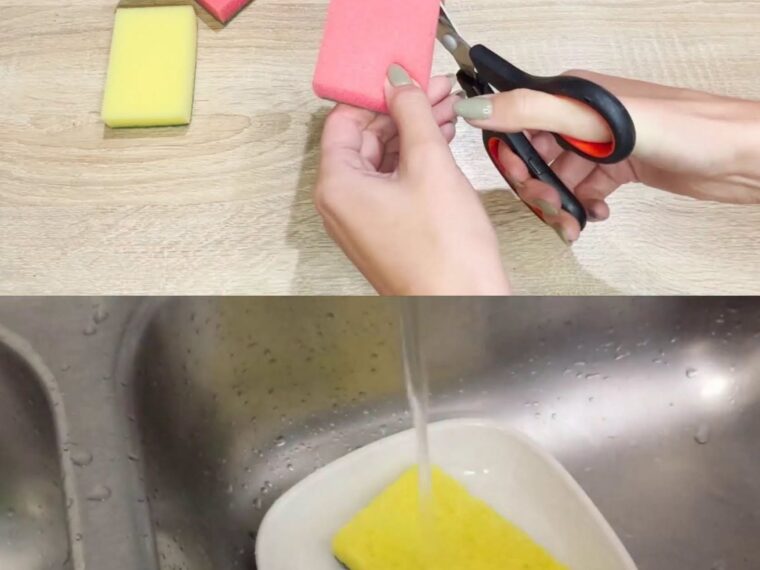
The image above suggests a simple cleaning hack: trimming the sponge and rinsing it thoroughly. While cutting a sponge doesn’t remove bacteria by itself, proper sanitizing methods can significantly reduce microbial growth.
Why Are Dish Sponges So Dirty?
Every time you wash dishes, tiny bits of food become trapped inside the sponge’s porous structure.
Combined with:
- Moisture
- Warm kitchen temperatures
- Organic material
these conditions create an ideal environment for bacteria to multiply rapidly.
Unlike smooth surfaces that dry quickly, sponges retain moisture for hours, allowing microbes to flourish.
Are Sponges Really Dirtier Than Toilets?
This surprising claim has circulated for years, and there is some truth behind it.
Toilet seats are usually cleaned regularly and remain relatively dry between uses. Kitchen sponges, on the other hand, are repeatedly exposed to food residue and moisture.
Researchers have detected high concentrations of bacteria in used sponges, including species commonly found in kitchens and on food. However, finding bacteria does not automatically mean a sponge is dangerous. The real concern is the potential transfer of harmful microbes to dishes, utensils, and food preparation areas.
What Types of Bacteria Can Live in Sponges?
A kitchen sponge may contain a wide variety of microorganisms, including:
- Food-related bacteria
- Environmental microbes
- Yeasts and molds
Some bacteria are harmless, while others can potentially cause illness if transferred to food or hands.
The risk increases when sponges are used to clean raw meat juices or remain wet for extended periods.
Signs Your Sponge Needs Attention
Your sponge may need cleaning or replacement if you notice:
- A sour or unpleasant odor
- Discoloration
- Slimy texture
- Crumbling edges
- Visible mold growth
If your sponge smells bad even after washing, it’s often a sign that bacteria are deeply embedded within the material.
How Often Should You Clean a Sponge?
Experts generally recommend sanitizing kitchen sponges frequently—ideally every day or every few uses, especially if they’re used heavily.
Regular sanitizing helps reduce bacterial populations and extend the life of the sponge.
However, no cleaning method makes a sponge permanently sterile.
Method 1: Hot Water and Dish Soap
The simplest cleaning method begins immediately after use.
Steps:
- Rinse the sponge thoroughly under hot water.
- Squeeze out trapped food particles.
- Add a small amount of dish soap.
- Work the soap through the sponge.
- Rinse again thoroughly.
- Squeeze out excess water.
Always store the sponge where it can dry quickly.
Method 2: Soak in a Bleach Solution
Bleach is one of the most effective ways to disinfect a sponge.
Instructions:
TO CONTINUE READING THE ARTICLE PLEASE SEE PAGE 2