⚠️ Should You Eat Crabgrass?
This is where caution is especially important.
Some Digitaria species and their seeds have a history of human consumption. However, you should never eat a wild plant simply because it looks like a species described as edible online.
Correct identification is essential because different grass species can look remarkably similar.
There is also another problem: crabgrass frequently grows in lawns, roadsides, gardens, and other places where it may have been exposed to:
- Herbicides
- Pesticides
- Fertilizers
- Animal waste
- Contaminated soil
- Road pollutants
A plant growing in an untreated, clean environment is very different from one growing beside a road or in a chemically treated lawn.
Therefore, the safest approach is to regard the crabgrass in your yard as an ornamental or ecological plant unless you have expert identification and reliable information about its growing conditions.
🔍 How to Recognize Large Crabgrass
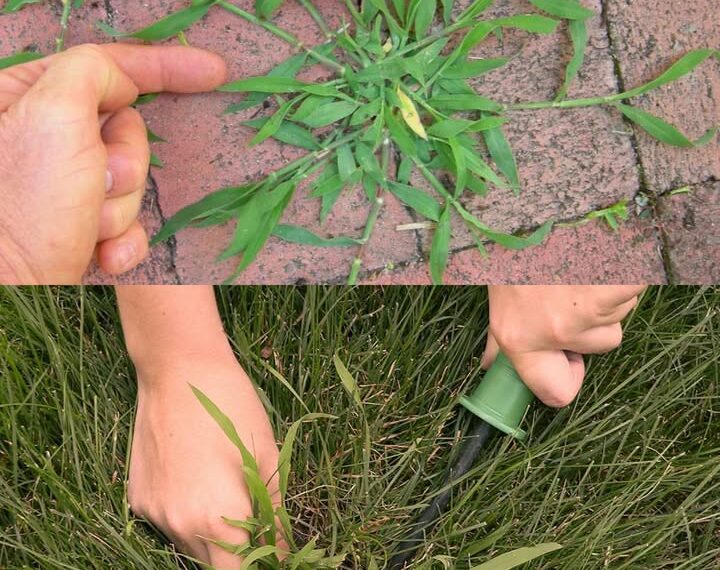
If you’re trying to determine whether a plant is large crabgrass, look for several characteristics rather than relying on one feature.
1. Spreading growth
The stems often spread outward from the center, giving the plant a low, sprawling appearance.
2. Hairy leaves
Large crabgrass is notably hairy. Its leaf blades and sheaths can have visible hairs, which help distinguish it from smooth crabgrass.
3. Finger-like seed head
One of its most recognizable features is the mature seed head. Several narrow branches radiate from the end of the stem, producing a shape that resembles fingers.
4. Annual life cycle
Unlike perennial lawn grasses, large crabgrass generally completes its life cycle in one growing season and reproduces through seeds.
🏡 Why Gardeners Usually Want to Remove It
Despite its interesting history, crabgrass can become a serious competitor in lawns and cultivated areas.
Large populations can compete with crops and desirable plants for:
- Water
- Nutrients
- Sunlight
- Growing space
Ontario’s weed identification guide, for example, classifies large crabgrass as a weed found in cultivated fields and lawns and documents measurable crop competition at high densities.
In a vegetable garden, therefore, allowing crabgrass to spread unchecked isn’t necessarily beneficial.
🌱 How to Control Crabgrass Naturally
If your goal is to keep it out of your lawn or garden, prevention is usually easier than trying to eliminate an established population.
Keep the soil covered
Bare soil gives annual weeds opportunities to establish themselves. Dense, healthy vegetation can reduce available space and light.
Pull young plants
Small crabgrass plants are generally much easier to remove than mature plants that have already produced seeds.
Don’t let it go to seed
Removing mature plants before they produce large quantities of seeds can help reduce future populations.
Improve lawn density
A healthy, appropriately maintained lawn leaves fewer open spaces for crabgrass to colonize.
Use mulch in garden beds
A suitable layer of mulch can reduce the amount of sunlight reaching emerging weed seedlings.
🌾 A Weed With a Forgotten History
Perhaps the most fascinating lesson from crabgrass is that the definition of a “weed” depends on context.
In a manicured lawn, crabgrass can be an unwanted competitor.
In a pasture, it can provide forage.
Historically, its seeds have been used as food.
And in traditional herbal practices, the plant has been associated with medicinal preparations.
Modern botanical databases confirm that Digitaria sanguinalis has a much broader history of human use than its reputation as a common lawn weed might suggest.
The Bottom Line
Crabgrass isn’t necessarily a “miracle plant,” and claims that it can cure serious illnesses should be treated skeptically. But it is certainly more interesting than an ordinary lawn weed.
The species commonly known as large or hairy crabgrass has a long history as food and forage, distinctive botanical characteristics, and documented traditional uses. At the same time, accurate identification and caution are essential before considering any wild plant for consumption or medicinal purposes.
So the next time you see this grass spreading across a garden path or lawn, remember: you may be looking at a plant with a surprisingly long history—not simply a weed to be pulled out.