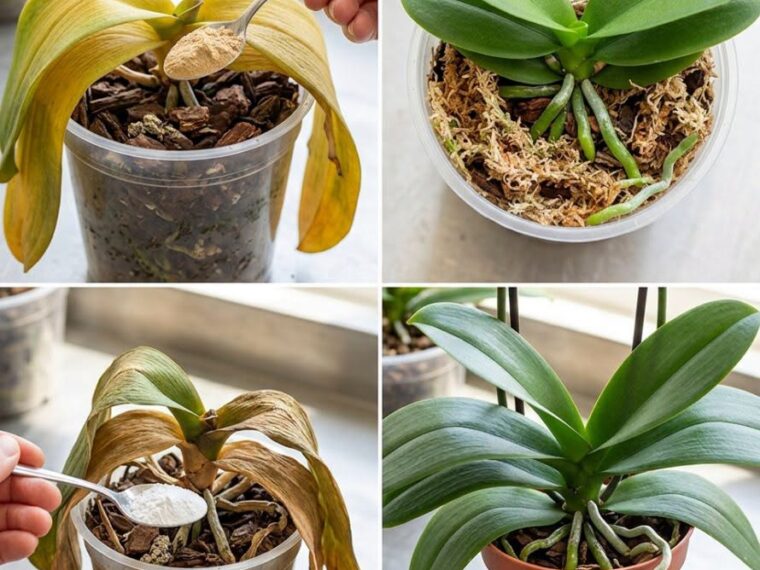
Orchids are among the most beautiful and elegant houseplants, but they also have a reputation for being difficult to care for. Many people assume that once an orchid develops yellow leaves or stops blooming, it’s beyond saving. Fortunately, that’s not always true.
In many cases, an older orchid simply needs the right care to recover. With a little patience and a few simple maintenance steps, even a tired-looking plant can produce healthy new roots, lush green leaves, and spectacular blooms once again.
It’s worth noting that many social media posts claim that adding a mysterious powder or household ingredient will instantly revive an orchid. The truth is that there is no miracle ingredient that can bring a dying orchid back overnight. Healthy growth comes from proper care—not quick fixes.
Here’s how you can help an old orchid thrive again.
Why Do Orchids Decline?
Before trying to revive your orchid, it’s important to understand what caused the problem.
Common reasons include:
- Overwatering
- Root rot
- Insufficient light
- Old or compacted potting mix
- Poor air circulation
- Improper temperatures
- Too much or too little fertilizer
The good news is that most of these issues can be corrected.
Step 1: Inspect the Roots
Healthy roots are the foundation of a healthy orchid.
Good roots should be:
- Green when wet
- Silvery-gray when dry
- Firm and plump
If you notice roots that are:
- Brown
- Black
- Mushy
- Hollow
they should be removed.
Using clean, sterilized scissors or pruning shears, carefully trim away only the dead roots while preserving all healthy ones.
Step 2: Replace the Old Potting Mix
Over time, orchid bark breaks down and begins holding too much moisture.
This can suffocate the roots and encourage rot.
Repot your orchid using a fresh orchid mix that contains ingredients such as:
- Pine bark
- Sphagnum moss (optional)
- Horticultural charcoal
- Perlite, if needed
Never use regular potting soil for orchids, as it retains too much water.
Step 3: Use a Clear Pot
Most Phalaenopsis orchids perform part of their photosynthesis through their roots.
A transparent pot allows you to:
TO CONTINUE READING THE ARTICLE PLEASE SEE PAGE 2