5. Prepare the Perfect Soil Mixture
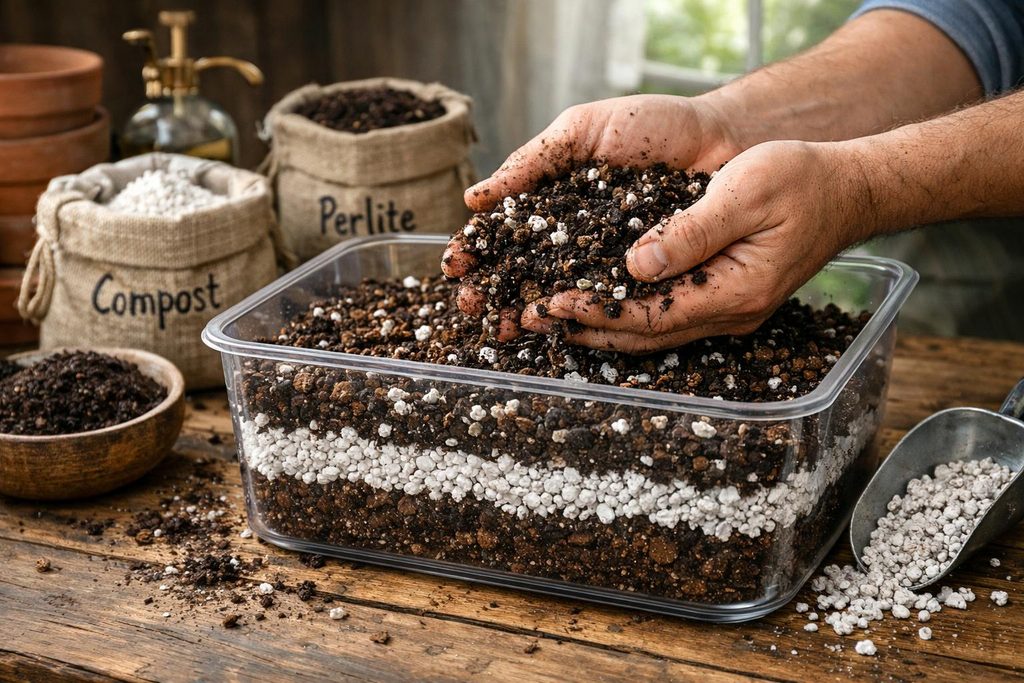
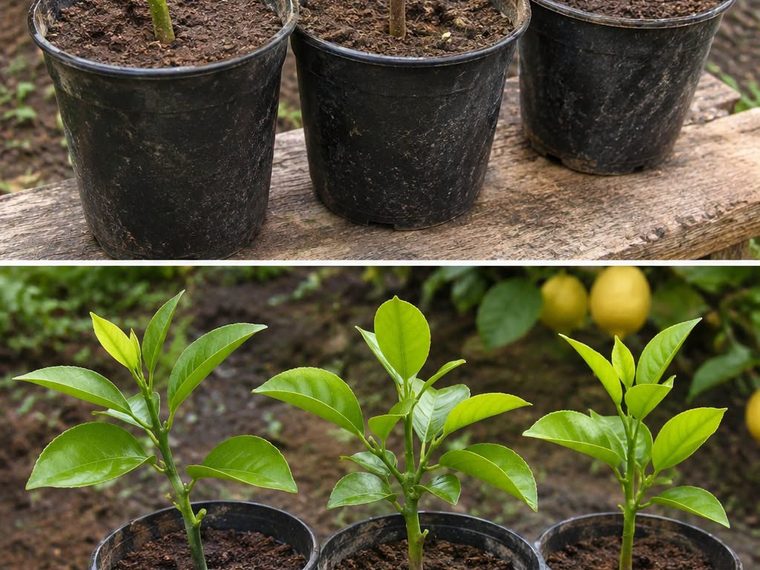
One common mistake when propagating lemon trees is using ordinary garden soil that holds too much water.
Lemon cuttings need moisture, but they also need oxygen around their developing roots.
If the growing medium remains saturated, the lower portion of the stem can rot before roots have time to form.
A light, well-draining propagation mixture is a much better choice.
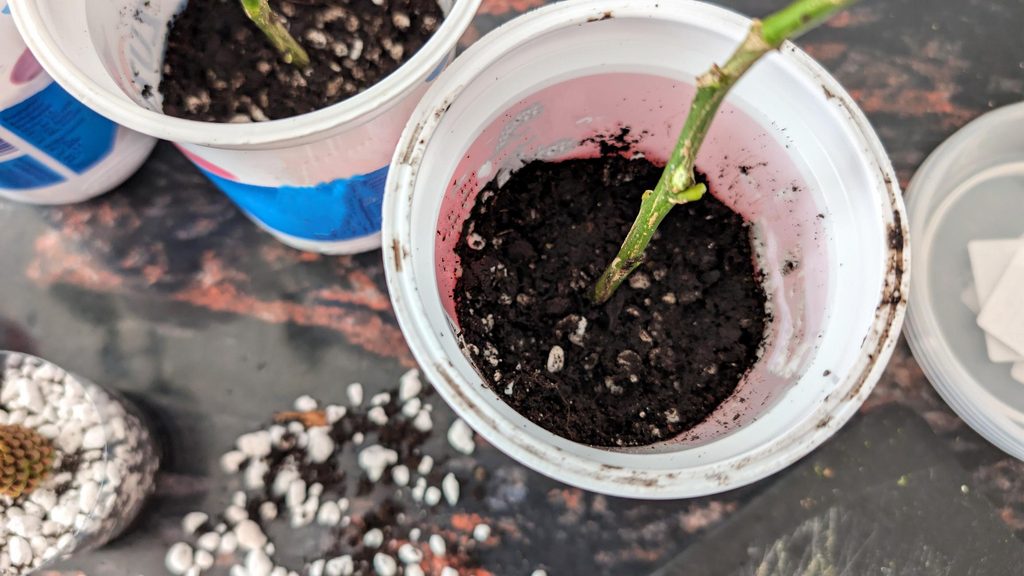
Recommended homemade mixture:
| Ingredient | Proportion |
|---|---|
| Clean coarse sand | 1 part |
| Perlite | 1 part |
| Coco coir or peat moss | 1 part |
Mix everything thoroughly before filling your containers.
Each ingredient has a purpose:
- Coarse sand: Helps improve drainage and provides a stable structure.
- Perlite: Creates air spaces that help prevent waterlogging.
- Coco coir or peat moss: Retains enough moisture around the cutting.
Use small pots with drainage holes. Moisten the mixture before inserting your cuttings.
Make a small hole with a pencil or stick, place the cutting inside and gently press the growing medium around its base.
Avoid pushing the cutting directly into the soil if this could remove the rooting hormone.
6. The 30-Day Trick: Create a Mini Greenhouse
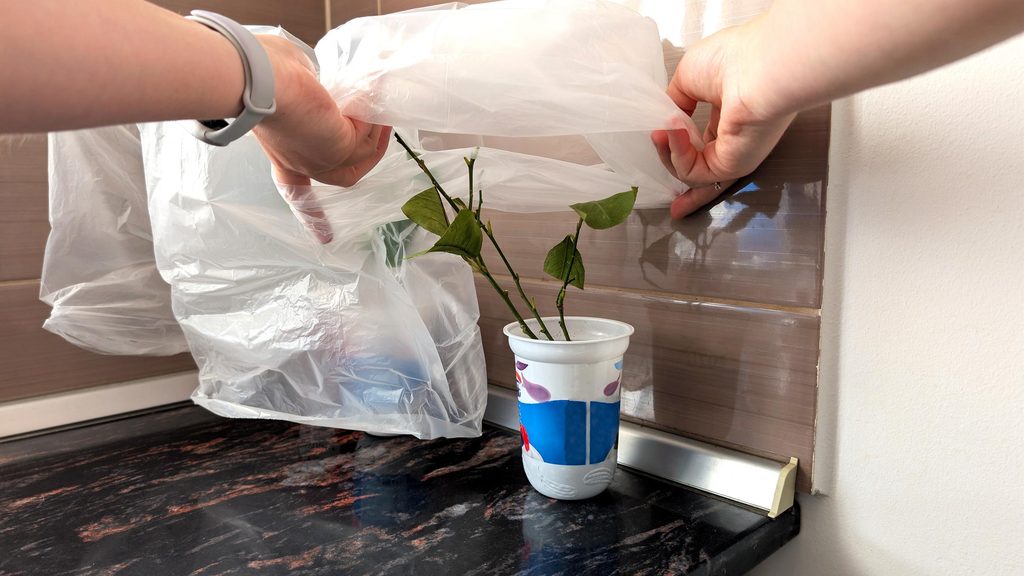
Hands Covering Lemon Tree Branch Cutting With Plastic Bag To Create Homemade Mini Greenhouse
This is one of the most important parts of the entire process.
Before roots develop, a lemon cutting cannot replace the water it loses through its leaves. If the surrounding air is too dry, the leaves may wilt and the stem may dry out before rooting begins.
Farmers and plant nurseries solve this problem by maintaining high humidity around their cuttings.
You can recreate this environment at home using a transparent plastic bag or a clear plastic bottle.
How to make your mini greenhouse:
- Plant your lemon cutting in its prepared container.
- Water the growing medium lightly.
- Place a transparent plastic bag over the pot.
- Use small sticks to prevent the plastic from touching the leaves.
- Secure the bag around the container without completely sealing it airtight.
- Place the pot somewhere warm with bright, indirect light.
The plastic cover traps moisture and creates a humid environment around the leaves.
You may notice small water droplets forming inside the plastic. This is condensation and indicates that moisture is circulating within the mini greenhouse.
However, too much condensation combined with poor ventilation can encourage fungal problems.
Open the cover periodically to allow fresh air to circulate, and make sure the growing medium stays moist rather than waterlogged.
The University of Florida and University of Florida Gardening Solutions both describe enclosed high-humidity environments and plastic covers as useful approaches to helping plant cuttings survive while developing roots. Ask IFAS+1
7. Where Should You Place Your Lemon Cuttings?
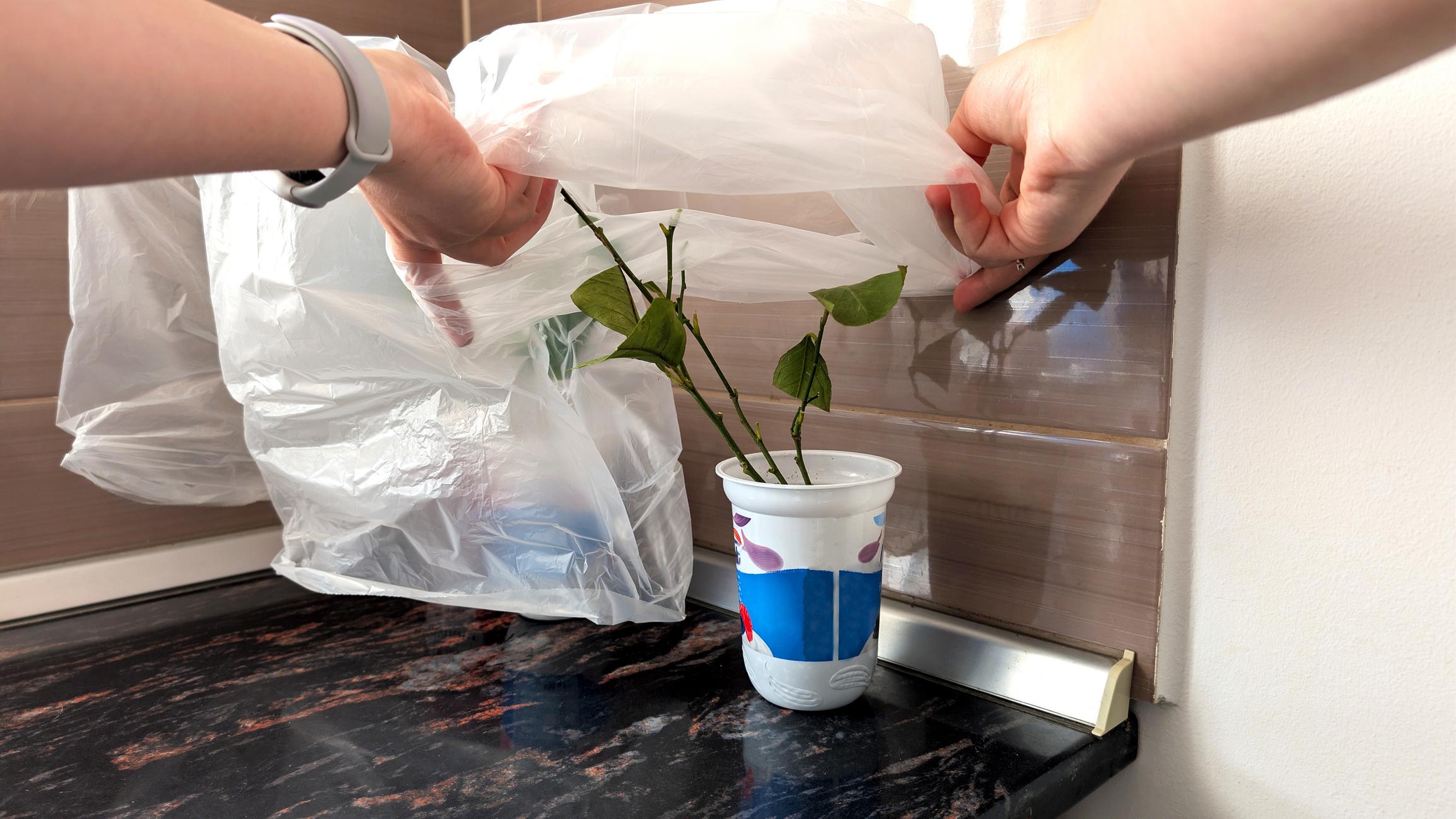
Homemade DIY Mini Greenhouse Using Plastic Bag For Citrus Lemon Tree Cuttings
Temperature and light play important roles in successful propagation.
Many beginners make the mistake of placing their cuttings directly under strong sunlight, believing that more sunshine will automatically produce faster growth.
Unfortunately, this can have the opposite effect.
A cutting covered with plastic can heat up quickly under direct sunlight. Excessive temperatures may damage the leaves and cause the stem to lose moisture.
Instead, choose a location that offers:
- Bright but indirect sunlight.
- Warm and relatively stable temperatures.
- Protection from strong winds.
- Good air circulation when the cover is opened.
- No exposure to intense midday sunshine.
A warm environment encourages biological activity and root formation, while indirect light allows the remaining leaves to continue producing energy.
For home propagation, a sheltered windowsill, bright greenhouse or protected outdoor area can work well.
In warm climates, such as many parts of Morocco, avoid exposing the covered pots to intense afternoon heat.
8. What Happens During the First 30 Days?
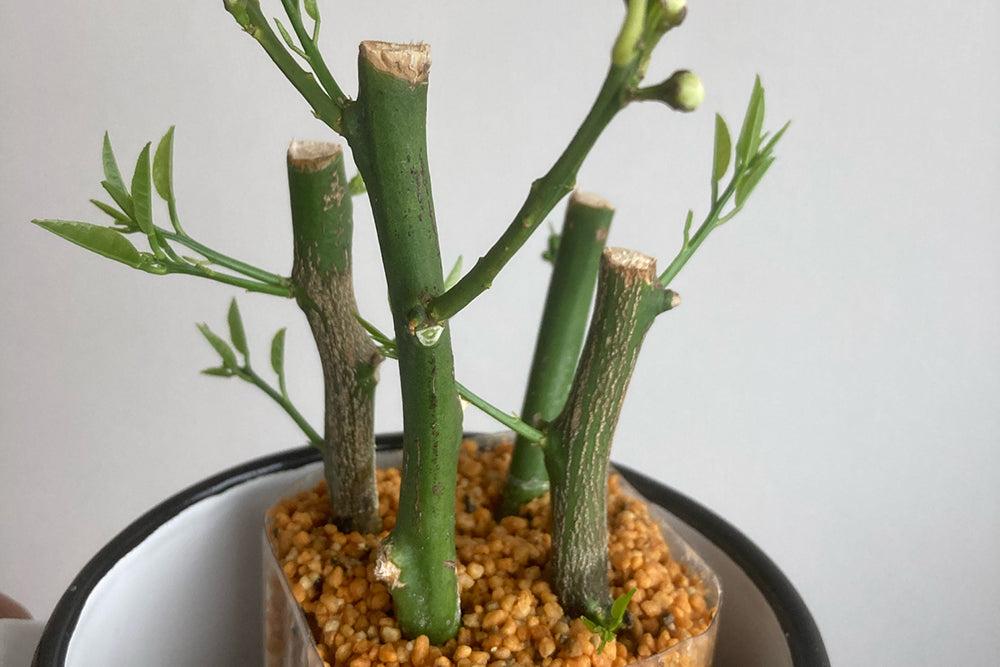
One of the most exciting parts of propagating lemon trees is watching the changes that happen over time.
Although every cutting develops at a different speed, the following timeline provides a useful general guide.
| Period | What may happen |
|---|---|
| Days 1–7 | The cutting adjusts to its new environment. Moisture management is essential. |
| Days 8–14 | The stem may remain green, while internal root development may begin. |
| Days 15–21 | Some cuttings may begin forming early roots, depending on conditions. |
| Days 22–30 | Successful cuttings may develop more visible roots and show signs of establishment. |
| After 30 days | Continue monitoring and allow the root system to become stronger before transplanting. |
An important warning: This is an illustrative timeline, not a guarantee. Some lemon cuttings take longer than 30 days to root, and some may fail completely.
Also, new leaves do not necessarily mean roots have formed. A cutting can sometimes produce shoots using stored energy even before it has developed a functioning root system.
For that reason, avoid pulling the cutting out of the soil every few days to check its progress.
9. How to Know If Your Lemon Cutting Has Developed Roots
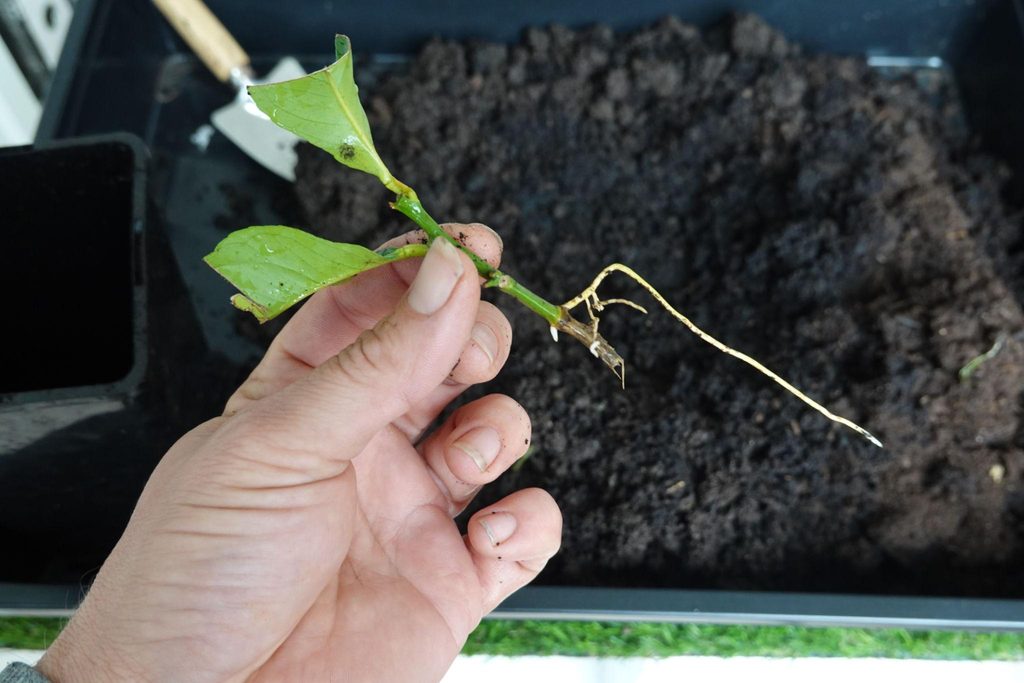
roots of young lemon tree obtained by cuttings. propagate lemon tree with roots with water.
After several weeks, you will naturally want to know whether your experiment has worked.
There are several signs that may indicate successful rooting.
Sign 1: New leaves begin growing
Fresh shoots can indicate that the cutting is active, although they do not independently prove that roots have formed.
Sign 2: The stem remains firm and green
A healthy-looking stem is generally more promising than one that has become brown, soft or shrivelled.
Sign 3: Roots become visible
If you used a transparent propagation container, you may eventually see small white or cream-coloured roots appearing near the sides.
Sign 4: The cutting resists a very gentle movement
Once sufficient roots have developed, the cutting may feel more firmly anchored in the growing medium. Do not repeatedly tug on it to test this.
The strongest confirmation is a visible, healthy root system.
10. Transplanting Your New Lemon Plant
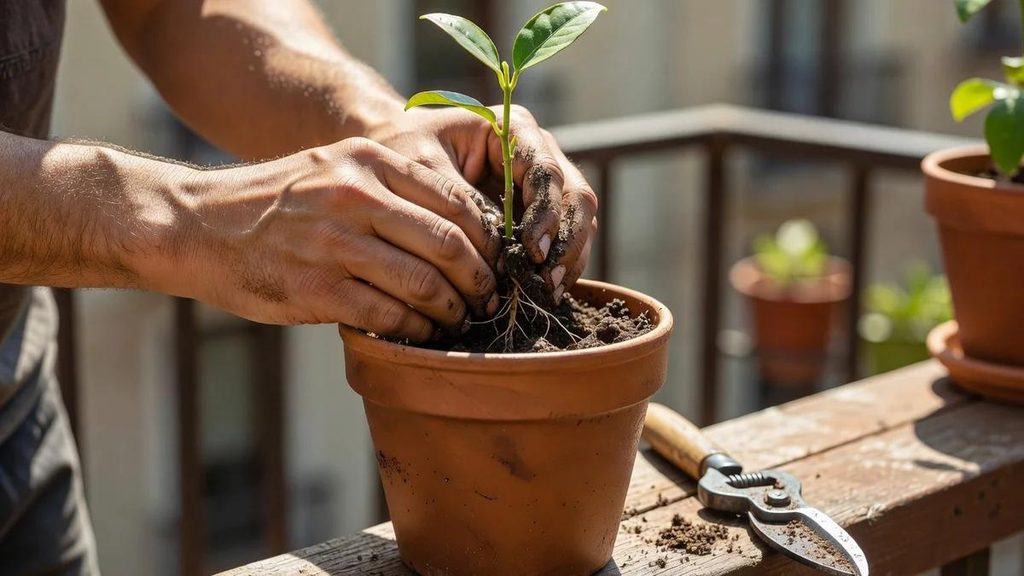
Once the cutting has developed a healthy root system, it will eventually need more room to grow.
However, transplanting too early can damage delicate new roots.
Wait until the roots are sufficiently developed to hold the growing medium together and support the young plant.
How to transplant it correctly:
- Choose a slightly larger pot with drainage holes.
- Prepare a well-draining citrus potting mixture.
- Carefully remove the young plant from its original container.
- Avoid pulling on the stem or breaking the roots.
- Position the plant at approximately the same depth as before.
- Fill the remaining space with potting mix.
- Water gently to settle the soil around the roots.
After transplanting, place the lemon plant in a sheltered location.
Do not immediately expose it to strong sunlight or sudden changes in temperature.
If the cutting was kept under a plastic cover, gradually increase ventilation over several days before removing the cover completely. This process is known as hardening off.
11. How to Care for Your Young Lemon Tree After Rooting
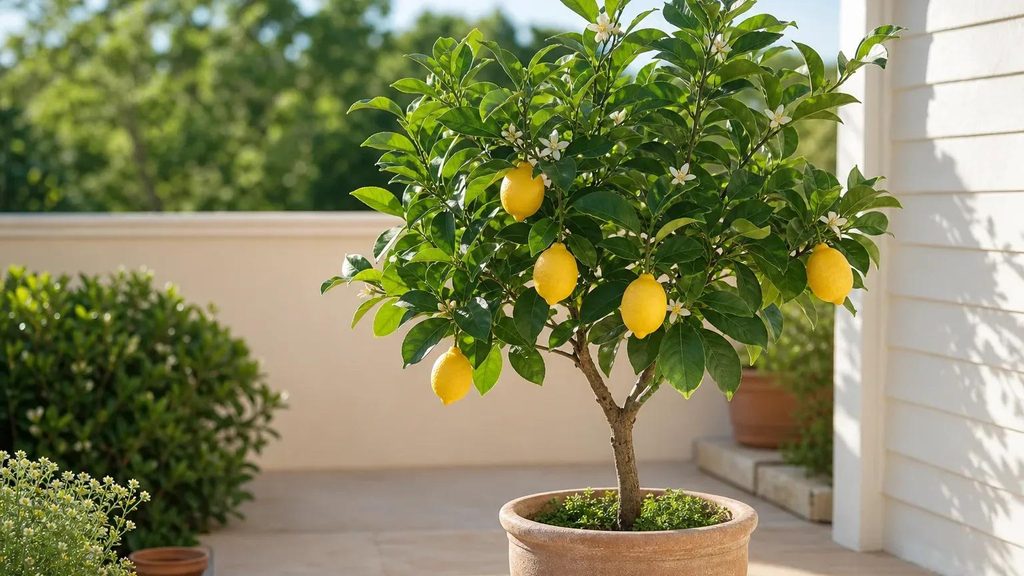
Getting roots to develop is only the beginning. Your new lemon tree needs consistent care if you want it to become a healthy, productive plant.
Watering
Keep the soil slightly moist but never permanently saturated. Allow excess water to drain freely.
Sunlight
Once the plant has adapted to its new environment, gradually introduce more sunlight. Mature lemon trees generally need several hours of direct sunlight daily.
Fertilizing
Avoid applying strong fertilizer immediately after transplanting. Once the plant is established and actively growing, use a balanced citrus fertilizer according to its instructions.
Pruning
Do not prune aggressively while the young plant is establishing itself. Remove only damaged or diseased growth when necessary.
Pest inspection
Check the leaves regularly for aphids, scale insects, spider mites and other common citrus pests.
Pot selection
As the tree grows, gradually move it into a larger container. Make sure the pot has sufficient drainage.
A healthy root system, appropriate nutrition and adequate sunlight are essential for long-term growth.
12. Common Mistakes That Can Ruin Lemon Cuttings
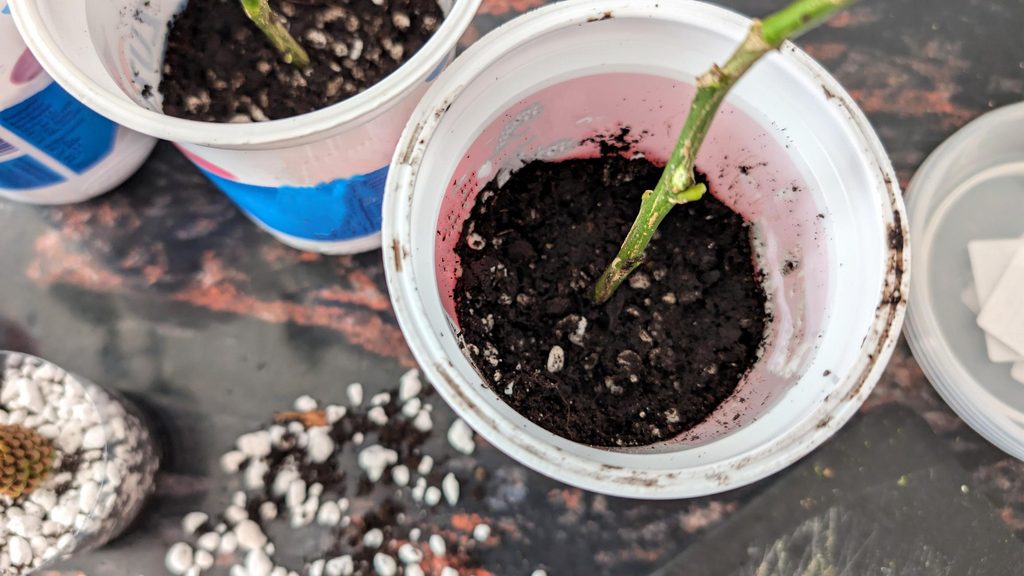
Even experienced gardeners sometimes lose cuttings during propagation. Fortunately, many problems can be avoided by understanding what young stems need.
Here are some common mistakes:
| Mistake | Better approach |
|---|---|
| Using very old branches | Select healthy, semi-mature growth. |
| Removing every leaf | Keep a few healthy leaves, reducing their size if necessary. |
| Using heavy garden soil | Choose a light, well-draining propagation medium. |
| Overwatering | Keep the medium moist, not saturated. |
| Exposing cuttings to strong sunlight | Use bright, indirect light. |
| Forgetting ventilation | Open the humidity cover periodically. |
| Transplanting too early | Wait for a sufficiently developed root system. |
| Using diseased branches | Start with healthy, disease-free material. |
One additional consideration is the parent tree itself. Citrus plants can carry serious diseases, so propagating from a healthy, certified disease-free source is especially important.
13. Can a Lemon Cutting Produce Fruit as Quickly as 30 Days?
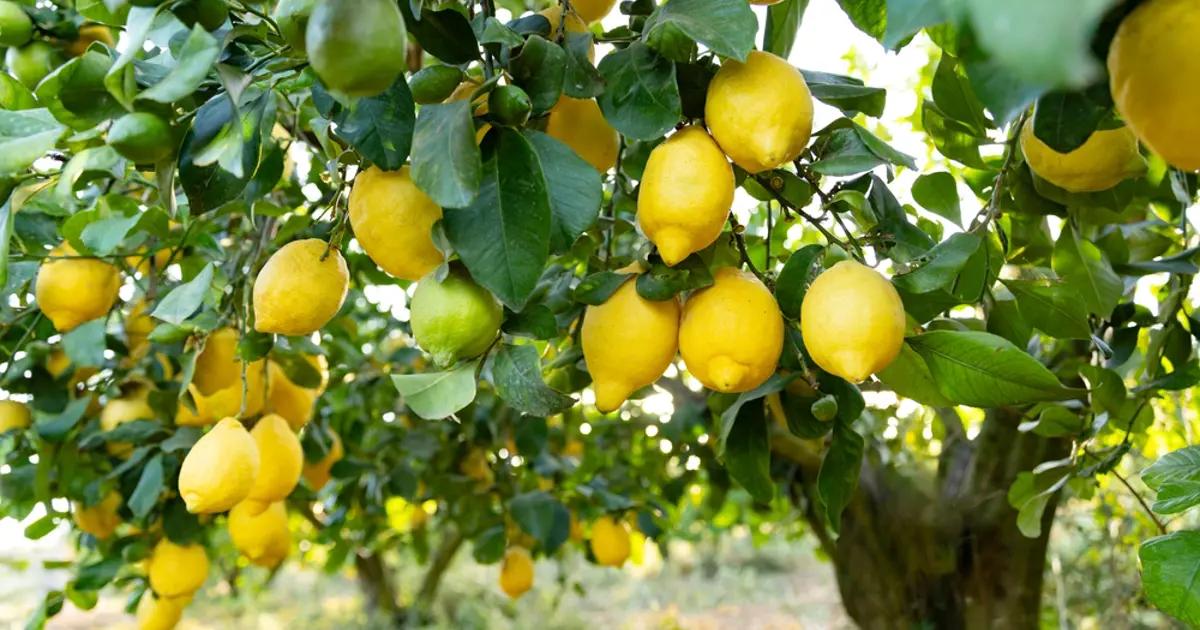
This is where expectations need to be realistic.
A lemon cutting may begin developing roots within several weeks under favourable conditions, but that does not mean it will produce lemons in 30 days.
Root development, plant establishment, flowering and fruit production are completely different stages.
A newly propagated lemon plant must first develop:
- A strong root system.
- A healthy trunk and branches.
- Sufficient leaves for photosynthesis.
- The maturity required for flowering.
Depending on the variety and growing conditions, it may take several years before a cutting-grown lemon tree produces a meaningful harvest.
Another important point is that commercial citrus growers frequently use grafting rather than relying exclusively on cuttings.
Grafting combines a desirable fruit-producing variety with a suitable rootstock, which can improve characteristics such as soil adaptation, vigour and disease tolerance.
A cutting can reproduce the characteristics of its parent plant, but it does not automatically provide all the advantages of a carefully selected grafted tree. About+1
14. An Extra Farmer’s Tip: Try Several Cuttings at Once
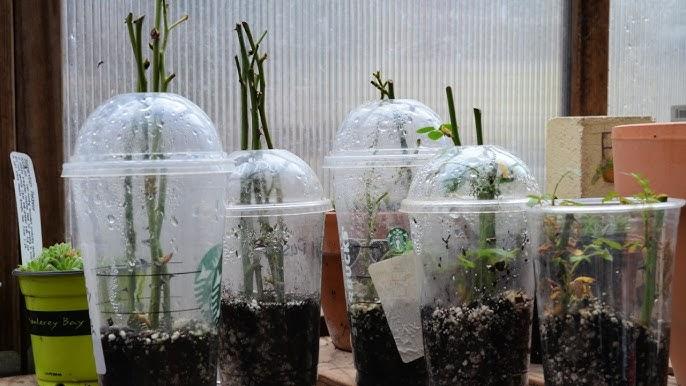
If you really want to improve your chances of success, do not experiment with just one cutting.
Prepare five or six cuttings from a healthy lemon tree and place them in individual containers.
This gives you several advantages:
- You can compare different branches.
- You can identify which cuttings root most successfully.
- You reduce the risk of losing your entire experiment.
- You can keep the strongest plants and share the others.
Label each pot with the date you planted it. This will help you monitor progress and understand which conditions produce the best results.
You can even compare two different propagation environments: one with a plastic humidity cover and another in a more naturally humid protected location.
Keep the other conditions as similar as possible so that your comparison is meaningful.
Final Thoughts: A Small Branch Can Become a Beautiful Lemon Tree
Growing lemon trees from cuttings is one of the most satisfying ways to multiply fruit trees at home.
With a healthy branch, clean pruning tools, a suitable rooting medium, rooting hormone and a simple mini greenhouse, you can create favourable conditions for a new lemon plant to develop.
The 30-day technique is best understood as a way to encourage early rooting and establishment, not as a promise of a fully grown tree or an immediate lemon harvest.
Be patient, monitor humidity carefully and avoid disturbing the cuttings while their roots are developing.
Whether you have a large garden, a small backyard or just a sunny balcony, this propagation technique is worth experimenting with.
And who knows? The small branch you almost threw away could eventually become a beautiful lemon tree producing fresh fruit for your family!