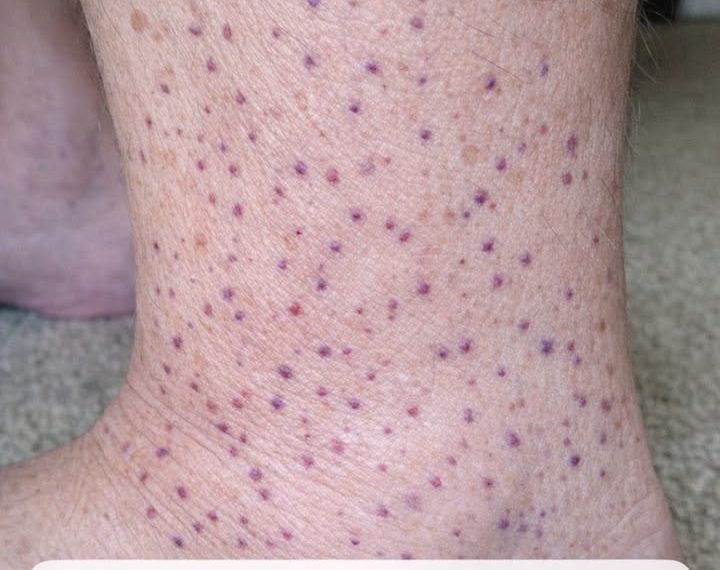
Waking up to discover dozens of tiny purple spots spreading across your legs can be frightening, especially when they appear suddenly and without an obvious explanation.
At first, they might look like small bruises, red dots, or unusual skin discoloration. But when these spots are flat, purple, and do not disappear when pressed, they may be a sign of something happening beneath the surface of the skin.
The photograph shows numerous small reddish-purple spots across the lower leg and ankle. This appearance can be consistent with a condition called petechiae or purpura.
Although some causes are relatively harmless, others require urgent medical attention.
The most important thing to understand is that a sudden, spreading purple rash should not be ignored. If this is happening to you or someone close to you, seek urgent medical assessment now rather than waiting several hours. If there is fever, severe headache, confusion, difficulty breathing, fainting, or rapid deterioration, call emergency services immediately.
Let’s explore what these spots could mean, what causes them, and which warning signs everyone should recognize.
1. What Are These Tiny Purple Spots?
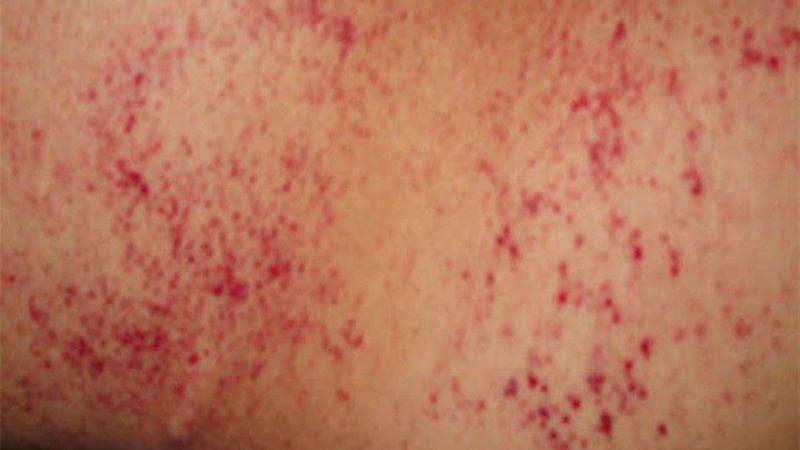
The spots shown in the photograph may be petechiae, which are tiny red, purple, or brownish marks caused by small amounts of blood leaking from damaged blood vessels beneath the skin.
When the spots become larger, they are generally called purpura.
Unlike an ordinary rash, these spots typically do not disappear when pressure is applied.
This happens because the discoloration comes from blood beneath the skin rather than simply from surface irritation. MedlinePlus+1
2. Why Do These Spots Suddenly Appear?
There are several possible explanations, ranging from minor problems to serious medical conditions.
Here are some of the most important possibilities.
Low platelet count (thrombocytopenia)
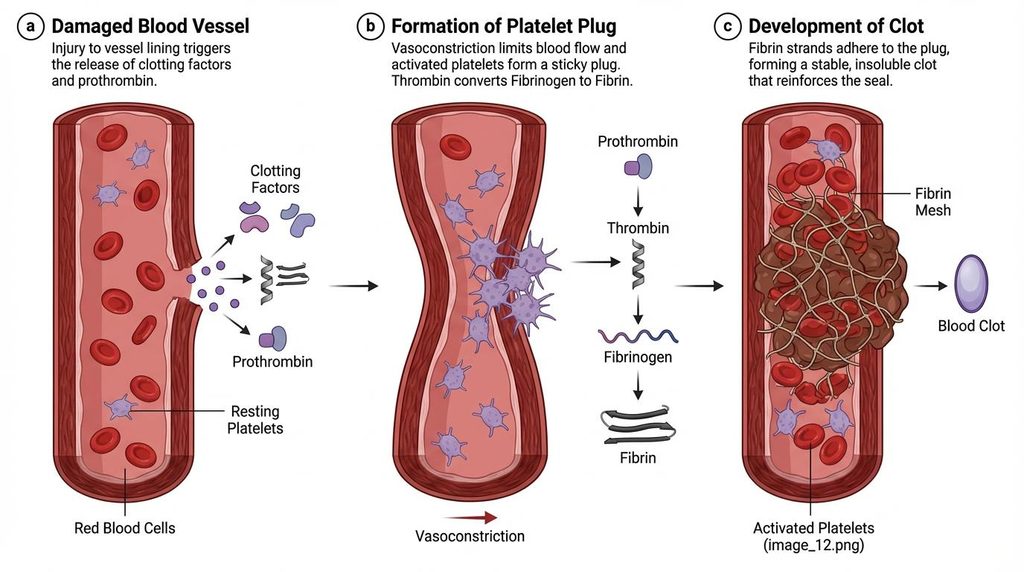
Platelets are tiny blood components that help stop bleeding.
When the platelet count becomes too low, small blood vessels can leak blood more easily, producing purple spots, bruises, and sometimes bleeding.
Other warning signs may include:
- Frequent nosebleeds.
- Bleeding gums.
- Unexplained bruises.
- Blood in the urine.
- Unusually heavy bleeding.
A blood test is needed to determine whether the platelet count is low. NHLBI, NIH+1
Vasculitis (inflammation of blood vessels)
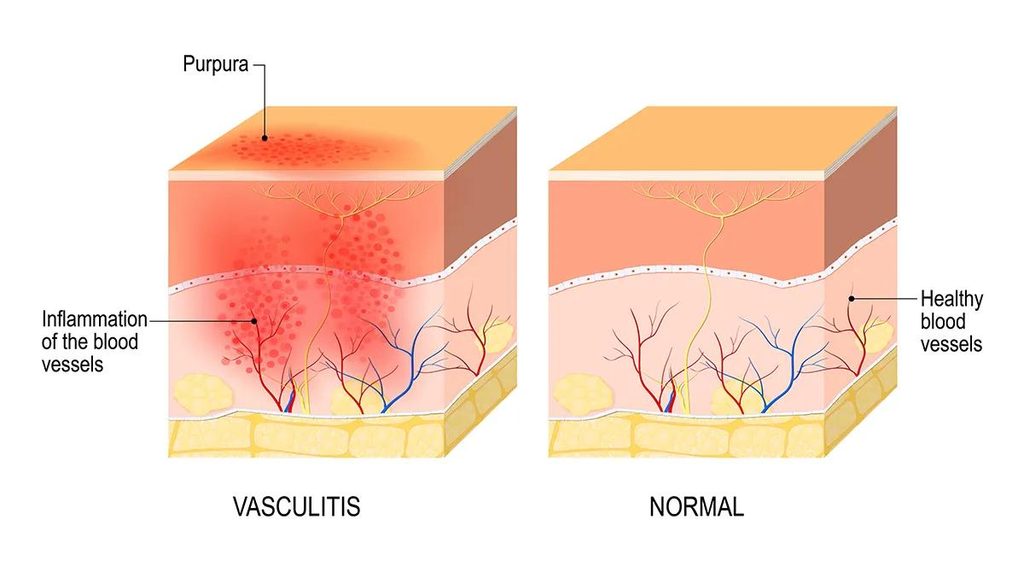
Vasculitis occurs when blood vessels become inflamed.
Some forms can cause purple spots, particularly on the lower legs and ankles.
Other symptoms may include:
- Joint pain or swelling.
- Abdominal pain.
- Swelling around the ankles.
- Blood or protein in the urine.
One example is IgA vasculitis, which can affect the skin, joints, digestive system, and kidneys. NHS+1
Infections

Certain infections can cause petechiae or purpura.
One particularly dangerous example is meningococcal disease, which can lead to meningitis or a serious bloodstream infection.
Symptoms can include:
- Fever and chills.
- Severe headache.
- Stiff neck.
- Vomiting.
- Confusion.
- Cold hands and feet.
- A rapidly spreading purple rash.
This type of infection can progress extremely quickly and become life-threatening within hours. Emergency medical attention is essential if it is suspected. CDC+1
3. How Can You Tell If the Spots Are Serious?
TO CONTINUE READING THE ARTICLE PLEASE SEE PAGE 2