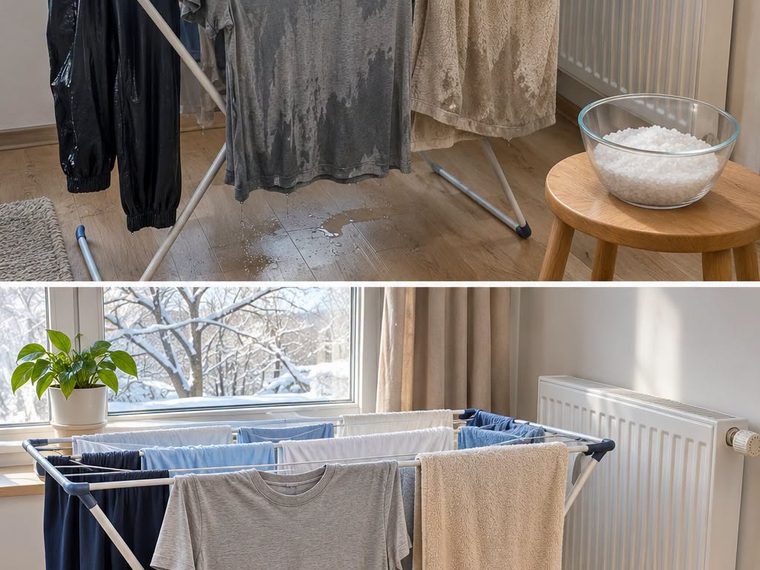
Drying laundry can become a real challenge during winter, especially when rain, cold temperatures, and high humidity make outdoor drying difficult. Clothes often remain damp for hours, sometimes developing an unpleasant musty smell. Meanwhile, using an electric tumble dryer after every wash can increase household electricity expenses.
But what if you could make indoor laundry drying easier with a few simple household tricks?
The ERS method has attracted attention as an economical approach to drying clothes indoors. It combines three elements: the washing machine’s spin cycle, a radiator or gentle heat source, and salt as a traditional moisture-absorbing aid.
The idea is simple: remove as much water as possible before hanging your clothes, encourage evaporation with warmth and airflow, and pay attention to excess humidity in the room.
Although salt cannot replace a proper dehumidifier, several parts of this approach can help make laundry day more efficient.
Let’s explore how to use the method, what actually works, and how to dry your clothes without wasting unnecessary energy.
1. What Is the ERS Method?
ERS is presented as a three-part household drying technique:
- E – Essorage (Spin cycle): Remove excess water from clothes before taking them out of the washing machine.
- R – Radiator: Make use of gentle warmth to encourage evaporation, while keeping clothes away from direct contact with the heater.
- S – Sel (Salt): Use a bowl of coarse salt as a traditional moisture-absorbing aid.
These three elements have different levels of effectiveness.
The washing machine’s spin cycle is particularly useful because it physically extracts water. Warmth and moving air also help clothes dry faster. Salt, however, has a limited capacity to absorb moisture from an entire room.
The most important principle is to combine effective water removal with good air circulation and humidity control.
2. Step One: Use the Washing Machine’s Spin Cycle
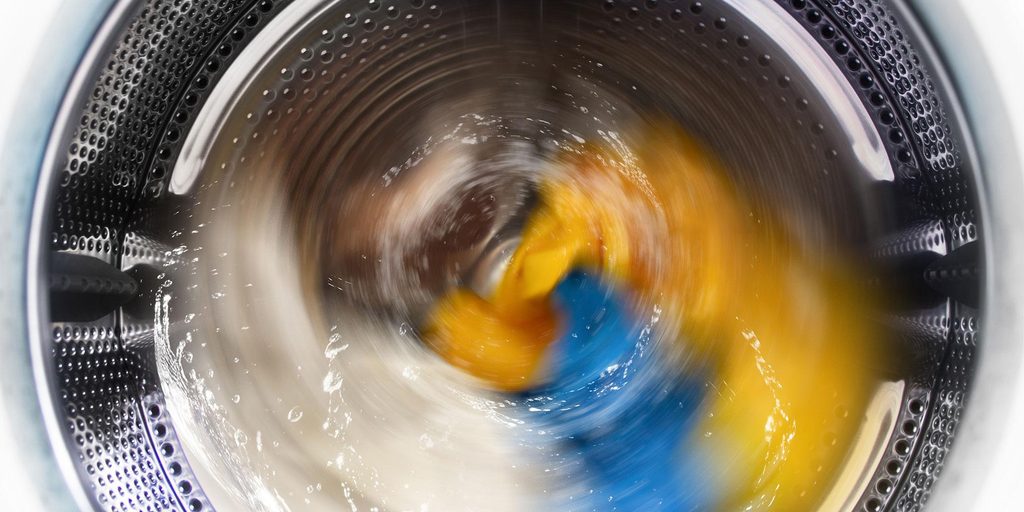
The first secret to faster laundry drying actually begins before you hang your clothes.
After a washing cycle, garments still contain a considerable amount of water. Thick materials such as towels, jeans, and sweatshirts can retain especially large quantities.
The more water remains in the fabric, the longer it will take to dry.
How to do it correctly:
- Finish your normal washing cycle.
- Check the care labels of your garments.
- Select an additional spin cycle if necessary.
- Choose a suitable spin speed for the fabrics.
- Remove the clothes immediately when the cycle finishes.
For many everyday cotton garments, a spin speed of 1,000–1,200 RPM can be useful if permitted by the care instructions.
Delicate fabrics should be spun at lower speeds to prevent damage.
Why does this work?
A washing machine removes water mechanically rather than relying on heat to evaporate it. This means less moisture needs to escape into your home during the drying process.
3. Step Two: Position Your Drying Rack Near a Radiator

The second part of the method involves using warmth to encourage evaporation.
Water evaporates more readily when the surrounding temperature is warmer. This is why clothes often dry faster in a warm room than in a cold, damp environment.
However, there is an important distinction: place the drying rack near a radiator, not directly on it.
Covering a radiator with wet clothing can prevent heat from circulating properly and reduce heating efficiency.
Follow these simple steps:
- Open your drying rack completely.
- Hang clothes individually rather than stacking them.
- Leave enough space between garments.
- Position the rack approximately 30 cm from the radiator, where practical.
- Make sure warm air can circulate around the clothes.
You should also avoid placing the rack against cold exterior walls.
This arrangement allows the clothes to benefit from the warmer surroundings without blocking the radiator.
4. Step Three: Place a Bowl of Coarse Salt Near the Laundry

Salt has hygroscopic properties, meaning it can attract and retain moisture under certain conditions. This explains why it is sometimes used in homemade moisture-control tricks.
For this technique, you will need:
- A medium-sized glass or ceramic bowl.
- Approximately 300–500 grams of coarse salt.
- A stable surface near the drying rack.
Instructions:
- Fill the bowl with coarse salt.
- Place it on a small table near the drying rack.
- Keep it away from children and pets.
- Check the salt occasionally.
- Replace it if it becomes noticeably wet or clumped.
The salt may absorb a small amount of moisture, but it is important to be realistic: a bowl of salt cannot remove the several litres of moisture that a load of wet laundry may release into the air.
If your room regularly becomes humid, a proper dehumidifier or good ventilation will be considerably more effective.
5. Improve Air Circulation to Speed Up Drying
One of the biggest mistakes people make when drying laundry indoors is forgetting about airflow.
Even if the room is warm, clothes may remain damp when the surrounding air becomes saturated with moisture.
Moving air helps carry water vapour away from the surface of fabrics, allowing more moisture to evaporate.
Try these practical tips:
- Leave gaps between individual garments.
- Avoid placing several heavy towels together.
- Turn clothes over after a few hours.
- Use a small fan to circulate air around the rack.
- Keep the drying rack away from walls and furniture.
A fan does not necessarily heat the room, but it can improve air circulation without requiring a tumble dryer.
6. Choose the Right Room for Indoor Laundry Drying
Not every room is suitable for drying wet clothes.
A small, poorly ventilated bedroom, for example, can become humid when several wet garments are left to dry overnight.
Whenever possible, choose a room with an extractor fan, a window, or another suitable ventilation system.
A bathroom with effective extraction can be a good option.
Here are some important recommendations:
Keep moisture contained: If possible, dry clothes in one suitable room rather than spreading wet laundry throughout your home.
Ventilate regularly: Use an extractor fan or open a window when outdoor conditions permit.
Avoid bedrooms: Drying laundry in a bedroom can increase overnight humidity and contribute to condensation.
Monitor humidity: A simple digital hygrometer can help you understand whether the room is becoming too humid.
Як обрати цифровий термогігрометр для дому: поради та огляд моделей | Блог Rozetka
7. Seven Additional Tricks to Dry Clothes Faster
TO CONTINUE READING THE ARTICLE PLEASE SEE PAGE 2