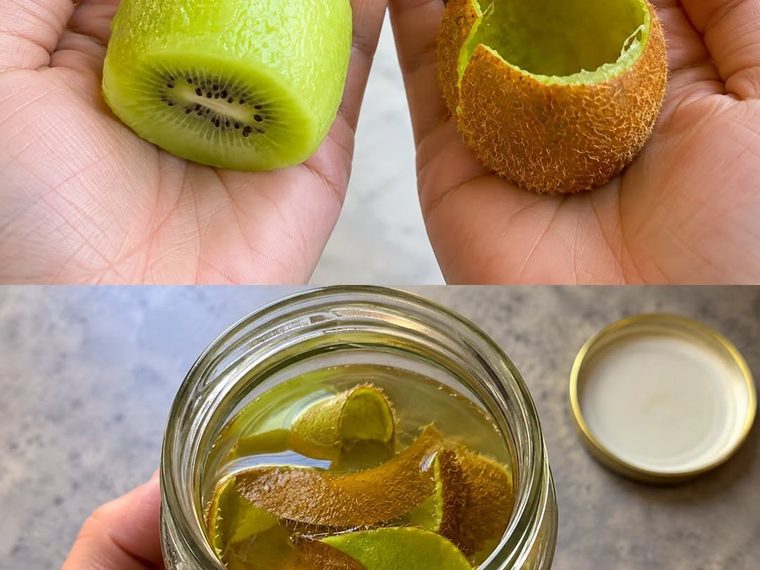
Most people enjoy the sweet, bright-green flesh of a kiwi and automatically throw the fuzzy skin into the trash.
But that rough outer layer may contain more interesting compounds than many people realize.
Research into kiwifruit peels has found that the skin contains dietary fiber, polyphenols, flavonoids, carotenoids and other bioactive compounds. Some studies have even found higher concentrations of certain antioxidant compounds in the peel than in the flesh.
That doesn’t mean kiwi peel is a miracle food or a cure for disease. However, it does make the peel an interesting part of the fruit from both a nutritional and food-waste perspective.
What Makes Kiwi Peel So Interesting?
The peel is the part of the fruit that protects it from the outside environment. As a result, it contains a variety of naturally occurring compounds.
Scientific studies have identified numerous phenolic compounds and flavonoids in kiwifruit peel. Research comparing peel and flesh has found that the peel can contain substantially higher levels of certain polyphenols and flavonoids.
These compounds are studied for their antioxidant activity because they can interact with free radicals in laboratory testing.
The important distinction is that antioxidant activity measured in a laboratory does not automatically mean the same effect occurs in the human body. Nevertheless, the findings help explain why researchers are interested in making greater use of kiwi peel.
1. Kiwi Peel Contains Valuable Fiber
One of the most obvious advantages of eating more of the fruit is that you consume more of its natural structure, including fiber.
Research specifically investigating kiwifruit peel has identified both soluble and insoluble dietary fiber. A 2026 study found that kiwi-peel dietary fiber also contained numerous bound phenolic compounds and showed interesting interactions with beneficial microorganisms during laboratory fermentation experiments.
Dietary fiber is important because it contributes to normal digestive function and forms an important part of a balanced diet.
Instead of removing the peel and losing some of this material, eating the fruit with its skin can therefore be one way to make more complete use of the fruit.
2. The Peel Is Rich in Plant Compounds
The green flesh of kiwi is already known for its nutritional value, including vitamin C, fiber and other compounds.
But the peel has its own chemical profile.
Researchers have detected compounds such as catechin, quercetin and epigallocatechin in kiwifruit peel. In one comparative study, several of these polyphenols were present at higher levels in the peel than in the flesh.
These substances belong to groups of plant compounds that scientists study for their antioxidant and other biological properties.
This is one reason researchers are exploring ways to transform kiwi peel from food waste into useful food ingredients.
3. Antioxidant Activity Is One of Its Most Interesting Features
Antioxidants are compounds capable of helping neutralize reactive molecules under certain conditions.
Laboratory research has found significant antioxidant activity in extracts made from kiwi peel.
A study published in Food & Nutrition Research found that kiwi peel contained more polyphenols and flavonoids than the flesh in the samples tested, and that peel extracts showed stronger antioxidant activity in the laboratory assays used by the researchers.
Other research has also reported antioxidant activity associated with kiwi peels.
However, it is important not to turn these findings into exaggerated health claims. Eating kiwi peel doesn’t mean that it will “detox” the body, prevent aging, or cure a particular disease.
The evidence supports describing the peel as a source of potentially beneficial plant compounds, rather than as a medicine.
4. Kiwi Peel May Have Interesting Potential for Gut Health
TO CONTINUE READING THE ARTICLE PLEASE SEE PAGE 2