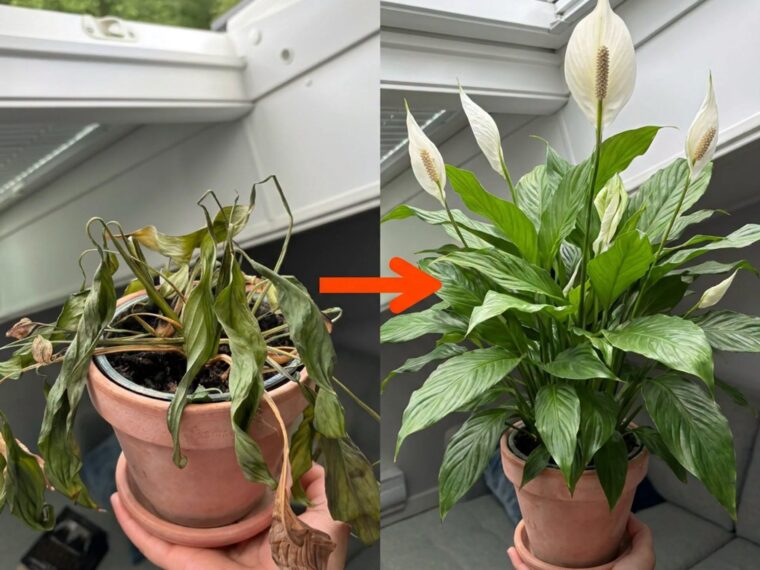
Seeing a once-lush Peace Lily suddenly collapse can be alarming. Its leaves may become limp, hang dramatically over the sides of the pot, turn yellow or brown, or stop producing flowers.
But don’t give up on it yet. Peace Lilies are surprisingly resilient, and dramatic drooping does not necessarily mean the plant is dying. In many cases, the problem can be corrected once you identify what is stressing the roots or leaves. The RHS notes that Peace Lilies can droop dramatically when they need water and may recover quickly after proper watering.
The plant shown in the image is a good example of a Peace Lily that looks severely stressed on the left but has recovered beautifully on the right.
Here’s how to diagnose the problem and give your plant the best chance of bouncing back.
🌿 1. First, Check the Soil
Before adding water, put your finger into the soil a few centimeters deep.
This simple test can tell you whether your Peace Lily is thirsty or suffering from too much water.
If the soil is very dry:
Your plant is probably suffering from underwatering.
Peace Lilies are notorious for showing their thirst by dramatically drooping their leaves. Unlike some houseplants that can tolerate prolonged dryness, Peace Lilies prefer a more consistent moisture level.
If the soil is wet:
Do not water it again.
Constantly wet compost can deprive roots of oxygen and eventually contribute to root rot. Overwatering can also cause yellowing and browning leaves.
This is one of the most common mistakes people make: they see a drooping plant and automatically add more water.
Sometimes, more water is exactly what the plant doesn’t need.
💧 2. If It’s Dry, Give It a Proper Drink
If the soil is genuinely dry, don’t just sprinkle a small amount of water over the surface.
Water thoroughly until some water begins to drain from the bottom of the pot.
Then allow the excess water to drain away completely.
Never allow the pot to sit in standing water for long periods.
After watering, place the plant back in its normal location and give it some time.
A severely dehydrated Peace Lily can look almost lifeless, but if the roots are still healthy, the leaves may begin to regain their firmness surprisingly quickly.
A useful rule:
Check the soil rather than watering according to a fixed calendar.
Your plant may need water more frequently during warm, bright periods and less frequently during cooler, darker periods.
🌱 3. If the Soil Is Wet, Check the Roots
This step is especially important if your Peace Lily has been drooping for several days despite having moist soil.
Carefully slide the plant out of its pot and inspect the root system.
Healthy roots generally look:
- Firm
- Pale, cream, tan, or light brown
- Moist but not mushy
Problematic roots may be:
- Very dark
- Soft
- Mushy
- Foul-smelling
- Easily pulled apart
Poor drainage and prolonged wet compost can lead to root problems. The RHS recommends checking the roots when a houseplant is struggling, particularly when watering may be involved.
If you discover significant root damage, remove the clearly rotten material with a clean tool and repot the plant into fresh, free-draining potting mix.
🪴 4. Don’t Put a Small Peace Lily in a Huge Pot
It may seem logical to give a struggling plant a much larger pot so its roots have “room to grow.”
But this can actually make the problem worse.
A pot that is far too large can hold excess moisture around a relatively small root system. That means the soil may remain wet for too long, increasing the risk of root problems.
When repotting, choose a container only slightly larger than the existing root ball and make sure it has proper drainage.
The RHS also recommends using a free-draining compost and avoiding excessive pot sizes.
☀️ 5. Give It Bright, Indirect Light
Peace Lilies are often described as low-light houseplants, but that doesn’t mean they should live in a dark corner.
They grow best with bright, indirect or filtered light.
A location near a bright window can work extremely well, provided the plant isn’t exposed to harsh direct sunlight for long periods.
Too much direct summer sun can scorch the leaves, while very low light can result in slow growth and poor flowering.
The sweet spot:
Bright room + filtered sunlight + no harsh midday rays.
If your Peace Lily is sitting several feet away from a bright window and barely receives any natural light, consider moving it closer.
💦 6. Don’t Forget Humidity
Peace Lilies are tropical plants, so dry indoor air can make them unhappy.
Low humidity can contribute to brown leaf edges and generally stressed-looking foliage. The RHS recommends increasing humidity when necessary, including using a pebble tray or other suitable methods.
You can try:
- Placing the plant near other houseplants
- Using a humidifier
- Keeping it in a naturally humid room
- Occasionally misting the foliage
- Using a pebble tray with water below the level of the pot
A bathroom with good natural light can be an excellent location.
🌡️ 7. Keep It Away From Temperature Extremes
Peace Lilies prefer warmth and don’t appreciate sudden environmental changes.
Avoid placing yours directly beside:
- Radiators
- Heating vents
- Air conditioners
- Frequently opened cold windows
- Cold drafts
The RHS recommends keeping Peace Lilies away from both hot radiators and cold drafts.
Sometimes a plant can appear healthy for months and suddenly struggle after being moved to a location with very different temperatures.
🍃 8. Remove Dead or Severely Damaged Leaves
Once you’ve corrected the underlying problem, clean up the plant.
Remove leaves that are:
- Completely brown
- Completely yellow
- Dead or collapsing
- Severely damaged
Use clean, sharp scissors and cut damaged leaves near their base.
Don’t remove every imperfect leaf, though. A leaf that still has substantial green tissue can continue contributing energy to the plant.
The goal isn’t to make the plant look perfect immediately.
The goal is to give it the conditions it needs to produce healthy new growth.
🌸 9. What About the Flowers?
Don’t panic if your Peace Lily stops flowering while it is recovering.
Flowering requires energy, and a plant struggling with watering, light, roots, or humidity may prioritize survival rather than producing blooms.
Once the plant is healthy again, provide good indirect light and appropriate care.
Insufficient light is one of the reasons Peace Lilies may fail to flower.
🌿 10. Don’t Overfertilize a Sick Plant
When a plant looks weak, it’s tempting to give it extra fertilizer.
But fertilizer isn’t a cure for a plant suffering from dehydration, root damage, poor drainage, or environmental stress.
Fix the growing conditions first.
Once the plant begins actively growing again, a suitable balanced houseplant fertilizer can be used according to the product instructions. The RHS recommends feeding during the growing season to support leaf production and flowering.
🚨 How to Tell What Your Peace Lily Needs
Here’s a quick diagnostic guide:
TO CONTINUE READING THE ARTICLE PLEASE SEE PAGE 2