Healthy nails are more than just a cosmetic feature—they often reflect your overall health and hygiene. If you’ve noticed that your toenails or fingernails have become yellow, dull, or rough over time, you’re certainly not alone. Nail discoloration is a common issue that affects millions of people and can occur for many different reasons.
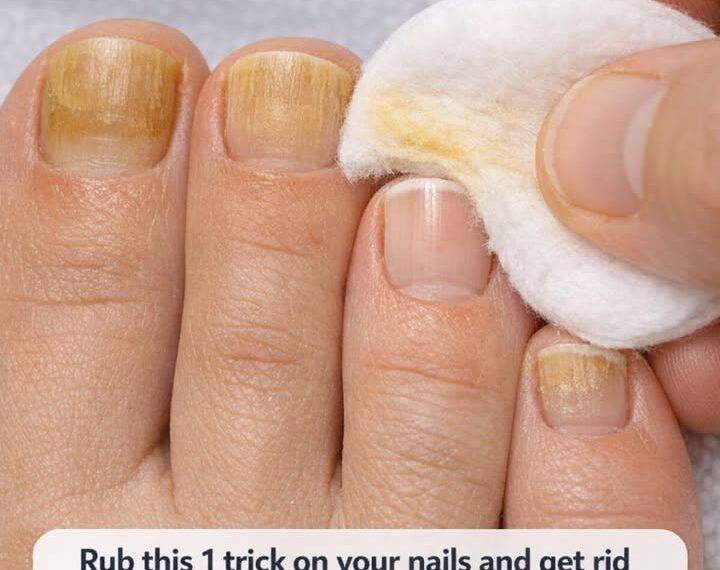
The image above shows yellow, thickened toenails, along with a cotton pad being used to clean the nail surface. While many social media posts promise that a single “miracle trick” can completely restore stained nails overnight, the truth is more nuanced. Some simple home care methods can improve the appearance of surface stains, but persistent yellow nails may require medical treatment if an underlying condition is present.
Here’s everything you should know about yellow nails, what causes them, and the safest ways to restore a healthier appearance.
Why Do Nails Turn Yellow?
Yellow nails can develop for several reasons. Understanding the cause is the first step toward choosing the right treatment.
Common causes include:
- Fungal nail infections
- Frequent use of dark-colored nail polish
- Smoking
- Aging
- Repeated trauma to the nails
- Poor foot hygiene
- Certain skin conditions such as psoriasis
- Some medical conditions, including diabetes or thyroid disorders
In many cases, discoloration is harmless, but if the nail also becomes thick, brittle, painful, or begins separating from the nail bed, it may indicate a fungal infection or another medical condition.
Can You Remove Yellow Stains Naturally?
If the discoloration is caused by nail polish stains or surface buildup, several gentle home remedies may help brighten the nails over time.
However, these methods will not cure a fungal infection or other underlying nail diseases.
1. Baking Soda Paste
Baking soda acts as a mild natural exfoliant.
How to use it:
Mix:
- 1 tablespoon baking soda
- A few drops of water
Apply the paste to the nails.
Leave it on for 10–15 minutes before gently scrubbing with a soft toothbrush.
Rinse thoroughly.
Use once or twice a week.
2. Hydrogen Peroxide and Baking Soda
This popular combination may help reduce superficial staining.
Directions:
Mix:
- 2 tablespoons hydrogen peroxide (3%)
- 2 tablespoons baking soda
Apply carefully to the nail surface.
Leave for 3–5 minutes before rinsing.
Avoid overusing this method, as frequent exposure may dry out the nails and surrounding skin.
3. Lemon Juice
Lemon contains natural acids that can help lighten mild stains.
Simply rub fresh lemon juice onto the nail surface.
Leave for about 10 minutes before rinsing.
Moisturize afterward, as lemon juice can be drying.
4. White Vinegar Soak
Vinegar has mild antifungal properties and may help reduce surface bacteria.
Mix:
- One part white vinegar
- Two parts warm water
Soak your feet for 15–20 minutes.
Dry them thoroughly afterward.
5. Tea Tree Oil
Tea tree oil has been studied for its antifungal properties.
If you suspect a mild fungal infection:
- Clean and dry the nails.
- Apply a drop of diluted tea tree oil daily.
Improvement, if any, may take several months.
Why Are Your Nails Rough?
Rough nail texture may result from:
TO CONTINUE READING THE ARTICLE PLEASE SEE PAGE 2