Should You Cut Everything Back Before Winter?
Not necessarily.
One of the biggest mistakes gardeners make is assuming that every perennial should be cut down as soon as autumn arrives.
Many plants benefit from being left alone until spring.
Standing stems and seed heads can:
- Provide food for birds
- Offer shelter for beneficial insects
- Protect plant crowns from extreme weather
- Add winter structure to the garden
- Help prevent soil from being completely exposed
For this reason, consider dividing your autumn cleanup into two categories: plants that benefit from being cut back and plants that are better left standing.
Watch the Weather Before Pruning
The calendar is only a guideline.
The best time to cut back perennials depends on your local climate, temperatures, frost dates, and the condition of the plants themselves.
If September remains warm and your plants are still green and actively growing, there may be no reason to cut them immediately.
On the other hand, if foliage has already collapsed after frost or disease, cleaning it up may be appropriate.
The goal should be to work with the plant’s natural growth cycle rather than following an exact date.
A Simple Autumn Garden-Cleanup Strategy
Instead of cutting everything at once, walk through your garden and inspect each perennial.
Start by removing:
Dead or diseased foliage — especially foliage showing obvious fungal problems.
Collapsed stems — particularly those lying on the soil.
Spent flowering stems — when you don’t want the plant to produce seeds.
Damaged growth — especially material that could harbor pests or disease.
Then leave healthy plants that provide winter interest or wildlife value.
This approach creates a garden that is both attractive and ecologically useful.
Final Thoughts
Late September can be an excellent time to begin preparing perennial gardens for the colder months, but autumn pruning shouldn’t be treated as a universal rule.
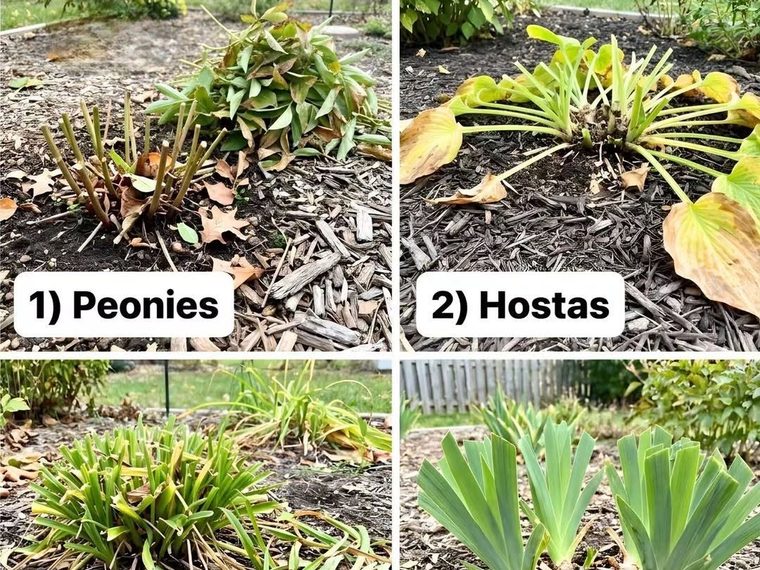
Peonies, hostas, daylilies, bearded iris, phlox, bee balm, catmint, salvia, yarrow, coneflowers, and columbine can all be candidates for autumn cleanup, depending on their condition, species, climate, and your gardening goals.
The most important principle is simple: remove what is dead or diseased, but don’t automatically remove everything that is still useful.
A little selective pruning now can leave your garden cleaner and healthier while still providing winter habitat, food for birds, and visual interest throughout the colder months.