4. What Happens to Your Sink When You Leave Home for Several Weeks?

To understand why people worry about drains during vacations, it helps to look beneath the sink.
The curved pipe below most sinks is not just a design feature. It holds water that creates a seal between the indoor environment and the drainage system.
Here is how it works:

Step 1: Water remains in the trap
After you use the sink, some water stays in the curved section of the pipe. This water helps block sewer gases and can also discourage insects from passing through the plumbing.

Step 2: The sink is left unused
While you are away, water may gradually evaporate from the trap. The process is influenced by indoor temperature, humidity, and how long the fixture remains unused.

Step 3: The water seal may become insufficient
If the trap loses enough water, sewer odors may enter the room. If this happens, the normal remedy is to restore the water seal and investigate any underlying plumbing problem.
Dry plumbing traps are a recognized cause of sewer-like odors in unused buildings. Michigan State University’s Environmental Health and Safety guidance explains that running water into an affected drain can restore the trap’s water barrier.
A normal kitchen sink used shortly before departure will not necessarily develop a dry trap during a typical holiday. The risk depends on the circumstances, and a glass over the drain cannot prevent the water inside the trap from evaporating reliably.
5. The Best Way to Prepare Your Sink Before Going on Vacation

If you want to protect your kitchen while you are away, there are several simple steps that are more dependable than the paper-and-glass trick.
Step 1: Clean the sink and remove food residue
Wash any remaining dishes, remove crumbs, and clean around the drain. Food scraps and grease can contribute to unpleasant odors and attract pests.
Empty the rubbish bin before leaving, and avoid leaving dirty sponges or damp cloths in the sink.
Step 2: Make sure the drain trap contains water
Run water into the sink before you leave. This helps ensure that the plumbing trap contains water and maintains its protective seal.
If you have a rarely used bathroom sink, shower, or floor drain, remember that those fixtures may need attention too.
Step 3: Use a proper drain stopper if you want to cover the opening
A correctly fitting stopper is a more practical option than paper and an inverted glass. It can help keep debris out and provide an additional physical barrier.
However, not every stopper is airtight, and it should not be treated as a guaranteed solution to sewer odors.
Step 4: Check for leaks
Look under the sink for dripping water, damp patches, loose connections, or unpleasant smells.
A small leak can create a damp environment that encourages mold and attracts some household pests. If you discover a persistent sewer odor, have the plumbing checked rather than relying on a cover.
Step 5: Consider how long you will be away
For a short holiday, ordinary cleaning and a functioning water trap are generally sufficient.
For a property that will remain empty for several weeks or months, consider asking a plumber about protecting infrequently used traps from evaporation, particularly in hot or dry conditions.
6. Is the Paper-and-Glass Trick Actually Worth Trying?
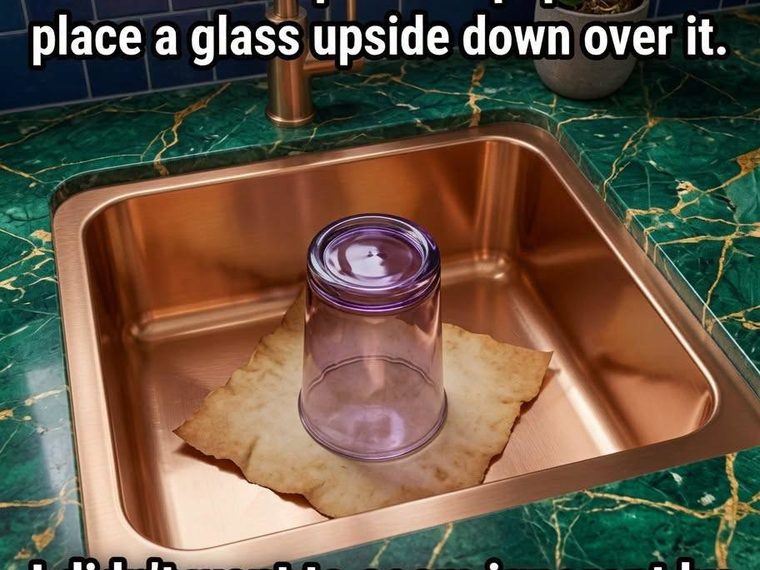
The technique shown in the photograph is inexpensive and easy to understand, but its benefits should not be exaggerated.
| Purpose | Is paper and an upside-down glass effective? |
|---|---|
| Covering the drain opening | May provide a temporary physical cover. |
| Keeping out loose debris | May help, depending on how well it covers the opening. |
| Preventing all insects | No guarantee; insects can enter by other routes. |
| Blocking sewer gases | Not a reliable solution. |
| Preventing water from evaporating inside the trap | Not reliably. |
| Replacing proper plumbing maintenance | No. |
A properly functioning water trap is the primary defense against sewer gases in a typical sink. If you experience persistent sewer smells, gurgling, or signs that the trap is losing its seal, investigate the plumbing instead of assuming that the drain simply needs to be covered.
7. Other Things to Check Before Leaving Your Home Empty

The sink is only one part of preparing a home for a vacation. A few additional precautions can help you avoid unpleasant surprises when you return.
- Clean the refrigerator and discard food that will spoil while you are away.
- Empty the rubbish and recycling bins.
- Check that faucets are completely turned off.
- Inspect visible plumbing for leaks.
- Make sure windows and doors are properly closed.
- Remove standing water from containers where mosquitoes could breed.
- If you will be away for an extended period, consider whether your home needs someone to check it periodically.
You do not need to turn every household task into a complicated ritual. The most useful precautions are those that address genuine risks rather than relying on unverified internet tricks.
Final Thoughts: Why Did the In-Laws Recommend This Unusual Trick?
The paper-and-glass method may have been suggested as a simple way to cover the sink opening and discourage debris or insects from reaching it while the family is away.
However, there is no strong evidence that this particular combination is a proven method for preventing sewer odors or plumbing problems.
The more important lesson is understanding the water trap beneath your sink. That small, curved section of pipe normally prevents sewer gases from entering your home, and keeping it in good working condition is far more useful than relying on a makeshift cover.
If you want to try the trick as a temporary cover, it is best to use a proper drain stopper instead, particularly if the paper could become wet or fall into the drain.
And if you return from vacation to find a persistent sewer smell, run water into the affected fixture to refill the trap. If the odor remains, or you notice gurgling or other plumbing problems, contact a qualified plumber.
Sometimes the most useful household advice is not the strangest trick—it is understanding why the plumbing already installed in your home works in the first place.