4. Should You Use It When Driving Through Dusty Areas?
If you regularly drive on rural roads, construction sites, or dusty roads, this button can be particularly helpful.
When a vehicle travels along an unpaved road, dust particles can become airborne and enter the ventilation system.
The recirculation function reduces the intake of outside air, which can help prevent some of that dust from entering the passenger compartment.
For example, imagine driving along a dry country road during summer.
A vehicle ahead of you creates a large cloud of dust. Instead of allowing your ventilation system to continuously draw in dusty outside air, you can temporarily activate recirculation.
This can make the interior more comfortable.
However, if dust continues entering the cabin, check that the windows are properly closed and that your cabin air filter is in good condition.
A clean cabin filter is an important part of maintaining good air quality inside your vehicle.
5. Why You Should Not Leave the Recirculation Button On All the Time
This is where many drivers make a mistake.
Because recirculation can cool the vehicle faster and reduce unpleasant smells, some people leave it activated permanently.
However, this is not always a good idea.
When you continuously reuse the same air inside the cabin, moisture produced by passengers’ breathing, wet clothing, shoes, and other sources can accumulate.
As humidity increases, condensation may form on the inside of the windows.
You might notice:
- Fog developing on the windshield.
- Moisture appearing on the side windows.
- Reduced visibility.
- An unpleasant or stuffy feeling inside the cabin.
- Unwanted smells becoming more noticeable.
This is particularly common during cold, rainy, or humid weather.
Another consideration is carbon dioxide. Passengers naturally release carbon dioxide when breathing. With limited fresh-air exchange, its concentration inside the vehicle can rise, particularly when several people are travelling together.
That is why switching back to fresh-air mode regularly is a sensible habit.
The important rule is simple: use recirculation when you need it, but do not automatically leave it switched on throughout every journey.
6. What Happens When Your Car Windows Start Fogging Up?
Have you ever been driving on a rainy morning when your windshield suddenly becomes covered in condensation?
This happens when warm, humid air inside the vehicle comes into contact with colder glass surfaces.
The moisture in the air condenses on the windshield, making it difficult to see the road.
Leaving recirculation switched on can make this problem worse because moisture is not being removed efficiently through fresh-air exchange.
Here is what you should do when your windows begin fogging up:
- Switch off air recirculation.
- Select the windshield defrost setting.
- Turn on the air conditioning if available.
- Set the temperature to a comfortable warm level.
- Increase the fan speed until the glass becomes clear.
Why turn on the air conditioning during cold weather?
Because air conditioning does more than cool the air. It also removes moisture from it.
This helps dry the air circulating through the cabin and makes it easier to clear condensation.
In many vehicles, selecting the windshield defrost setting automatically disables recirculation and activates the appropriate ventilation settings.
The Société de l’assurance automobile du Québec (SAAQ) also recommends using air conditioning to remove condensation because conditioned air is drier. SAAQ+1
Never continue driving if your windshield is too foggy to see the road clearly. Pull over safely until visibility is restored.
7. Does the Recirculation Button Help Save Fuel?
Many drivers wonder whether using this button can reduce fuel consumption.
The answer is that it can sometimes help indirectly.
When the outside air is extremely hot, the air-conditioning system has to work harder if it constantly draws in hot air.
Recirculation allows it to reuse air that has already been cooled.
As a result, the system may require less cooling effort to maintain the desired cabin temperature.
This can potentially reduce the energy demanded by the air-conditioning system.
However, the actual effect depends on several factors:
- Outside temperature.
- Your selected cabin temperature.
- Vehicle design.
- Air-conditioning system efficiency.
- Driving conditions.
- Whether the vehicle has automatic climate control.
It is therefore better to think of recirculation as a comfort and cooling-efficiency feature rather than a guaranteed fuel-saving trick.
Also remember that air conditioning itself consumes energy, whether your vehicle uses petrol, diesel, or electricity.
8. Should You Use It During Winter?
During winter, the recirculation button can help warm the passenger compartment more quickly in certain circumstances.
For example, when the air inside your car has already become warm, recirculating it can help maintain a comfortable temperature.
However, winter is also the season when you should be particularly careful about leaving this function activated for long periods.
Cold weather combined with moisture inside the cabin can cause windows to fog up quickly.
This is especially likely when:
- Several passengers are travelling together.
- Your clothes or shoes are wet.
- It is raining outside.
- You are driving during cold mornings.
- Your ventilation system is not removing enough moisture.
For normal winter driving, fresh-air mode is generally a better choice.
If the windows begin fogging, switch off recirculation and use the defrost function.
9. When Should You Turn the Button On and Off? A Simple Guide
Here is a simple reference guide that you can remember whenever you get behind the wheel.
| Driving situation | Recommended setting |
|---|---|
| Very hot summer day | Recirculation ON temporarily |
| Driving behind a smoky truck | Recirculation ON temporarily |
| Heavy traffic with exhaust fumes | Recirculation ON temporarily |
| Driving through a dusty area | Recirculation ON temporarily |
| Normal everyday driving | Fresh air mode |
| Cold or rainy weather | Fresh air mode |
| Windshield fogging | Recirculation OFF |
| Several passengers in the car | Fresh air mode periodically |
| After the cabin has cooled down | Return to fresh air mode |
Remember that some vehicles automatically control this function depending on temperature, humidity, and the selected ventilation mode.
Always check your vehicle’s owner’s manual for model-specific instructions.
10. Does Every Car Have This Button?
Most vehicles equipped with conventional heating and air-conditioning systems have some form of air recirculation control.
You can find it in:
- Small city cars.
- Family sedans.
- SUVs.
- Pickup trucks.
- Older vehicles with manual air conditioning.
- Newer vehicles with automatic climate control.
In some cars, the button is located directly beside the fan-speed controls. In others, it is integrated into a touchscreen or automatic climate-control menu.
Some vehicles also have an automatic recirculation setting that activates when sensors detect certain conditions.
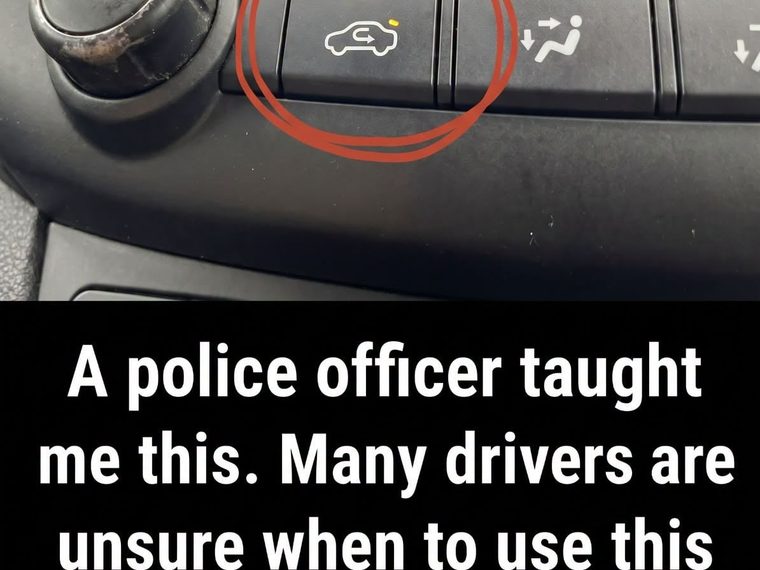
The symbol may look slightly different depending on the manufacturer, but the basic idea remains the same: a vehicle with an arrow circulating inside it.
11. Five Common Mistakes Drivers Make With This Button
Even experienced drivers sometimes misunderstand this feature.
Here are five common mistakes worth avoiding.
Mistake 1: Leaving it activated permanently.
This can contribute to humidity buildup and window fogging. Switch back to fresh-air mode periodically.
Mistake 2: Using it when the windshield is fogging up.
This can make condensation worse. Turn it off and use the defrost function.
Mistake 3: Thinking it completely blocks pollution.
It reduces outside-air intake, but it is not a complete filtration or protection system.
Mistake 4: Forgetting to activate it when passing through strong outside smells.
It can temporarily make the journey more comfortable by limiting outside-air intake.
Mistake 5: Assuming every vehicle operates in exactly the same way.
Some systems automatically change ventilation modes. Always follow the manufacturer’s instructions.
Final Thoughts: One Small Button That Can Make a Big Difference
The air recirculation button may look like a small and unimportant dashboard feature, but understanding how it works can make your driving experience more comfortable.
It can help your air conditioning cool the cabin faster, reduce unpleasant outside smells, and limit the amount of dusty or polluted air entering your vehicle.
However, it is not designed to remain switched on continuously.
For everyday driving, fresh-air mode is generally the best default. Activate recirculation temporarily when you need to cool the vehicle quickly or pass through an area with unpleasant outside air.
And whenever your windows begin fogging up, switch back to fresh air and use the air conditioning or defrost function.
The next time you get into your car, take a look at that little button. Now you know what it does, when to use it, and perhaps more importantly, when to turn it off!