4. Step-by-Step: How to Clean Away Ant Trails Naturally
Before trying any repellent, it is important to remove the invisible chemical trails that guide ants toward food.
You can do this with an ordinary cleaning solution.
What you need
- Warm water.
- A small amount of mild dishwashing liquid.
- A clean microfiber cloth.
- A dry towel.
Instructions
Step 1: Locate the ant trail
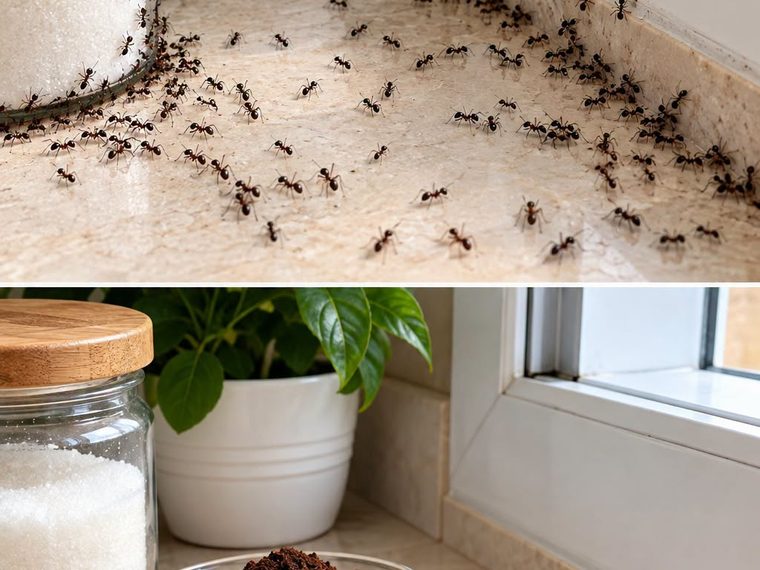
Watch where the ants are travelling. They may follow the edge of a countertop, move along a windowsill or disappear behind a kitchen cabinet.
Step 2: Remove accessible food
Put away sugar, fruit, bread, biscuits and other exposed foods.
Clean up any spills or crumbs that may be attracting the insects.
Step 3: Prepare a mild cleaning solution
Mix warm water with a small amount of dishwashing liquid.
Step 4: Wipe the entire trail
Use the damp cloth to clean the surface where the ants have been walking.
Pay particular attention to corners, edges, windowsills and the areas around food containers.
Step 5: Clean the surrounding area
Do not stop at the visible line of ants. Clean the nearby surfaces where food residue or sticky deposits may have accumulated.
Step 6: Dry the area
Use a clean towel to remove excess moisture.
This method helps remove the scent trails and food residue that attract additional ants. It provides temporary relief, however, and does not eliminate a hidden colony by itself. UMN Extension+2
5. Seven Simple Ways to Stop Ants From Returning
Once you have reduced the ant activity, the next step is to make your home less attractive to them.
These simple habits can significantly reduce the chances of another invasion.
1. Store sugar and sweets in airtight containers
Sugar, honey, syrup and sweet snacks are common attractions for household ants.
Transfer opened packages into tightly sealed containers.
Avoid leaving spoons covered in honey or sugar on the kitchen counter.
Remember to wipe the outside of jars and bottles because even a small sticky residue can attract insects.
2. Never leave dirty dishes overnight
Dirty dishes can contain food particles, sauces, grease and sugary residues.
Try to wash dishes promptly after meals.
If you cannot wash them immediately, rinse away food residues and avoid leaving standing water in the sink.
3. Clean beneath kitchen appliances
Crumbs frequently accumulate in places that are not cleaned every day.
Pay attention to the spaces beneath refrigerators, ovens, microwaves and kitchen cabinets.
A quick vacuuming or thorough wipe can remove food sources that might otherwise attract ants.
4. Take out rubbish regularly
Food waste is another major attraction.
Use a bin with a tightly fitting lid and empty it regularly.
Clean the inside and outside of the bin when food or liquid spills occur.
Avoid leaving fruit peels, sweet packaging and uncovered food scraps inside the kitchen overnight.
5. Fix dripping taps and leaking pipes
Ants do not visit homes only for food. They also need water.
A dripping kitchen tap, damp sponge or leaking pipe can create a convenient water source.
Repair leaks and avoid leaving wet cleaning cloths or standing water around the sink.
6. Seal cracks around windows and doors
Look carefully around:
- Window frames.
- Door thresholds.
- Skirting boards.
- Pipes entering walls.
- Gaps around electrical or plumbing installations.
Seal suitable openings with an appropriate caulk or weatherstripping material.
Do not block ventilation openings or any openings required for appliance safety.
University of Florida and UC Integrated Pest Management guidance both identify sealing entry points as an important part of long-term ant prevention. Ask IFAS+1
7. Keep plants and branches away from exterior walls
Outdoor vegetation can provide ants with convenient routes toward your home.
Trim branches that touch walls, windows or roofs.
Also check potted plants near entrances, as ants may sometimes establish nests in the soil.
Keep the immediate area around the building tidy and avoid excessive accumulations of damp leaves or mulch against the foundation.
6. Other Household Ingredients People Use to Repel Ants
Many people prefer trying household ingredients before purchasing commercial pest-control products.
Some commonly mentioned options include:
White vinegar
A diluted vinegar solution can be used to wipe suitable hard surfaces and temporarily disrupt ant scent trails.
However, vinegar does not eliminate the colony.
Avoid using it on natural stone, marble and other acid-sensitive surfaces.
Lemon
Lemon juice and citrus scents are frequently suggested as natural ant deterrents.
They may temporarily make certain surfaces less attractive, but they are not a reliable treatment for an infestation.
Peppermint
Peppermint oil is another popular household suggestion.
Some essential-oil-based products may discourage or kill insects on direct contact, but their effects are generally limited and do not reliably eliminate hidden ant colonies.
Essential oils can also be harmful to some pets, particularly cats, if used improperly.
Cinnamon
Cinnamon is often recommended because of its strong smell.
However, sprinkling cinnamon around a kitchen should not be considered a proven way to eliminate ants.
Coffee grounds
As discussed earlier, used coffee grounds are popular in gardening discussions, but their effectiveness against household ants has not been established.
The important lesson: Household ingredients may help with cleaning or provide temporary changes in scent, but they should not replace effective colony-control methods.
7. Why You Should Avoid Spraying Every Ant You See
It may feel satisfying to spray a line of ants and watch them disappear immediately.
Unfortunately, this often solves only the visible part of the problem.
Most of the colony may remain hidden, including the queen and developing ants.
If the food source and entry point are still available, new workers can continue arriving.
When using ant bait, spraying the surrounding area can also discourage ants from approaching the bait or contaminate it.
That is why a targeted approach is often more effective:
- Remove the food source.
- Clean areas that are not being baited.
- Identify the entry point.
- Place appropriate bait where ants are active.
- Allow time for the bait to work.
- Seal suitable entry gaps after the baiting process has been completed.
This approach focuses on reducing the colony rather than repeatedly killing individual workers. Entomology+1
8. Special Warning: Not All Ants Are the Same
One reason homemade ant remedies often fail is that different ant species behave differently.
Some ants prefer sweet foods, while others are more interested in proteins, oils or greasy food.
This also means that one type of bait may work well for one species but attract very few ants from another.
For example:
- Sugar-loving ants may be attracted to sweet liquid baits.
- Protein-seeking ants may prefer protein-based or oily baits.
- Carpenter ants may indicate a moisture problem or damaged wood.
- Pharaoh ants can be particularly difficult to control and may require specialist treatment.
If you notice large black ants repeatedly emerging from damp wooden structures, investigate the possibility of a carpenter-ant problem.
If the infestation is extensive, persistent or difficult to identify, professional pest control may be the safest and most effective option. University of Maryland Extension+2
9. How to Protect Your Home Throughout Autumn and Winter
Ant prevention should not be a one-time activity.
A few small habits can help prevent another infestation as the seasons change.
| Prevention task | Recommended frequency |
|---|---|
| Wipe kitchen counters | Daily |
| Store exposed food | After every meal |
| Clean food spills | Immediately |
| Empty rubbish | Regularly |
| Check sinks for leaks | Weekly |
| Inspect windows and doors | Monthly |
| Check for new ant trails | Regularly |
| Inspect potted plants | Weekly |
You can also keep a small note of where ants appear and when activity increases.
This may help you identify a particular entry point or an outdoor source.
The goal is not to eliminate every ant outdoors. Ants play useful ecological roles in gardens, including soil movement and feeding on other insects. The goal is to prevent them from entering your living spaces.
Frequently Asked Questions
Does coffee really keep ants away?
Coffee grounds are often recommended as a homemade ant repellent, but there is no reliable scientific evidence that they can eliminate an infestation or prevent ants from entering a home.
Does sugar attract ants?
Yes. Many common household ants are attracted to sweet foods such as sugar, honey, syrup and fruit. Store these foods in tightly sealed containers.
Why do ants keep coming back after I clean?
Cleaning removes food residues and scent trails, but it may not eliminate the colony. If the nest remains active, new ants can discover the same food source or establish another route into your home.
Does vinegar kill ants?
Vinegar may kill some ants on direct contact depending on concentration, but wiping surfaces with diluted vinegar mainly provides temporary cleaning and scent-trail disruption. It does not reliably eliminate a colony.
What is the best way to eliminate an ant colony?
For many common household ants, a suitable slow-acting commercial bait is one of the most effective options because worker ants can transport it back to the colony. The right product depends on the species and its food preferences.
Can I use baking soda and sugar to kill ants?
This mixture is frequently promoted online, but its effectiveness is not reliably established. It is better to use a properly labelled ant bait rather than relying on an untested homemade poison.
Are ant bait stations safe around pets and children?
They can present risks if opened, damaged or accessed. Choose products designed for the intended location, follow all label instructions and place them where children and pets cannot reach them.
Will ants disappear permanently after using bait?
Bait can eliminate or greatly reduce a colony, but it cannot guarantee that new ants will never enter your home. Other colonies may be nearby, so food hygiene and sealing entry points remain important.
Final Thoughts: The Real Secret to an Ant-Free Home
Finding ants all over your kitchen during autumn can be incredibly frustrating, especially when they seem to return no matter how often you clean.
The coffee grounds shown in the photograph may look like a simple natural solution, but they should not be treated as a proven ant repellent. Sugar, on the other hand, can attract many household ant species, so keeping it securely stored is particularly important.
The most effective approach combines several simple actions:
- Remove food and water sources.
- Clean the surfaces and wipe away ant trails.
- Identify where the ants are entering.
- Use an appropriate slow-acting ant bait when necessary.
- Seal suitable cracks and openings.
- Maintain good kitchen hygiene to prevent future visits.
With patience and consistency, you can greatly reduce ant activity and make your home much less attractive to these unwanted visitors.
Remember: the secret is not simply to chase away the ants you can see. It is to deal with the colony, remove what attracts it and prevent new ants from finding their way inside.