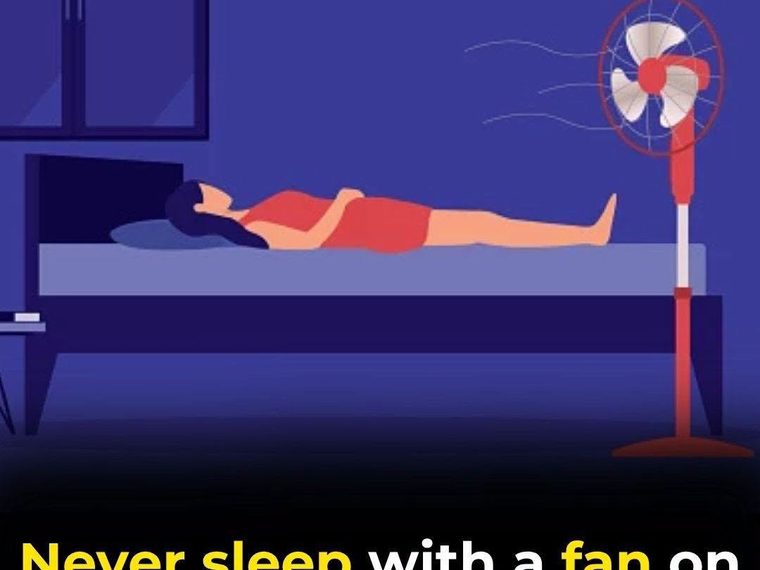
The image above carries a warning that many people have seen on social media: “Never sleep with a fan on in your bedroom!” But is sleeping with a fan really dangerous, or is this another common household myth?
During hot summer nights, a fan can make the difference between tossing and turning for hours and enjoying a comfortable night’s sleep. Millions of people use ceiling fans, pedestal fans, and desk fans to circulate air in their bedrooms. Yet concerns about dry air, allergies, congestion, and the safety of leaving electrical appliances running overnight have led some people to question whether this everyday habit is healthy.
The truth is that sleeping with a fan on is generally safe for healthy people. However, the airflow can aggravate certain symptoms, and the fan itself needs to be clean and in good working condition. Understanding the potential benefits and drawbacks can help you decide how to use one safely.
1. Why do people warn against sleeping with a fan on?

The warning in the image may sound alarming, but it does not reflect the general medical advice. For most healthy adults, sleeping with a fan running is not inherently dangerous. The main concerns are related to the way moving air affects the body and the environment inside the bedroom.
A fan moves air around the room. It does not usually cool the room itself in the same way an air conditioner does. Instead, it helps your body lose heat by increasing airflow over your skin, making you feel cooler.
This can be especially helpful during hot weather, when an overheated bedroom makes it difficult to fall asleep or stay asleep.
According to the Sleep Foundation, using a fan at night is generally considered safe, although some people may experience discomfort from allergens, dryness, or noise.
The important distinction is that a fan may aggravate certain health problems, but that does not mean it is dangerous for everyone.
2. Can sleeping with a fan cause a cold or make you sick?

One of the most common beliefs is that sleeping in front of a fan causes a cold, flu, or other respiratory infection.
However, ordinary airflow from a household fan does not itself cause viral infections. Colds and flu are caused by viruses, not by sleeping in a cool breeze.
Nevertheless, there is a reason some people wake up feeling unwell after sleeping with a fan running all night.
Continuous airflow can dry out the nose, mouth, and throat. This may leave you with a dry throat, a blocked or irritated nose, or discomfort when swallowing. If you already have a respiratory illness or sensitive airways, these symptoms may become more noticeable.
For example, someone who wakes up with a scratchy throat might assume the fan caused an infection. In reality, the discomfort could be due to dryness rather than a new illness.
If you repeatedly experience these symptoms, try moving the fan farther away, reducing its speed, or using a timer.
3. The hidden problem: Dust and airborne allergens

Dust is one of the most important things to consider when using a fan overnight.
Over time, dust, pet dander, pollen, and other particles can accumulate on fan blades and protective grilles. When the fan operates, it can redistribute some of these particles into the surrounding air.
For people with allergies, this may lead to:
- Sneezing or a runny nose.
- Itchy, watery eyes.
- Nasal congestion.
- Coughing or throat irritation.
- Worsening asthma symptoms in susceptible individuals.
The risk depends on the cleanliness of the room, the condition of the fan, and the person’s sensitivity to particular allergens. A fan does not automatically make a room unhealthy, but a dusty fan can make an already irritating environment worse.
How to reduce the problem
- Turn off and unplug the fan before cleaning it.
- Remove dust from the grille and blades according to the manufacturer’s instructions.
- Vacuum the bedroom regularly, especially around the bed.
- Wash sheets and pillowcases regularly.
- Keep pets away from the bed if their dander triggers your allergies.
If your symptoms consistently worsen when the fan is running, try sleeping without it for several nights and see whether you notice a difference.
4. Can a fan dry out your eyes, skin, and throat?
TO CONTINUE READING THE ARTICLE PLEASE SEE PAGE 2