The String of Pearls (Curio rowleyanus, formerly known as Senecio rowleyanus) is one of the most eye-catching trailing succulents you can grow. Its long, cascading stems covered in small, round green “pearls” can turn an ordinary pot into a spectacular living display.
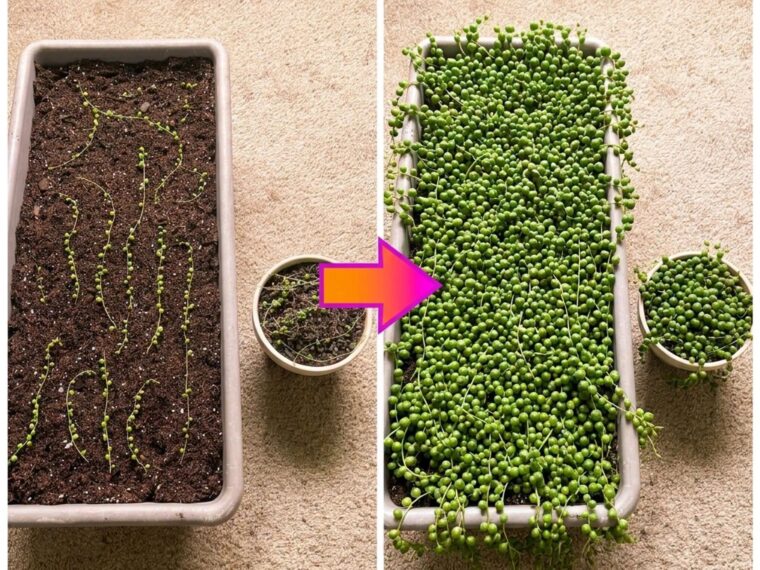
The image captures the dream many plant lovers have: starting with a few delicate strands and eventually growing a thick, overflowing mass of trailing pearls. While that transformation is possible, it requires the right balance of light, watering, soil, and drainage.
One important rule comes before everything else: String of Pearls is a succulent, so overwatering is usually far more dangerous than underwatering.
1. Understanding Your String of Pearls
String of Pearls is a trailing succulent with spherical, water-storing leaves attached to thin stems. The plant can produce long cascading trails and is ideal for hanging baskets, shelves, and elevated planters. In good conditions, its stems can grow impressively long, creating the full cascading effect shown in the image.
Despite its delicate appearance, the plant is adapted to relatively dry conditions. Its biggest enemies are constantly wet soil, poor drainage, and insufficient light.
2. Light: The Secret to Full, Healthy Growth
Light is one of the most important factors in keeping a String of Pearls dense and attractive.
Place your plant somewhere with:
- Bright indirect light.
- A few hours of gentle direct sunlight if the plant tolerates it.
- Protection from intense, scorching midday sun.
A bright windowsill can work well, especially if the strongest afternoon sun is softened by a sheer curtain. Too little light can cause the stems to become weak, stretched, and sparse. The pearls may also become smaller and the plant may lose its full appearance.
A good location might be:
- Near an east-facing window.
- Close to a bright south- or west-facing window with filtered light.
- Under a suitable grow light if natural light is limited.
If you move the plant into stronger sunlight, do it gradually. A sudden change from low light to intense sun can scorch the leaves.
3. How Often Should You Water It?
There is no perfect calendar schedule that works for every home.
Instead of saying, “Water every seven days,” check the soil first.
Water thoroughly only after the potting mix has dried sufficiently. String of Pearls should not sit in constantly damp soil. During winter or periods of slower growth, it generally needs even less water.
Signs your plant may need water:
- The pearls begin to look slightly less plump.
- Some leaves appear wrinkled or shriveled.
- The potting mix is dry.
Signs you may be watering too much:
- Pearls become soft or mushy.
- Stems near the soil turn brown or soft.
- The plant starts collapsing from the crown.
- The soil remains wet for a long time.
Root and stem rot caused by excessive moisture is one of the most common reasons String of Pearls plants fail.
The best watering method
When it is time to water:
- Water the soil thoroughly.
- Allow excess water to drain completely.
- Never leave the pot standing in water.
- Wait until the growing medium dries appropriately before watering again.
4. Choose the Right Soil
Heavy garden soil is not suitable for this plant.
String of Pearls needs a fast-draining growing medium that allows excess moisture to escape quickly.
A cactus or succulent potting mix is a good starting point. You can improve drainage further with materials such as:
- Perlite.
- Pumice.
- Coarse horticultural grit.
Good drainage is essential because the plant’s delicate root system can be damaged if it remains surrounded by wet soil for too long.
5. The Right Pot Makes a Difference
Always choose a pot with drainage holes.
A container without drainage greatly increases the risk of overwatering because excess water has nowhere to escape.
Since String of Pearls does not develop an enormous root system, an excessively large pot can also stay wet longer than necessary. A relatively shallow container may be a better choice than an oversized pot.
Terracotta pots can also be useful because their porous material can help the potting mix dry more quickly.
6. Temperature and Humidity
String of Pearls generally prefers warm indoor conditions and does not like freezing temperatures or cold drafts.
The RHS recommends keeping these plants in warm conditions and protecting them from temperatures below about 10°C (50°F). They also generally prefer lower humidity rather than constantly damp air.
Keep your plant away from:
- Cold winter drafts.
- Air-conditioning vents.
- Radiators or intense heat sources.
- Frost.
7. How to Make Your String of Pearls Fuller
The lush tray shown on the right side of the image represents what many gardeners want: a dense, overflowing mass of green pearls.
One of the best ways to create a fuller-looking plant is through propagation.
As the plant grows, you can take healthy stem cuttings and root them back into the same pot. Over time, this helps fill empty areas and creates a thicker plant.
Simple propagation method
TO CONTINUE READING THE ARTICLE PLEASE SEE PAGE 2