Simple propagation method
- Choose a healthy stem.
- Cut a section several inches long.
- Remove a few pearls from the lower section of the stem.
- Lay the exposed nodes gently on top of a lightly moist, well-draining potting mix.
- Ensure the nodes make contact with the soil.
- Keep the medium lightly moist while roots establish, without soaking it.
String of Pearls can develop roots from stem nodes, making it relatively easy to multiply when healthy. Propagation is generally recommended during active growth, such as spring and summer.
A simple trick for a fuller pot
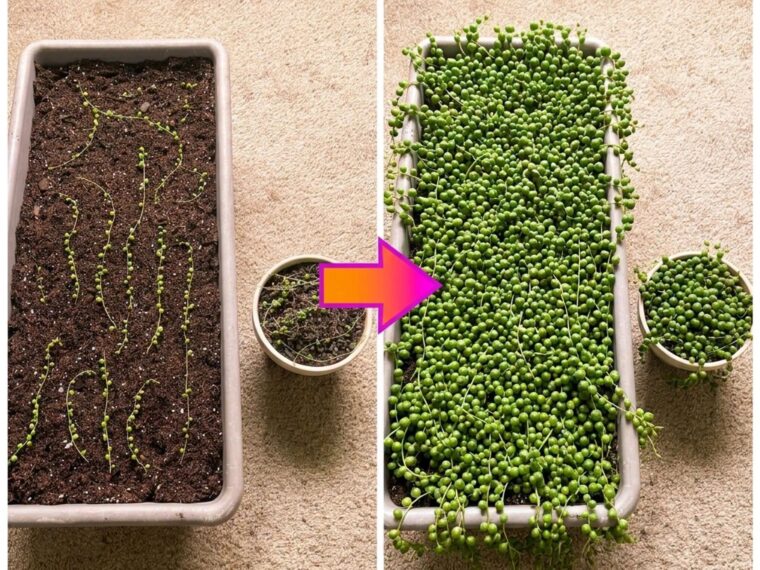
Instead of planting just one cutting, arrange several healthy strands across the surface of the soil.
This encourages growth from multiple points and can eventually create the thick, dense appearance shown in the image.
8. Pruning: Don’t Be Afraid to Trim
If some stems become long, weak, or sparse, you can prune them.
Trimming weak or straggly stems can encourage a neater appearance and gives you healthy material for propagation.
Do not throw away healthy cuttings.
Use them to start new plants or place them back into the original pot to make it fuller.
9. Fertilizing Your String of Pearls
String of Pearls does not need heavy feeding.
During active growth, you can use a diluted fertilizer suitable for succulents or houseplants, following the product instructions.
Avoid overfertilizing. Too much fertilizer can cause problems and does not guarantee faster or healthier growth.
A light feeding during the growing season is generally sufficient. The University of Wisconsin Extension notes that plants can be fertilized lightly in spring.
10. Common Problems and How to Fix Them
Problem: The pearls are shriveling
Possible causes include:
- The soil has become too dry.
- The plant has been left without water for too long.
- The roots are damaged.
- The plant is under stress from unsuitable conditions.
Check the soil before watering. If it is dry, give the plant a thorough watering and allow excess water to drain.
However, remember that shriveling does not always mean underwatering. A plant with damaged roots may also look dehydrated because the roots are unable to function properly.
Problem: The pearls are soft or mushy
This is often a warning sign of excessive moisture and possible rot.
Stop watering and inspect the plant.
Remove badly damaged stems and check whether healthy sections can be saved for propagation.
Constantly soggy soil is especially dangerous for String of Pearls.
Problem: The stems are long and sparse
Your plant may not be receiving enough light.
Move it gradually to a brighter location.
You can also prune the stretched stems and propagate healthy sections to create a fuller plant.
Problem: The plant is dying near the center
The crown of the plant can be particularly vulnerable if moisture remains trapped around the stems near the soil surface.
Check for:
- Overwatering.
- Dense, poorly draining soil.
- A pot without drainage holes.
If rot is spreading, save healthy trailing sections by taking cuttings and rooting them in fresh, well-draining medium.
11. Repotting String of Pearls
String of Pearls generally does not need frequent repotting.
Repot only when necessary, such as when:
- The soil has broken down.
- Drainage has become poor.
- The plant has outgrown its container.
- You need to remove rotting roots and replace contaminated soil.
Handle the delicate stems carefully, as they can break easily.
Choose a pot only slightly larger than the existing root ball and always use fresh, free-draining succulent mix.
12. Can String of Pearls Flower?
Yes!
Under favorable conditions, Curio rowleyanus can produce small white or cream-colored flowers. The RHS describes them as paintbrush-shaped and fragrant.
However, flowering indoors may not happen regularly. Your main goal should be to provide consistent, healthy growing conditions rather than forcing the plant to bloom.
13. Is String of Pearls Safe Around Pets and Children?
This is an important point.
String of Pearls should be kept out of reach of children and pets. The RHS notes that the sap may irritate the skin and that ingestion can cause stomach upset; its growing guide also advises keeping the plant away from children and pets.
A hanging planter is therefore not only attractive—it can also help keep the plant safely out of reach.
A Quick String of Pearls Care Checklist
For a healthy and lush plant, remember:
☀️ Light: Bright indirect light with some suitable gentle sun.
💧 Water: Allow the potting mix to dry sufficiently between waterings.
🪴 Soil: Fast-draining cactus or succulent mix.
🚰 Drainage: Always use a pot with drainage holes.
🌡️ Temperature: Keep warm and protect from cold and frost.
✂️ Pruning: Trim weak stems and reuse healthy cuttings.
🌱 Propagation: Lay healthy stem nodes on suitable potting mix to create new plants.
🐾 Safety: Keep away from pets and children.
Final Thoughts
A spectacular String of Pearls plant does not usually happen overnight. The full, overflowing appearance shown in the image is the result of healthy growth, good light, careful watering, and often the propagation of multiple stems to fill the container.
The biggest mistake is usually treating it like an ordinary thirsty houseplant. Remember that every little green pearl stores water. Give your plant bright light, excellent drainage, and allow the growing medium to dry appropriately before watering again.
With patience—and by propagating healthy stems back into the pot—you can transform a few delicate strands into a lush, cascading curtain of green pearls.