Examples include:
- Cetylpyridinium chloride
- Essential oils
- Chlorhexidine (professional use)
Studies show these mouthwashes can reduce plaque accumulation and support gum health.
Less plaque means less material available to become tartar.
Hack #5: Drink More Water
Water may be one of the simplest oral health tools available.
Benefits include:
- Rinsing away food particles
- Supporting saliva production
- Reducing bacterial concentration
- Helping neutralize acids
Saliva naturally protects teeth and helps prevent plaque accumulation.
Staying hydrated supports this protective mechanism.
Hack #6: Reduce Sugary and Sticky Foods
Bacteria thrive on sugars.
Frequent consumption of:
- Candy
- Soft drinks
- Pastries
- Sticky snacks
provides fuel for plaque-producing bacteria.
Studies consistently demonstrate that lower sugar intake contributes to better oral health and reduced plaque accumulation.
Hack #7: Schedule Regular Professional Cleanings
This is the most important “hack” of all.
Once tartar hardens, professional removal is usually necessary.
Dental hygienists use specialized instruments to remove calculus safely without damaging enamel.
Professional cleanings:
- Remove tartar deposits
- Reduce gum inflammation
- Improve oral hygiene
- Lower the risk of periodontal disease
Most dentists recommend cleanings every six months, though some patients may need more frequent visits.
Popular Home Remedies: Fact vs. Fiction
Many social media posts promote home tartar-removal methods.
Let’s examine some common claims.
| Method | Scientific Support |
|---|---|
| Baking soda | Helps remove stains, limited tartar effect |
| Oil pulling | Limited evidence |
| Vinegar | Can damage enamel |
| Hydrogen peroxide | May reduce bacteria when used properly |
| Scraping with tools | Not recommended |
| Lemon juice | Can erode enamel |
Dental professionals generally warn against aggressive home scraping because it can:
- Damage enamel
- Injure gums
- Increase sensitivity
- Cause infections
What Research Says About Tartar Prevention
Modern dental research consistently emphasizes prevention over removal.
Studies indicate the most effective strategy combines:
- Twice-daily brushing
- Daily flossing
- Professional cleanings
- Fluoride use
- Healthy diet choices
No single miracle product eliminates tartar completely.
Long-term consistency produces the best results.
Signs You Should See a Dentist
Seek professional evaluation if you notice:
- Bleeding gums
- Persistent bad breath
- Loose teeth
- Gum recession
- Visible tartar buildup
- Tooth sensitivity
Early intervention can prevent more serious dental problems later.
The Biggest Myth About Tartar Removal
The internet is filled with videos showing instant tartar removal using household tools.
The reality is that hardened calculus is extremely difficult to remove safely without professional equipment.
What looks easy on social media can sometimes lead to:
- Gum injury
- Enamel damage
- Infection
- Increased dental costs
Dentists and hygienists spend years learning proper scaling techniques for a reason
Final Thoughts
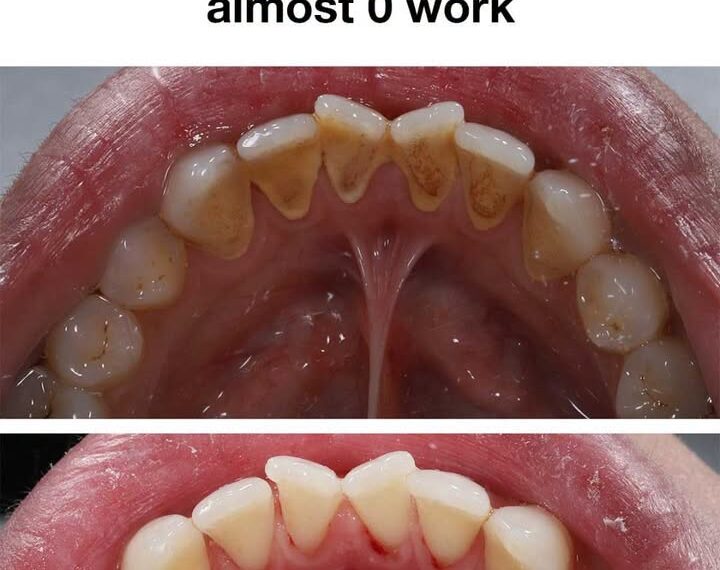
The dramatic before-and-after image highlights a very real dental issue: tartar buildup can accumulate quickly and affect both appearance and oral health. While there are several scientifically supported ways to prevent tartar formation—including proper brushing, flossing, tartar-control toothpaste, and regular professional cleanings—there is no proven home hack that can safely remove large amounts of hardened tartar once it has formed.
The most effective strategy is prevention. Consistent daily oral hygiene, combined with routine dental visits, remains the gold standard supported by decades of dental research. If your teeth resemble the upper image, the safest and most effective solution is to schedule a professional cleaning and let trained dental professionals restore your smile safely.