5. Can Yolk Color Tell You Whether a Chicken Is Healthy?

No. Yolk color alone cannot reliably determine a chicken’s health.
A healthy hen can produce eggs with pale, golden, or deep orange yolks. The shade largely reflects dietary pigments, while a chicken’s health depends on many other factors, including adequate nutrition, access to clean water, appropriate housing, disease prevention, and veterinary care.
Likewise, a dark orange yolk does not rule out disease or poor husbandry.
When assessing the health of a flock, poultry keepers look at broader indicators, such as:
- Normal activity and alertness.
- Consistent eating and drinking.
- Healthy feathers and body condition.
- Normal breathing and movement.
- Consistent egg production, taking the hen’s age and seasonal conditions into account.
- The absence of unusual illness or mortality.
Changes in egg production, shell quality, or other egg characteristics may sometimes signal a nutritional or health problem, but they need to be assessed alongside the hen’s overall condition.
For anyone buying eggs, it is more useful to focus on safe handling, appropriate storage, shell condition, and reliable sourcing than to use yolk color as a health test.
6. What About the Egg White? Does It Reveal Freshness?

Although the image focuses on yolk color, the egg white can also provide useful clues about an egg’s condition.
A freshly laid egg often has a relatively thick, cohesive white that holds the yolk in place. As an egg ages, its internal structure gradually changes, and the white may become thinner and spread more widely across a plate.
However, appearance is not a definitive safety test. An egg can look normal and still contain harmful bacteria.
Here are a few things to keep in mind:
- A thick egg white: Often indicates that the egg retains good internal quality.
- A thinner egg white: Can be associated with aging, although other factors influence consistency.
- An intact yolk: Is common in eggs with good internal quality, but it does not guarantee freshness.
- An unusual smell: Is a reason to discard the egg.
Egg freshness and egg safety are not exactly the same thing. Even a fresh-looking egg can carry Salmonella, so safe storage and thorough cooking remain important.
7. How to Choose Good-Quality Eggs for Your Family

Rather than searching for the darkest yolk, focus on the factors that genuinely help you select and handle good-quality eggs.
Check the shells
Choose eggs with clean, intact shells. Avoid eggs that are cracked or leaking, as cracks can allow bacteria to enter.
Pay attention to storage
Follow the storage instructions on the packaging and the guidance in your country. In places where eggs are sold refrigerated, keep them refrigerated. Avoid large temperature fluctuations that may cause condensation on the shell.
Check the date and source
Look at the best-before date or other date information provided on the packaging. Buy eggs from reputable sellers who handle and store them appropriately.
Cook eggs safely
Cook eggs until both the white and yolk are firm when food safety is especially important. Dishes containing eggs should be cooked thoroughly, and foods made with raw or lightly cooked eggs should use pasteurized eggs when appropriate.
Young children, pregnant people, older adults, and people with weakened immune systems are particularly vulnerable to serious foodborne illness.
Consider nutrition rather than appearance alone
Eggs provide high-quality protein and several important nutrients. If you are looking for eggs with particular nutritional characteristics, such as increased omega-3 content, check credible product information rather than assuming a darker yolk is better.
8. A Simple Experiment You Can Try at Home

The next time you buy eggs from different sources, you can compare their yolks yourself.
- Crack each egg into a separate clean white plate.
- Observe the yolk color, shape, and consistency.
- Compare the thickness of the egg whites.
- Check the packaging to see whether the eggs come from different producers or feeding systems.
- If the producers provide information about the hens’ diets, compare it with the yolk colors you observe.
You may notice that eggs from different sources have visibly different yolks. This is a useful demonstration of how much natural variation exists in eggs.
However, this experiment cannot establish which egg is healthier or safer. To determine nutritional differences, laboratory analysis would be needed.
9. So, Which Egg Is the Healthiest: Number 1, 2, or 3?
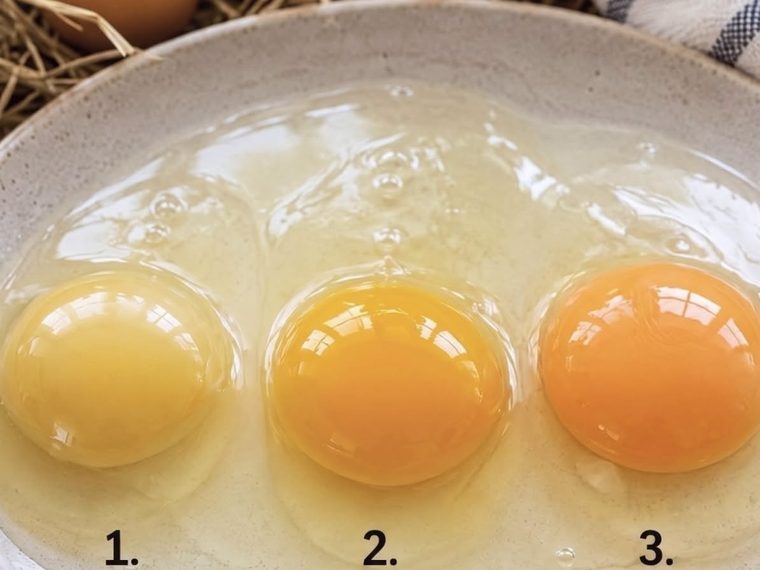
Looking at the three eggs in the image, number 1 has the palest yolk, number 2 has a golden-orange yolk, and number 3 has the deepest orange shade.
If we are judging only by color, number 3 contains the strongest visual indication of a higher concentration of certain dietary pigments. But that is all we can reasonably conclude from the picture.
We cannot determine which hen was healthiest, which egg contains the most nutrients, or which egg is the safest to eat simply by comparing these three yolks.
The correct answer is that all three could come from healthy chickens. The color difference is not a reliable ranking of egg quality.
A pale yolk is not automatically inferior, and a dark orange yolk is not automatically superior. The hen’s diet, the egg’s nutritional composition, its handling, and its storage all matter.
Final Thoughts: Don’t Judge an Egg by Its Color
Egg yolk color is fascinating because it gives us a glimpse into the relationship between a hen’s diet and the food she produces. The yellow and orange pigments found in yolks can tell us something about the ingredients the hen has consumed.
But color is only one characteristic of an egg, and it should not be mistaken for a complete measure of health or quality.
The next time you crack an egg and see a pale yellow yolk, do not assume that something is wrong. And when you find a beautiful deep orange yolk, enjoy its appearance without assuming that it is automatically healthier.
Choose eggs from reliable sources, store them correctly, and cook them safely. These practices matter far more for food safety than whether the yolk is pale yellow or deep orange.
What do you think?
When you crack open an egg, which yolk color do you usually see: pale yellow, golden yellow, or deep orange?
Have you noticed differences between supermarket eggs and eggs from backyard chickens? Share your experience in the comments!