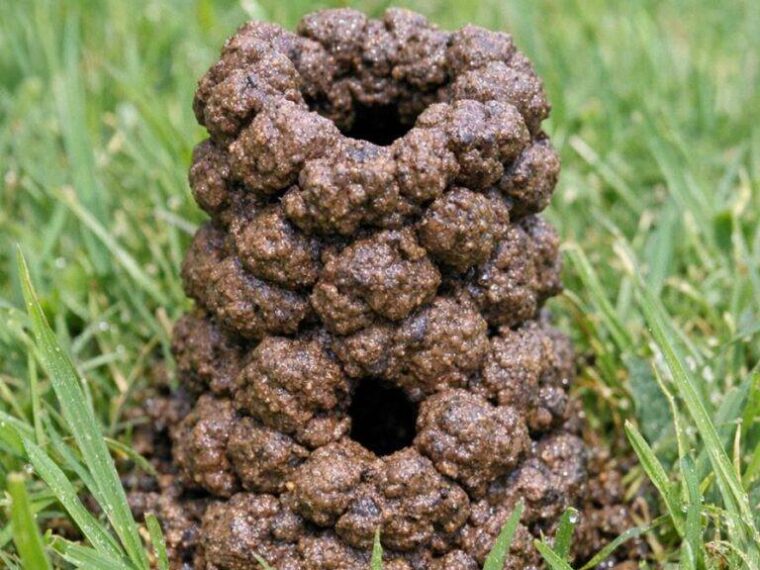
You walk outside in the morning and spot something unusual in your yard: a small tower made of mud balls, about 4 inches tall, with a hole in the center. It looks almost handmade — like a tiny clay chimney rising from the grass.
So… what made it?
The answer is fascinating. In most cases, this strange mud structure is the work of burrowing crayfish, sometimes called chimney crayfish.
🦞 The Real Builder: Burrowing Crayfish
The most common cause of these mud towers is the Crayfish, particularly burrowing species such as the Devil crayfish.
These freshwater crustaceans don’t just live in streams and ponds — some species live underground in moist soil, especially in lawns, fields, and near ditches.
Why Do They Build Mud Towers?
Burrowing crayfish dig vertical tunnels deep into the soil to reach groundwater. As they excavate, they push wet mud to the surface.
Instead of scattering it randomly, they stack the mud into small rounded pellets, forming a chimney-like tower around the burrow entrance.
The chimney serves several purposes:
- Prevents flooding of the burrow
- Improves airflow inside the tunnel
- Marks the entrance of the burrow
- Provides structural reinforcement
The central hole you see leads straight down into the crayfish’s underground tunnel system — which can extend up to 3 feet deep.
Where Are These Common?
Burrowing crayfish are found across North America, especially in:
- The Midwest
- The Southeastern United States
- Areas with heavy clay soil
- Lawns with poor drainage
They are most active after heavy rainfall when the soil is moist and easier to dig.
How Big Are These Burrows?
Research on burrowing crayfish shows:
- Chimneys are usually 2–6 inches tall
- Burrows may extend 1–3 feet underground
- Some systems include side chambers for resting or egg-laying
Unlike termites or ants, crayfish burrows are solitary — one chimney usually equals one crayfish.
🔬 What Do Studies Say?
Scientific research on burrowing crayfish has revealed:
- They play a major role in soil aeration
- They improve water drainage in compacted soils
- Their burrowing helps cycle nutrients
- They increase soil biodiversity
In ecological terms, crayfish are considered “ecosystem engineers” because they physically modify their environment in ways that benefit other organisms.
A study published in wetland ecology research found that crayfish burrows can significantly influence groundwater movement and plant growth patterns.
Is It Harmful to Your Lawn?
TO CONTINUE READING THE ARTICLE PLEASE SEE PAGE 2