👁️ 5. Can It Improve Your Eyesight?
The phrase “improve eyesight” is too strong.
Eating nutritious foods can support the nutrients needed for normal eye function, but that is different from correcting vision.
For example, a balanced diet supplies nutrients involved in maintaining normal tissues and protecting cells from oxidative stress.
However, if someone has:
- blurred vision;
- difficulty seeing at night;
- sudden changes in vision;
- eye pain;
- flashes or floaters;
- loss of vision;
a smoothie should not be used as a substitute for an eye examination.
Vision problems can have many causes, including refractive errors, cataracts, glaucoma, retinal conditions and other eye diseases.
🍍 6. Pineapple Adds Vitamin C and Flavor
Pineapple makes the smoothie naturally sweet and provides vitamin C and other nutrients.
It also contains bromelain, a group of enzymes naturally present in pineapple.
Bromelain has been studied for various biological effects, but it is important not to turn preliminary or specific research findings into claims that pineapple smoothies can treat diseases.
For everyday eating, pineapple is simply a nutritious fruit that can make the smoothie much easier to enjoy.
🍋 7. Lime Gives the Smoothie a Vitamin C Boost
Lime adds acidity, freshness and vitamin C.
Its acidity also balances the sweetness of pineapple and beetroot.
If you find the smoothie too tart, you can reduce the amount of lime rather than adding a large amount of sugar.
🌿 8. The Combination Can Be More Useful Than Any Single Ingredient
One of the strengths of this recipe is that it combines several different foods.
Instead of focusing on one “miracle ingredient,” think about what the entire smoothie contributes:
| Ingredient | Nutritional contribution |
|---|---|
| Beetroot | Folate, potassium, nitrates and plant compounds |
| Kiwi | Vitamin C, fiber, potassium and folate |
| Pineapple | Vitamin C, carbohydrates and plant compounds |
| Lime | Vitamin C and flavor |
| Water | Hydration |
This is a much more realistic way to think about healthy smoothies.
There isn’t one ingredient responsible for all the supposed benefits.
💪 Could It Give You More Energy?
Some people feel more energetic after drinking a fruit-based smoothie.
However, this doesn’t necessarily mean that the smoothie is “increasing oxygen in your blood” or curing anemia.
The fruits provide carbohydrates, which the body can use as an energy source.
If your fatigue is persistent, however, don’t automatically assume you need a smoothie.
Persistent tiredness can have many causes, including:
- insufficient sleep;
- inadequate calorie intake;
- iron deficiency;
- vitamin deficiencies;
- thyroid problems;
- infections;
- chronic illness;
- stress.
If fatigue continues or is significant, discussing it with a healthcare professional is more appropriate than relying on a particular drink.
❤️ Could Beetroot Support Circulation?
Beetroot’s naturally occurring nitrates have attracted considerable scientific interest.
The body can convert dietary nitrate into nitric oxide, which participates in processes involving blood vessels.
Some research has found that nitrate-rich foods can influence blood pressure or exercise performance in certain circumstances.
But that doesn’t mean drinking beetroot juice or a beetroot smoothie replaces prescribed blood-pressure medication.
If you take medication for blood pressure or another cardiovascular condition, don’t change your treatment based on social-media health claims.
🌱 A Better Way to Think About “Detox”
Many online smoothie recipes are advertised as “detox drinks.”
Your body already has organs that perform detoxification functions, particularly the liver and kidneys.
A smoothie doesn’t magically remove toxins from your bloodstream.
What a nutrient-rich smoothie can do is provide:
- fluids;
- vitamins;
- minerals;
- fiber;
- plant compounds;
- fruit and vegetable servings.
That is a much more scientifically reasonable description.
🥤 How to Make the Smoothie
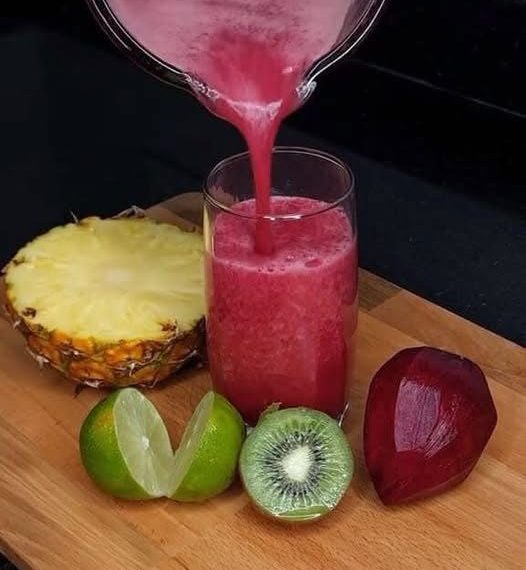
Here’s a simple version inspired by the photograph.
Ingredients
- 1 small beetroot
- 1 kiwi
- 1 cup pineapple chunks
- Juice of ½ lime
- ½–1 cup cold water
- A few ice cubes, optional
Instructions
Step 1: Wash the produce thoroughly.
Step 2: Peel the kiwi and beetroot if necessary.
Step 3: Cut the beetroot and pineapple into smaller pieces.
Step 4: Add the beetroot, kiwi and pineapple to a blender.
Step 5: Add the lime juice.
Step 6: Pour in approximately ½ cup of water.
Step 7: Blend until smooth.
Step 8: Add more water if you prefer a thinner drink.
Step 9: Add ice if desired and blend briefly again.
⚠️ One Thing to Know About Beetroot
Don’t be surprised if your urine or stool becomes pinkish or reddish after eating beetroot.
This phenomenon is sometimes called beeturia when it occurs in urine.
It can look alarming, but beetroot pigments can cause this color change.
However, if you see blood in your urine or stool and you aren’t sure whether beetroot explains it, don’t automatically assume it is harmless—seek medical advice.
Is It Better to Drink It Every Day?
Not necessarily.
There is nothing magical about drinking this exact combination every morning.
A healthier approach is to vary your fruits and vegetables throughout the week.
You could alternate this smoothie with other nutritious combinations containing foods such as:
- berries;
- oranges;
- spinach;
- carrots;
- plain yogurt;
- oats;
- bananas;
- avocado;
- other seasonal fruits.
Variety helps you obtain different nutrients.
🥤 Whole Fruit or Smoothie?
Smoothies can be a convenient way to consume fruits and vegetables.
But there is an important difference between a smoothie made from whole produce and a commercial fruit drink.
A homemade smoothie retains much of the fruit’s fiber, especially when you blend the whole fruit rather than extracting only the juice.
For example, blending a kiwi is different from simply drinking strained kiwi juice.
Fiber can contribute to fullness and digestive health.
Don’t Add Large Amounts of Sugar
The ingredients in the photograph already contain naturally occurring sugars.
Pineapple and kiwi provide plenty of sweetness and acidity, while beetroot adds an earthy flavor.
There’s generally no nutritional need to add large amounts of:
- white sugar;
- syrups;
- sweetened condensed milk;
- sugary juice.
If you want a sweeter smoothie, adjusting the amount of pineapple or using a ripe banana can change the flavor.
Who Should Be Careful?
Although these ingredients are common foods, individual circumstances matter.
People with certain medical conditions or dietary restrictions may need to modify smoothie ingredients.
For example, people who have been advised to limit potassium intake because of certain kidney conditions should discuss dietary changes with their healthcare professional.
People taking medications should also avoid assuming that a “natural” drink is automatically appropriate in unlimited quantities.
And anyone with a diagnosed anemia should identify the cause rather than attempting to treat it exclusively through food.
What If You Actually Have Anemia?
If you suspect anemia, the useful first step is medical evaluation.
A healthcare professional may recommend blood tests such as a complete blood count and, depending on the situation, tests related to iron status, vitamin levels or other causes.
Treatment depends on the diagnosis.
For iron-deficiency anemia, for example, a healthcare professional may recommend dietary changes and/or iron supplementation while investigating why the deficiency occurred.
This is especially important when anemia is caused by blood loss or another underlying condition.
A Healthier Headline for This Recipe
Instead of:
“Take This Daily Smoothie, Improve Eyesight, Eliminate Anemia and More”
a more accurate headline would be:
“This Colorful Beetroot, Kiwi and Pineapple Smoothie Is Packed With Vitamin C and Plant Nutrients”
Or:
“Try This Beetroot, Kiwi and Pineapple Smoothie for a Nutrient-Rich Start to Your Day”
These headlines are still attractive without promising medical results that the recipe cannot guarantee.
Frequently Asked Questions
Can this smoothie cure anemia?
No. It may contribute useful nutrients, including vitamin C, but anemia has many causes and may require specific medical treatment.
Can it improve eyesight?
A nutritious diet contributes to overall eye health, but this smoothie has not been shown to restore vision or treat eye disease.
Is beetroot good for the body?
Beetroot is a nutritious vegetable containing folate, potassium, nitrates and other plant compounds. It can be part of a balanced diet.
Why add lime or kiwi?
Both provide vitamin C. Vitamin C can improve the absorption of non-heme iron from plant foods.
Can I drink this smoothie every morning?
For most healthy people, the ingredients can be part of a balanced diet. However, you don’t need this exact smoothie every day to have a healthy diet. Variety is valuable.
Should I drink it instead of taking iron supplements?
No. If a healthcare professional has diagnosed iron-deficiency anemia and recommended iron treatment, don’t replace the treatment with a smoothie without discussing it with them.
Can I make it without beetroot?
Absolutely. You can make a fruit smoothie using pineapple, kiwi, lime and other fruits, although removing beetroot will change the nutritional profile and color.
Final Thoughts
The bright red smoothie in the photograph is a nutrient-rich combination of fruits and vegetables, particularly because it contains vitamin-C-rich kiwi, pineapple and lime alongside beetroot.
Vitamin C is especially relevant because it can help the body absorb non-heme iron from plant foods.
But it’s important to separate nutrition from medical treatment.
This smoothie cannot be guaranteed to eliminate anemia, and there is no good basis for claiming that it will restore eyesight. Those conditions can have different causes and may require professional evaluation.
The most useful takeaway is much simpler:
Enjoy the smoothie as part of a varied, balanced diet—not as a miracle cure.
And if you have persistent fatigue, diagnosed anemia, or changes in your vision, the right next step is to find and address the underlying cause rather than relying on a single food or drink.