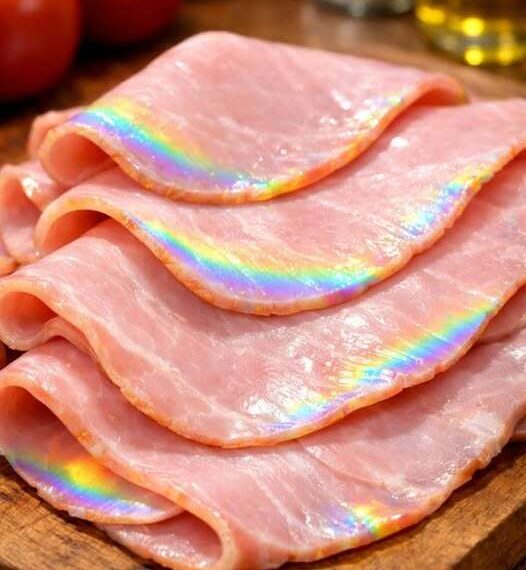
If you’ve ever opened a pack of deli ham and noticed a strange rainbow or iridescent shimmer on the surface, you’re not alone—and you’re probably wondering if it’s still safe to eat. The good news is that this colorful sheen is usually harmless. But in some cases, visual changes can signal spoilage. Understanding the difference is key to avoiding food waste while protecting your health.
Let’s break down what that rainbow effect really means, why it happens, and how to tell if your ham is safe or should go in the trash.
Why Does Ham Sometimes Look Rainbow-Colored?
That shiny, oil-slick appearance is called iridescence. It’s a physical phenomenon, not a chemical one, and it has nothing to do with artificial dyes or contamination.
The Science Behind It
Iridescence happens when:
- Light hits the surface of the meat
- The light reflects off microscopic layers of muscle fibers
- Different wavelengths bounce back at different angles
This creates the rainbow shimmer effect, similar to what you see on soap bubbles or butterfly wings.
What Causes It in Meat?
- Thin slicing (common in deli meats)
- Smooth, moist surfaces
- Uniform muscle fibers
- Strong overhead lighting
In short: It’s how light behaves—not a sign of rot.
According to food science research, iridescence is common in:
- Ham
- Roast beef
- Turkey
- Salmon
- Tuna
Is Rainbow Ham Safe to Eat?
In Most Cases: YES
If the ham:
- Smells normal
- Feels firm, not slimy
- Is within the expiration date
- Has been stored properly (below 4°C / 40°F)
Then the rainbow effect is purely visual and harmless.
The USDA and food safety experts confirm that iridescence does not indicate spoilage and does not affect nutritional value.
When Should You Worry?
While iridescence itself is safe, there are real signs of spoilage you should never ignore.
Throw It Away If You Notice:
TO CONTINUE READING THE ARTICLE PLEASE SEE PAGE 2