Why Tomato Splitting Happens More Than You Think
You walk into your garden, excited to harvest your tomatoes… and then you see it—cracks running across the surface of your beautiful, ripening fruit. It feels like all your hard work just went to waste. But here’s the truth: tomato splitting is incredibly common, and most gardeners experience it at some point.
What surprises most people is that this problem isn’t caused by pests or disease. It’s actually what experts call a physiological issue, meaning it’s triggered by environmental conditions like water, temperature, and growth patterns—not infections or insects.
The good news? Once you understand what’s happening, you can control it. And even better—you can prevent it next time.
Affiliate Disclaimer
Some links may be affiliate links, meaning I may earn a small commission at no extra cost to you. I only recommend products I trust. Thank you for your support!
What Tomato Splitting Really Means
Tomatoes split because the inside grows faster than the outside. Sounds simple, right? But there’s a bit more going on.
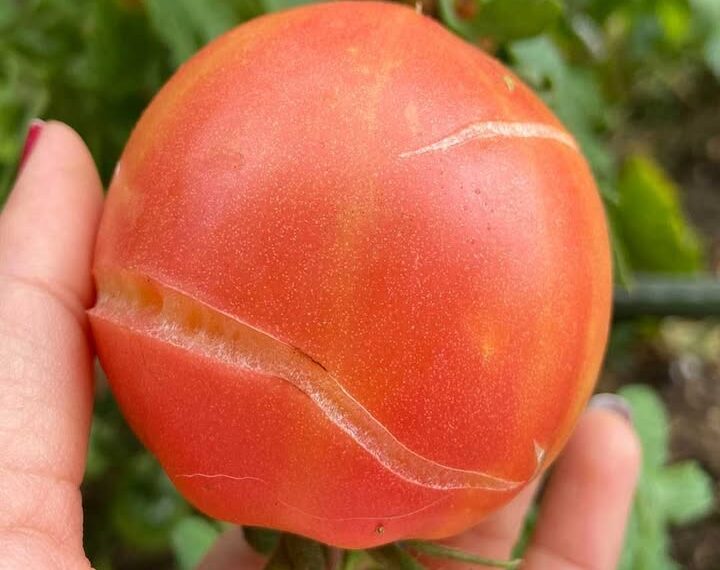
When a tomato suddenly absorbs a large amount of water, the fruit swells quickly. The skin, however, doesn’t stretch fast enough—and it cracks under pressure.
There are two main types of cracks:
- Radial cracks – deep splits running from the stem downward
- Concentric cracks – circular lines around the top
Radial cracks are more serious because they expose the inside of the fruit to bacteria and pests, while concentric cracks are usually more cosmetic.
The Real Reasons Your Tomatoes Are Splitting
1. Inconsistent Watering (The #1 Cause)
This is where most people go wrong. Tomatoes hate inconsistency. If your plant goes through a dry period and then suddenly gets a lot of water, the fruit absorbs it rapidly and expands too quickly.
That sudden expansion is what causes the skin to split.
Think of it like inflating a balloon too fast—it bursts.
👉 A drip irrigation system can help keep watering consistent — get it on Amazon
2. Heavy Rain After Dry Weather
Even if you’re watering properly, nature can interfere. A heavy rain after a dry spell can flood your plants with water, causing the same rapid expansion.
This is why splitting often happens overnight after rainstorms.
3. Rapid Growth During Ripening
As tomatoes ripen, their skin becomes thinner and less elastic. That makes them more vulnerable to splitting, especially if conditions suddenly change.
4. Temperature Fluctuations
Hot days followed by cool nights can stress the plant and speed up growth cycles. This uneven growth can weaken the skin and increase the chances of cracking.
5. Over-Ripening on the Vine
Leaving tomatoes on the vine too long increases the risk of splitting. The riper they get, the softer and more fragile their skin becomes.
How to Prevent Tomato Splitting (Step-by-Step)
1. Water Consistently (Not Too Much, Not Too Little)
TO CONTINUE READING THE ARTICLE PLEASE SEE PAGE 2