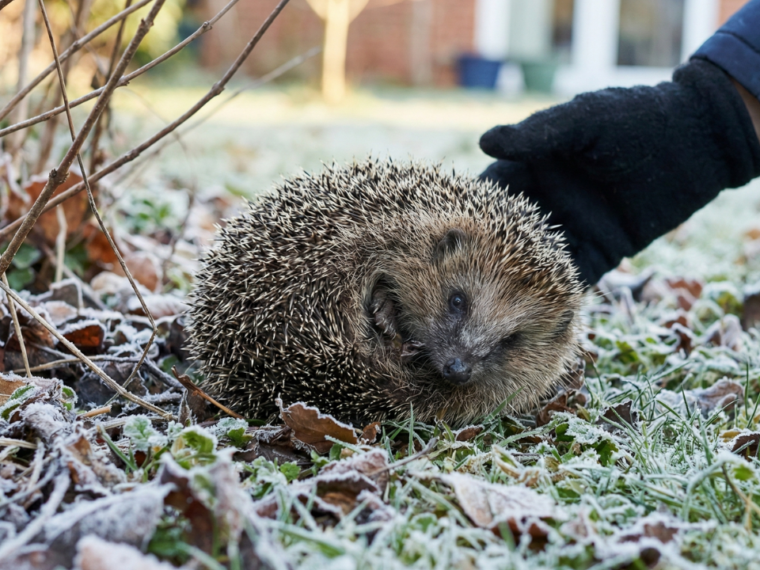
Bring it into a safe, warm shelter immediately.
This is the most important step.
Here’s what to do:
- Prepare a sturdy cardboard box or plastic container
- Line it with newspaper, a towel, or a soft cloth
- Gently place the hedgehog inside (use gloves if possible)
- Put the box in a quiet, dry, frost-free place such as:
- a garage
- a shed
- a cellar
- or a sheltered indoor area
Do not return it outside in freezing temperatures.
This simple act alone can save its life by protecting it from cold and exhaustion.
Should You Feed It?
Yes — but carefully.
You may offer:
- Cat food (meat-based, not fish)
- Fresh water in a shallow dish
Never give:
- Milk (very dangerous for hedgehogs)
- Bread
- Human leftovers
Food can help restore strength, but warmth and safety come first.
What to Do Next
After securing the hedgehog:
- Contact a wildlife rescue center
- Call a local animal protection organization
- Ask a veterinarian experienced with wild animals
They can determine whether the hedgehog needs treatment or supervised hibernation.
How to Protect Hedgehogs in Your Garden Long-Term
You can help prevent these emergencies by making your garden hedgehog-friendly:
- Leave piles of leaves for natural shelters
- Install a hedgehog house
- Avoid pesticides and chemicals
- Create small gaps under fences
- Always check leaf piles before burning or clearing
Your garden can become a lifesaving refuge.
A Small Gesture That Means Everything
Hedgehog populations are declining across Europe due to habitat loss, traffic, and climate changes. Every single hedgehog matters.
If you see one during the day in winter, remember:
❌ It is not cute behavior
⚠️ It is not normal
❤️ It is an emergency
Sometimes, saving a life doesn’t require special skills —
just awareness, compassion, and one simple action at the right time.