Avoid:
- treated wood
- painted wood
- black walnut (toxic to plants)
These logs form the foundation.
Step 3: Add Branches and Twigs
Fill the gaps with smaller wood pieces. This improves air flow and speeds decomposition.
Step 4: Add Organic Matter
Layer on:
- dry leaves
- straw
- grass clippings
- compost
Water well between layers.
Step 5: Cover with Topsoil
Add 20–30 cm (8–12 inches) of soil on top.
Now your mound is ready for planting.
What Grows Best in Hugelkultur Beds?
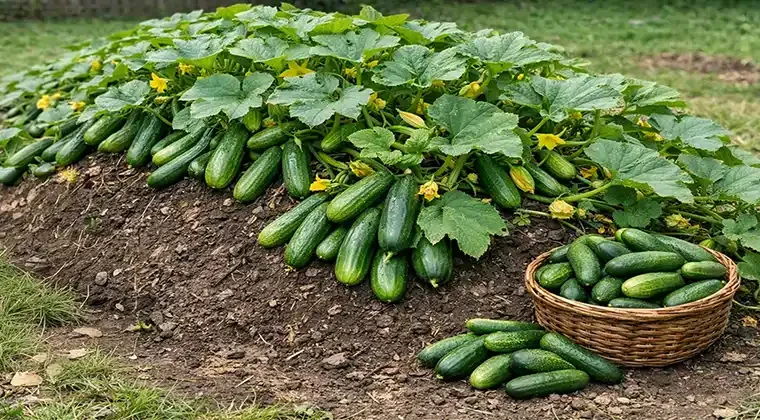
The image perfectly demonstrates one of the best crops: cucumbers.
Excellent choices include:
- cucumbers
- zucchini
- pumpkins
- melons
- tomatoes
- peppers
- beans
These plants thrive thanks to deep roots and consistent moisture.
Maintenance: Very Low Effort
One of the biggest advantages is minimal maintenance:
- little watering after the first year
- no digging required
- no chemical fertilizers
- fewer weeds due to thick mulch
Just plant, harvest, and enjoy.
How Long Does a Hugelkultur Bed Last?
A well-built mound can last:
- 5 to 10 years, sometimes more
Each year, the soil becomes darker, softer, and richer.
You may simply add compost or mulch on top annually.
Why Gardeners Love Hugelkultur
✔ saves water
✔ boosts soil fertility
✔ reduces waste
✔ increases yields
✔ works naturally
✔ ideal for organic gardening
Many gardeners report harvests 2–3 times larger compared to flat beds.
Final Thoughts
The Hugelkultur mound garden is more than a gardening method — it’s a living system.
By working with nature instead of against it, you create a garden that:
- feeds itself
- waters itself
- improves year after year
Whether you have poor soil, limited water, or simply want bigger harvests with less effort, Hugelkultur offers one of the most powerful solutions in natural gardening.
🌿 Build it once — harvest for years.