Disclosure: This post contains affiliate links. If you make a purchase through these links, I may earn a small commission at no extra cost to you. I only recommend products I use and trust for my own garden.
As the last frosts of winter begin to fade and the soil starts to warm, your rose bushes are preparing for their most important transition of the year. While they might look like nothing more than a collection of brown, thorny sticks right now, what you do in these crucial early weeks of spring will determine whether you get a few scattered petals or a heavy, fragrant explosion of color.
Waking up dormant roses isn’t complicated, but it does require a bit of strategic “tough love.” Follow these five steps to ensure your garden is the envy of the neighborhood this season.
1. The Big Reveal: Removing Winter Mulch
If you “hilled up” your roses with extra soil or mulch to protect the graft union during the freezing months, your first task is to gently pull that back. Keeping the base of the plant covered for too long in the spring can trap moisture against the canes, leading to rot or fungal diseases.
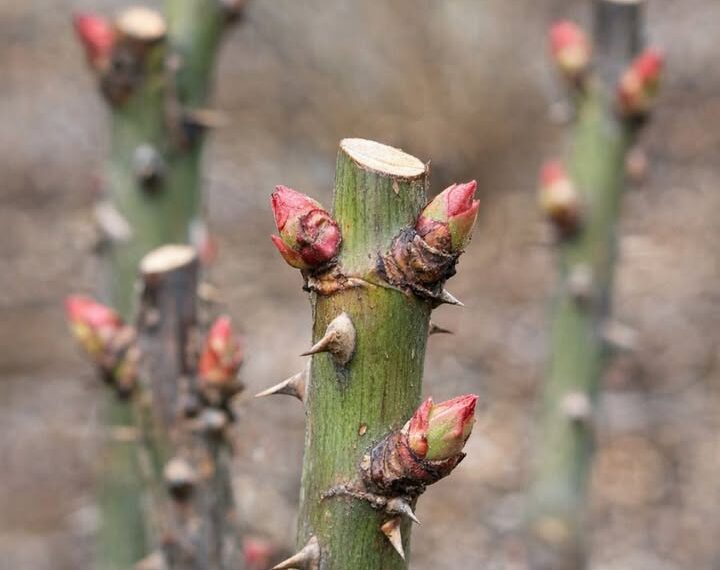
Pro Tip: Use your hands or a soft hand rake to avoid nicking the tender “eyes” (buds) that are just starting to swell.
2. The Three D’s of Pruning
Pruning is the most important “wake-up call” you can give a rose. It stimulates growth hormones and opens up the plant for better air circulation. You are looking to remove the “Three D’s”:
- Dead: Wood that is brittle, brown, or shriveled.
- Damaged: Canes that have been cracked by wind or ice.
- Diseased: Anything showing spots, cankers, or unusual growths.
For most modern roses (like Hybrid Teas or Floribundas), you’ll also want to cut the remaining healthy canes down to about 12-18 inches, making your cuts at a 45-degree angle just above an outward-facing bud.
3. Clean the Floor (Sanitation)
Once you’ve finished pruning, don’t leave the debris sitting at the base of the plant. Old rose leaves and clippings are the primary hiding spots for black spot spores and aphids.
Rake the area clean and apply a fresh, 2-inch layer of organic mulch, being careful not to let the mulch touch the actual canes. This suppresses weeds and keeps the roots cool as the sun gets stronger.
4. Feed the Hunger: The First Fertilization
TO CONTINUE READING THE ARTICLE PLEASE SEE PAGE 2