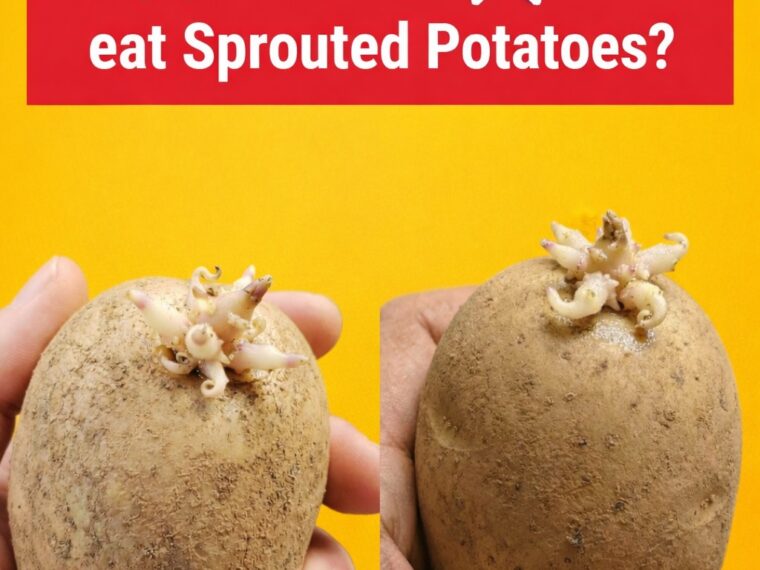
Not necessarily. It depends on their condition.
✅ Usually safe to eat if:
- The potato is still firm
- Sprouts are small
- There is no green coloring
- You remove sprouts deeply (at least 1 cm around them)
- The potato does not taste bitter
❌ Do NOT eat if:
- The potato is soft or wrinkled
- The skin is green
- Sprouts are long and numerous
- The potato tastes bitter
- It smells unusual
If in doubt — throw it out. No recipe is worth the risk.
Does Cooking Destroy the Toxins?
Unfortunately, no.
Solanine and chaconine are heat-stable, meaning:
- Boiling ❌
- Frying ❌
- Baking ❌
Cooking may reduce small amounts, but it does not eliminate the toxins completely.
That’s why proper inspection before cooking is essential.
How to Store Potatoes Safely
To prevent sprouting and toxin formation:
- Store in a cool place (4–10°C / 40–50°F)
- Keep them away from light
- Use a paper bag or breathable basket
- Do not store near onions (they speed up sprouting)
- Avoid plastic bags
Proper storage can significantly extend potato freshness.
What About Green Potatoes?
Green skin is a strong warning sign.
The green color comes from chlorophyll, which itself isn’t toxic — but it indicates high solanine levels underneath.
👉 Any potato with large green areas should be discarded immediately.
Final Verdict: Should You Eat Sprouted Potatoes?
✔️ Yes — sometimes, if:
- Sprouts are tiny
- Potato is firm
- No green color
- Sprouts are fully removed
❌ No — absolutely not, if:
- Potato is green
- Soft or shriveled
- Bitter tasting
- Heavily sprouted
When it comes to food safety, it’s always better to be cautious.
Key Takeaway
Sprouted potatoes are not automatically dangerous, but they can become toxic if ignored. Understanding the warning signs helps protect your health and prevents unnecessary risks.
When in doubt — throw it out. Your health matters more than saving a potato. 🥔