Where Should You Put the Apple Pieces?
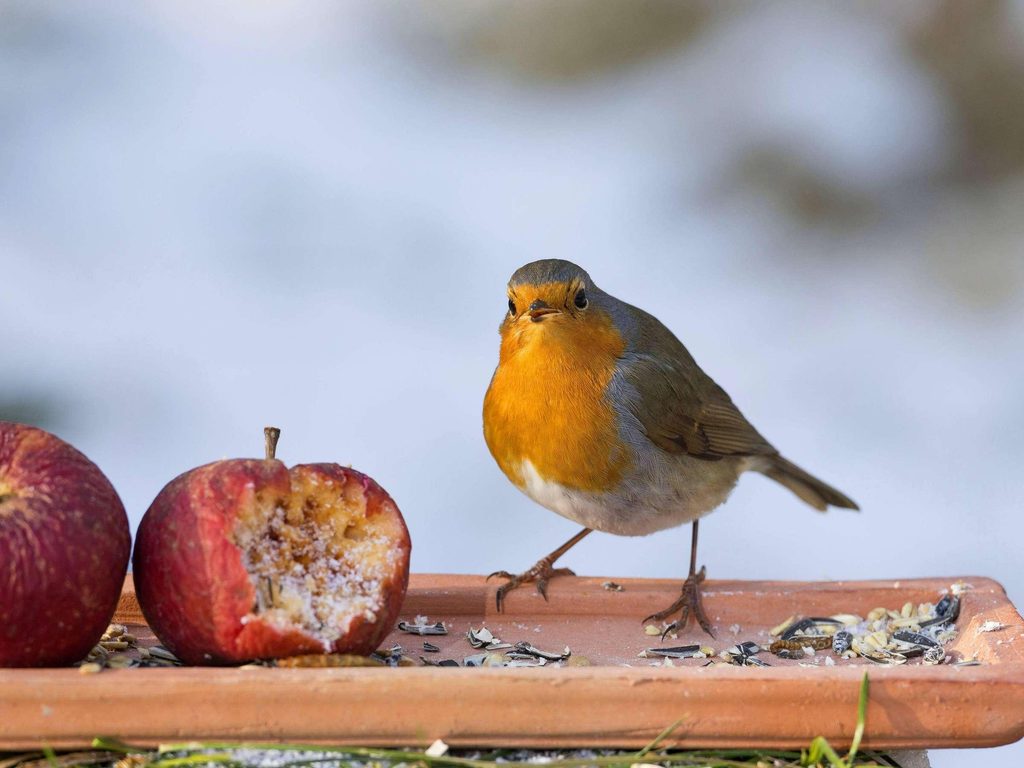
The location of your feeding spot can make a big difference.
Robins often prefer feeding areas where they can quickly retreat to nearby vegetation if they feel threatened.
Try these simple ideas:
- Near shrubs or hedges: These provide natural shelter and somewhere to hide.
- On a low feeding tray: Robins frequently feed on or near the ground.
- In a quiet corner: Avoid busy areas where people and pets regularly pass.
- Away from cats: Choose a location where predators cannot easily approach.
- In a visible spot: This will also make it easier for you to watch the birds from your window.
Remember to remove uneaten fruit regularly, especially during warm or wet weather. Clean the feeding surface frequently to prevent mould and disease.
Other Fruits Robins May Enjoy
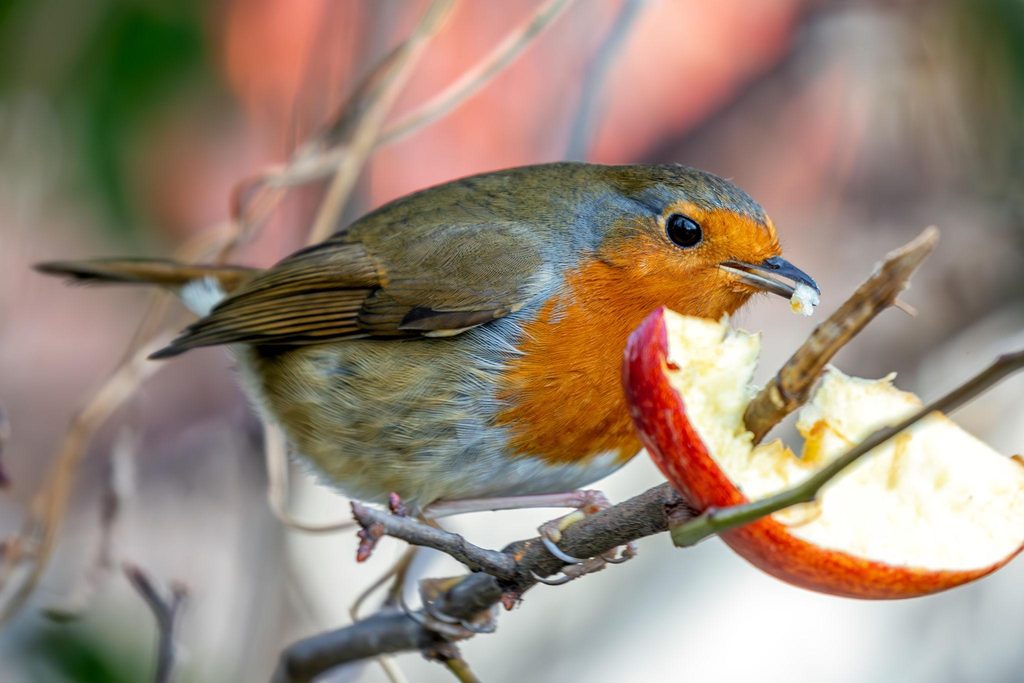
Although apples are a convenient choice, they are not the only fruit you can offer.
Robins and other garden birds may also enjoy several other types of fruit.
1. Pears
Ripe pears can be cut into small pieces and offered fresh. Their soft texture makes them easy to peck at.
2. Blackberries
These naturally occurring berries are an excellent seasonal food for many wild birds.
3. Raspberries
Fresh raspberries can provide another fruit option. Offer small quantities and remove anything that starts to deteriorate.
4. Rowan berries
Rowan trees produce colourful clusters of berries that provide natural food for many bird species during autumn.
5. Other garden berries
Depending on the species, birds may also feed on elderberries, hawthorn berries and other naturally available fruits.
Whenever possible, encourage natural food sources by planting native berry-producing shrubs and trees.
Another Favourite: Mealworms!
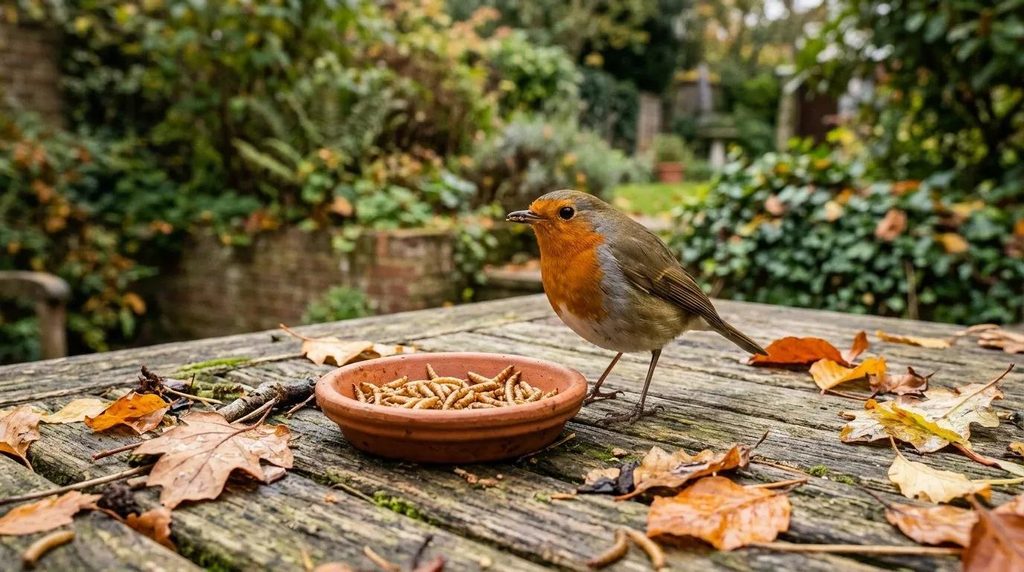
If you really want to make your garden attractive to robins, consider offering mealworms as well.
Unlike fruit, mealworms provide a source of animal protein and are particularly suitable for birds that naturally feed on insects and small invertebrates.
You can offer:
- Live mealworms.
- Dried mealworms that have been rehydrated in water.
- Special insect-based food formulated for wild garden birds.
Start with a small quantity and place it in a shallow, clean feeding dish.
Mealworms should be offered as part of a varied diet rather than as the only food available.
Don’t Forget to Provide Fresh Water
Food is important, but water is another essential element of a bird-friendly garden.
Robins need water for drinking and bathing, even during colder months.
A simple shallow bird bath can make your garden much more inviting.
Here are a few tips:
- Use a shallow container with gently sloping sides.
- Add a few clean stones to provide secure footing.
- Replace the water every day.
- Clean the container regularly.
- Position it somewhere sheltered but with a clear view of approaching predators.
During freezing weather, check that the water has not frozen. Never add antifreeze or chemicals to keep it liquid.
Five Plants That Can Naturally Attract Robins
If you have a garden, planting the right shrubs and trees can provide a natural source of food for birds.
Here are five plants worth considering:
1. Rowan
Rowan trees produce colourful clusters of berries that attract several species of wild birds.
2. Hawthorn
Its red autumn berries provide food for wildlife, while its dense branches offer useful shelter.
3. Elderberry
Elderberry bushes produce clusters of dark berries that are consumed by many garden birds.
4. Ivy
Ivy flowers and berries provide valuable resources for wildlife at different times of the year.
5. Blackberry bushes
Blackberry brambles offer seasonal fruit and can provide useful nesting and hiding places.
By combining fruit-producing plants with sheltered areas, you can create a garden that supports wildlife throughout the changing seasons.
Common Mistakes to Avoid When Feeding Robins
Feeding garden birds is a wonderful activity, but it is important to do it responsibly.
Avoid these common mistakes:
- Never offer mouldy, rotten or fermented fruit.
- Avoid salty, sugary and heavily processed human foods.
- Do not rely on bread as a main food source.
- Remove uneaten food before it starts to spoil.
- Clean feeding trays regularly.
- Avoid placing food where cats can easily ambush visiting birds.
- Never leave plastic netting around feeding areas, as birds can become entangled.
Good hygiene is especially important when several birds visit the same feeding station.
How Long Does It Take for Robins to Discover Your Feeding Spot?
There is no guaranteed timetable.
Some robins may discover your feeding area within a few days, while others may take longer.
Their visits depend on several factors:
- Whether robins already live nearby.
- The availability of natural food.
- The location of your feeding station.
- The amount of shelter in your garden.
- The presence of predators and disturbances.
The best approach is to be patient and maintain a clean, consistent feeding area.
You may eventually notice the same robin returning regularly, sometimes appearing at almost the same time each day!
Final Thoughts: A Simple Apple Can Make Your Garden More Welcoming
Attracting robins doesn’t have to be complicated or expensive.
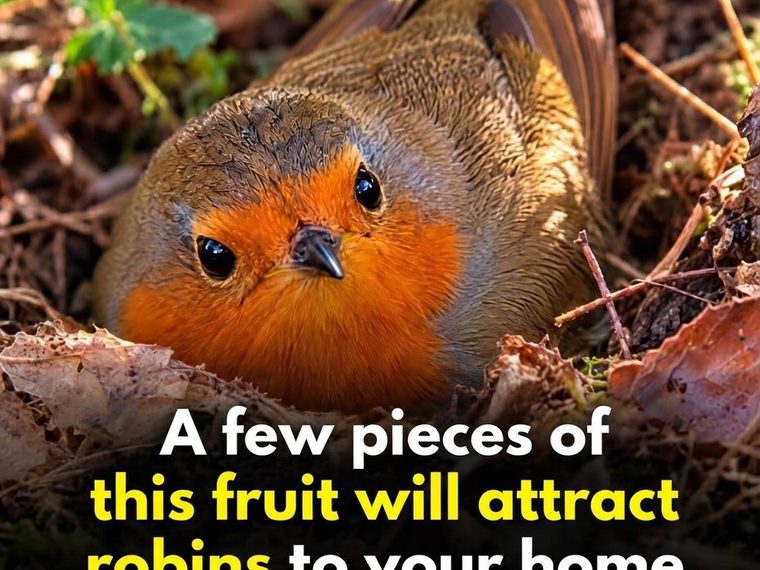
A few pieces of fresh apple, a little supplementary bird food, clean drinking water and some suitable garden plants can help create a welcoming environment for these beautiful little visitors.
Autumn is a wonderful time to start. As the leaves change colour and temperatures begin to fall, you can turn even a small outdoor space into a place where birds can find food and shelter.
And who knows? That little robin might soon become a regular visitor, returning to your garden throughout the colder months.
Have you ever tried putting apple pieces outside for robins? What foods attract the most birds to your garden? Share your experience in the comments!