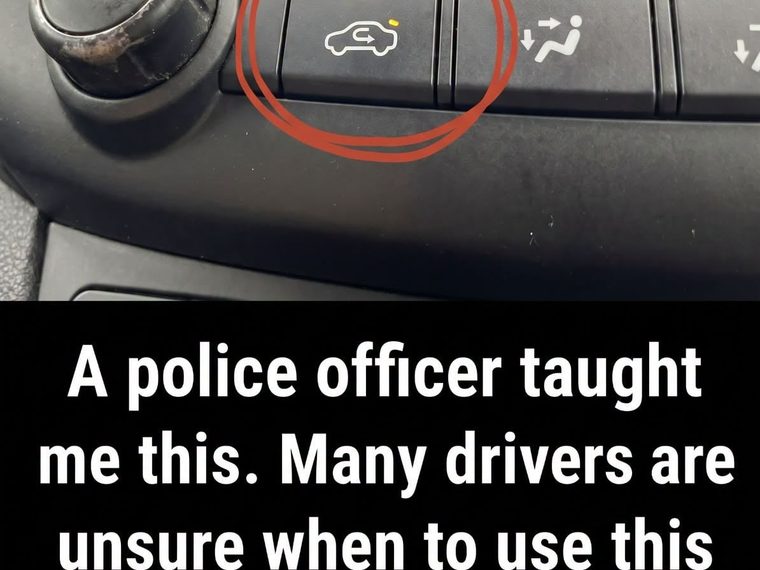
Have you ever noticed a small button on your car’s dashboard showing a vehicle with a curved arrow inside it? You may have pressed it several times without really knowing what it does. Perhaps you have even left it switched on for weeks without thinking about it.
This small button, commonly known as the air recirculation button, plays an important role in your vehicle’s heating and air-conditioning system. It can help cool your car faster on hot days, keep unpleasant smells outside, and reduce the amount of polluted air entering the passenger compartment.
However, using it incorrectly can also create problems, particularly when your windows begin to fog up or the air inside the vehicle becomes uncomfortable.
The symbol shown in the image represents one of the most useful but frequently misunderstood functions of a car’s climate-control system.
So, when should you press it? Should you leave it switched on all the time? And what happens if you forget to turn it off?
Let’s take a closer look at how this simple button works and how to use it properly.
1. What Exactly Does the Air Recirculation Button Do?
The button circled in the image controls the vehicle’s air recirculation system.
When you activate it, your car stops drawing most of its ventilation air from outside and instead reuses air already inside the passenger compartment.
In simple terms, the air-conditioning system takes the air inside your car, passes it through the ventilation system, and sends it back through the dashboard air vents.
When the function is switched off, the system generally returns to drawing fresh air from outside.
You will usually recognize the button by its distinctive symbol:
- A small outline of a car.
- A curved arrow pointing around inside the vehicle.
- Sometimes an illuminated indicator showing that the function is active.
In the photograph, the orange indicator light is illuminated, meaning that recirculation is selected.
This function is available in many modern and older vehicles, although the exact operation can vary depending on the manufacturer and model.
2. When Should You Use the Button? On Hot Summer Days!
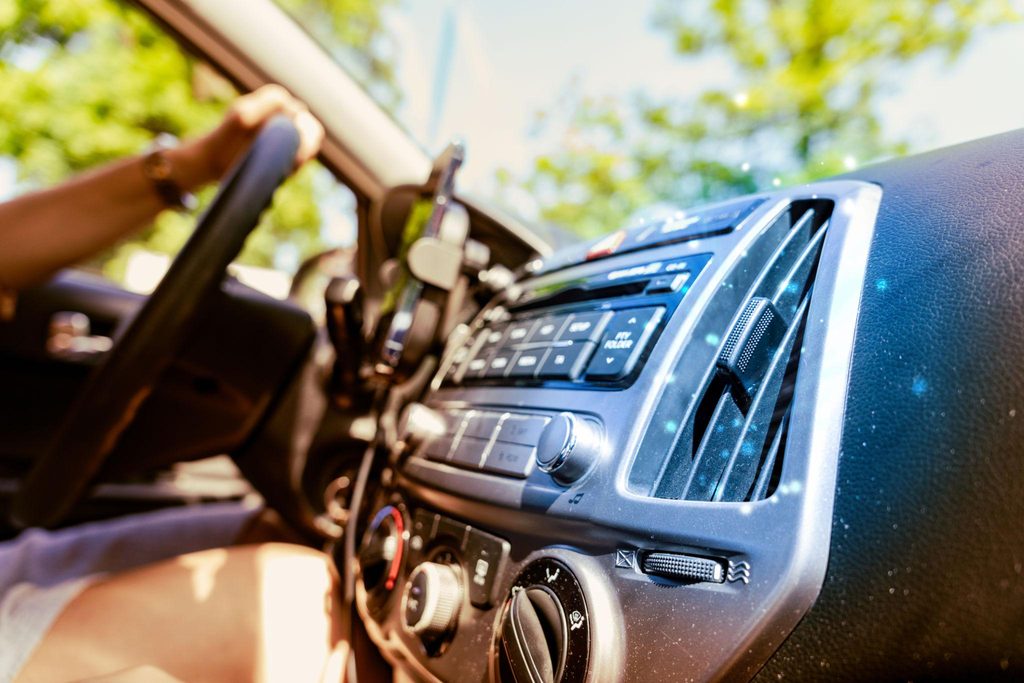
One of the best times to use the recirculation button is when your car has been sitting in the sun.
Imagine getting into your vehicle after it has been parked outside for several hours during a hot summer afternoon.
The steering wheel feels hot, the seats are uncomfortable, and the air inside the cabin seems almost unbearable.
Many drivers immediately turn on the air conditioning at maximum power. However, there is a simple technique that can help the cooling system work more efficiently.
Here is what you should do:
- Open the windows briefly to allow the trapped hot air to escape.
- Close the windows once the hottest air has been released.
- Turn on the air conditioning.
- Activate the air recirculation button.
- Adjust the fan speed and temperature to your comfort.
Why does this work?
When recirculation is activated, the air conditioner repeatedly cools the air already inside the vehicle instead of continuously drawing in hot outside air.
This can help the cabin reach a comfortable temperature more quickly.
Once the interior has cooled down, you can switch back to fresh-air mode periodically.
This is particularly useful during hot summer weather, when outside temperatures are significantly higher than the temperature you want inside your vehicle.
3. Use It When Driving Behind Trucks or Through Heavy Traffic
This is another situation in which the recirculation button can be extremely useful.
Imagine driving through a busy city during rush hour. You are surrounded by buses, trucks, motorcycles, and cars releasing exhaust fumes.
Sometimes, you can smell diesel fumes entering your vehicle, even when all the windows are closed.
This is when activating recirculation can help.
By reducing the amount of outside air entering the cabin, the system can temporarily limit your exposure to unpleasant smells and some airborne pollutants.
It can also be useful when:
- Driving behind an old diesel truck.
- Passing through heavily polluted streets.
- Waiting in traffic near buses.
- Driving through tunnels with poor air quality.
- Passing through areas with strong smoke or unpleasant smells.
However, remember that recirculation is not an air purifier. It does not remove every pollutant already inside your car, and it cannot guarantee protection against exhaust gases.
Use it temporarily while passing through polluted areas, then return to fresh-air mode when conditions improve.
4. Should You Use It When Driving Through Dusty Areas?
TO CONTINUE READING THE ARTICLE PLEASE SEE PAGE 2