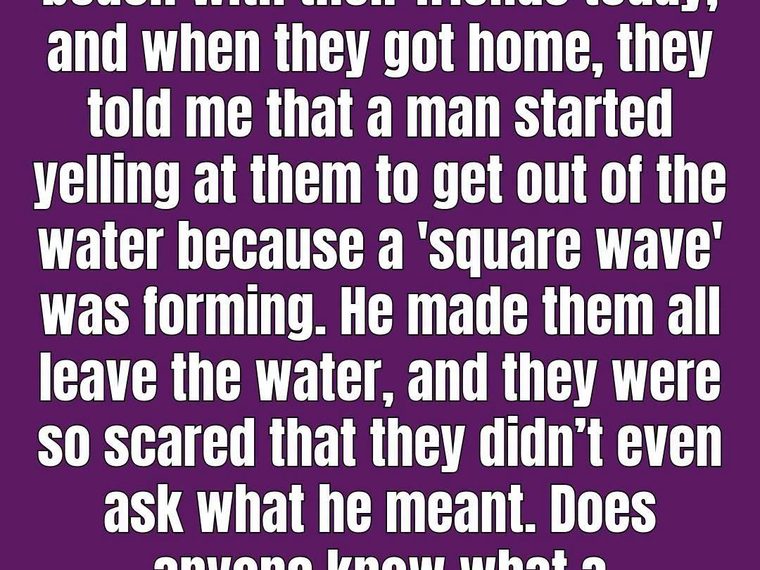
Imagine standing on a beach and looking out at the ocean when you notice something unusual: the water appears to form a giant checkerboard, with waves moving in two different directions and crossing one another. Instead of the familiar parallel lines of rolling waves, the sea looks like a pattern of squares stretching toward the horizon.
This fascinating phenomenon is known as a cross sea, and although it can look beautiful from the shore, it may indicate dangerous ocean conditions.
Square waves are not simply an unusual visual effect. They form when two different wave systems meet, creating a complicated pattern of moving water. In certain circumstances, these conditions can make swimming, surfing, sailing, and other water activities particularly hazardous.
Understanding why cross seas occur, how to recognize them, and what to do if you encounter one could help you avoid a potentially dangerous situation.
1. What Exactly Are Square Waves?
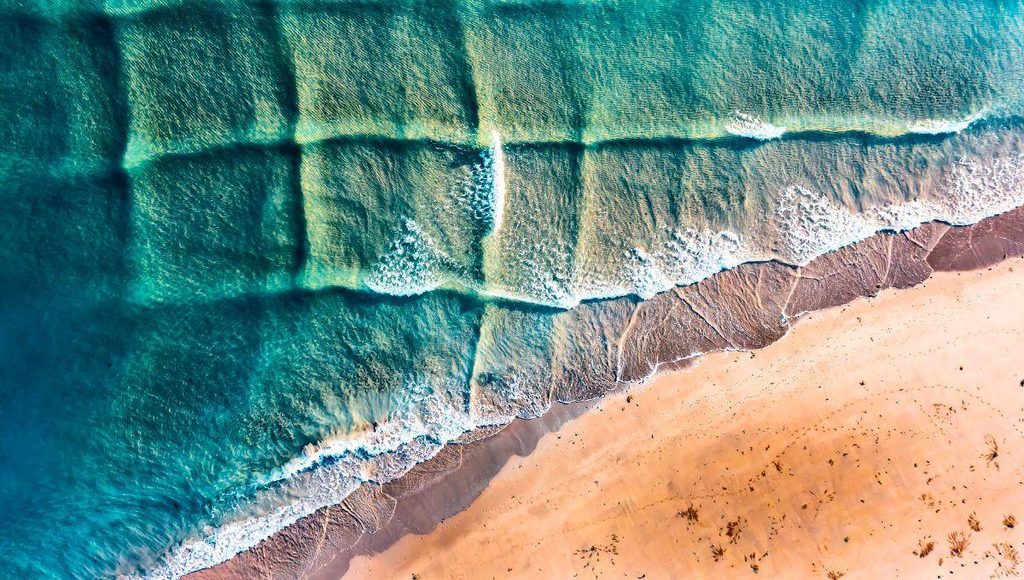
Square waves, sometimes called cross waves or cross seas, are a natural ocean phenomenon created when wave systems travel in different directions and intersect.
Ordinary ocean waves generally approach a coastline in roughly parallel lines. However, when waves from different weather systems or directions meet, they can create a crisscrossing pattern on the water’s surface.
From above, the intersecting wave crests may look like a checkerboard or a series of squares.
These patterns are not usually perfect squares. Their appearance depends on several factors, including:
- The direction of the incoming wave systems.
- The height and frequency of the waves.
- The angle at which the wave systems intersect.
- Local wind and weather conditions.
- The shape and depth of the seabed.
The result can be a striking geometric pattern that looks almost too organized to be natural.
2. How Do Cross Seas Form?
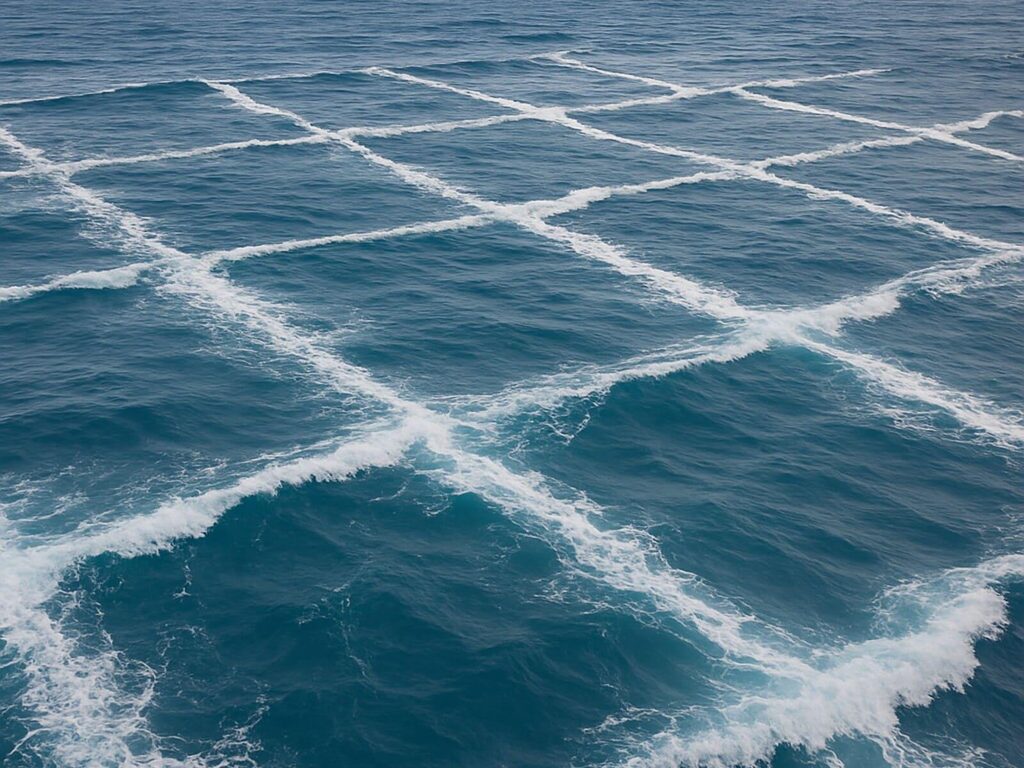
Cross seas develop when two wave systems move across the same area of water from noticeably different directions.
One wave system may have been generated by nearby winds, while another may have traveled a long distance from a distant storm.
When the two systems meet, their wave crests intersect. If their directions are sufficiently different, the surface can develop a distinctive grid-like appearance.
This process is related to a phenomenon called wave interference.
When waves meet, their movements combine. In some places, their crests reinforce each other, producing higher waves. In other places, their movements partially cancel each other out.
The exact pattern is constantly changing as the wave systems move.
The role of changing weather
A cross sea can develop when:
- Wind changes direction while an existing wave system continues moving.
- Swell from a distant storm reaches an area with locally generated waves.
- Two different weather systems influence the same stretch of ocean.
- Waves approach an area from different directions because of coastal geography.
This is why cross seas can appear even when the sky looks relatively clear.
3. Why Can Square Waves Be Dangerous?
TO CONTINUE READING THE ARTICLE PLEASE SEE PAGE 2