Have you ever cracked open three eggs and noticed that each yolk had a different color? One might be pale yellow, another golden orange, and a third a deep orange shade. This simple difference often raises an interesting question: Which egg comes from a healthy chicken, and does the color of the yolk reveal anything about the egg’s quality?
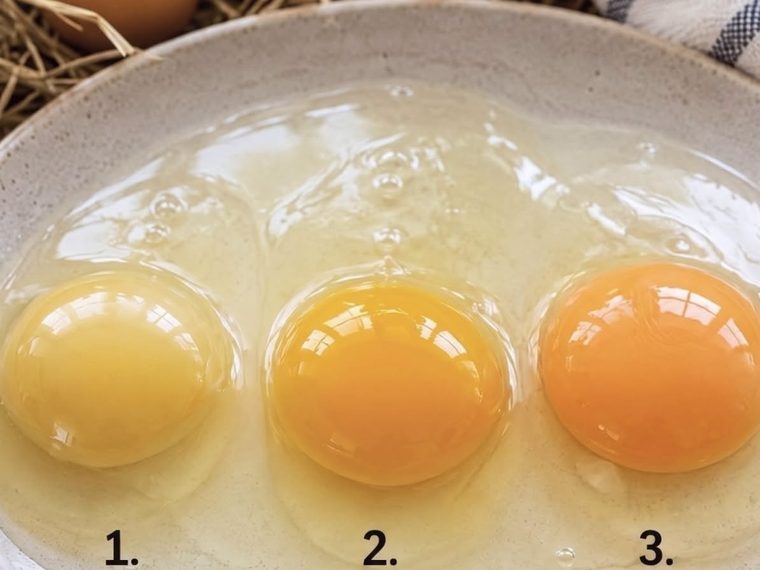
The image above shows three raw eggs with noticeably different yolk colors, numbered 1, 2, and 3. At first glance, it may seem obvious that the egg with the darkest orange yolk must be the healthiest. Many people believe this because rich orange yolks are often associated with farm-fresh eggs and chickens that roam freely outdoors.
But the truth is more interesting than that.
Yolk color can provide clues about a hen’s diet, particularly the pigments in the foods she eats. However, it is not a reliable way to determine whether a chicken is healthy, whether an egg is fresh, or whether an egg is nutritionally superior.
Let’s explore what the three eggs can tell us, what really influences yolk color, and how to choose good-quality eggs for your family.


1. What Do the Three Different Yolk Colors Mean?
The three eggs in the picture have different shades of yellow and orange. These variations are common and usually reflect differences in the hens’ diets rather than differences in their health.
Egg number 1: The pale yellow yolk
A pale yellow yolk is not necessarily a sign of an unhealthy chicken or a poor-quality egg.
This color may occur when a hen eats a diet containing relatively small amounts of yellow-orange pigments, such as carotenoids. Hens fed balanced commercial poultry feed can produce pale yolks while remaining perfectly healthy.
The important point is that a pale yolk does not automatically mean the egg is less nutritious or unsafe to eat.
Egg number 2: The golden yellow yolk
A golden yellow yolk often indicates that the hen has consumed more pigments that contribute to yellow coloration.
These pigments can come from ingredients such as corn, alfalfa, and other plant materials. The precise shade depends on the combination of ingredients in the hen’s feed.
A golden yolk can be perfectly normal and is common in eggs from many different production systems.
Egg number 3: The deep orange yolk
A deep orange yolk may result from a diet rich in pigments called carotenoids and xanthophylls.
These compounds occur naturally in various plants, including leafy greens, certain flowers, and other colorful feed ingredients. Some poultry diets are specifically formulated to produce darker yolks.
An orange yolk can therefore reflect the hen’s diet, but it does not prove that she was healthier, that she lived outdoors, or that the egg is safer to eat.
The key takeaway: All three yolk colors can occur in eggs from healthy hens. Color alone cannot identify the healthiest egg.
2. Why Does Egg Yolk Color Change?

The main reason egg yolks differ in color is the hen’s diet.
Hens obtain pigments from the food they eat, and some of these pigments are deposited in the developing yolk. The process is influenced by the types of feed ingredients, the quantity of pigments consumed, and how efficiently the hen absorbs and uses them.
Several dietary ingredients can affect yolk color:
- Corn: Contains yellow pigments that can contribute to a golden yolk.
- Green leafy plants: Some contain lutein and other pigments that influence yolk coloration.
- Alfalfa: Can provide pigments that contribute to yellow-orange shades.
- Marigold petals: Are sometimes used in poultry feed because they contain yellow-orange pigments.
- Other plant ingredients: Different grains, vegetables, and plant extracts can influence the final color.
The proportions of these ingredients matter. Two healthy hens can eat nutritionally balanced diets and still lay eggs with different yolk colors.
Other factors, including the hen’s age, breed, and the composition of her overall diet, can also influence egg characteristics. Nevertheless, the amount and type of dietary pigments are major determinants of yolk color.
3. Is a Dark Orange Yolk More Nutritious?

This is one of the most common questions about eggs, and the answer requires a little nuance.
A darker yolk can contain higher amounts of certain carotenoid pigments, depending on what the hen eats. Some carotenoids, such as lutein and zeaxanthin, are of nutritional interest because they contribute to the body’s antioxidant defenses and are associated with eye health.
However, the color itself does not tell you how much of any particular nutrient an egg contains.
A deep orange yolk does not automatically contain more protein, more vitamin D, more omega-3 fatty acids, or more of every other beneficial nutrient than a pale yellow yolk.
The nutritional composition of an egg depends on several factors, especially the hen’s diet and the specific nutrients being considered.
For example:
- Two eggs with different yolk colors can contain similar amounts of protein.
- An egg with a pale yolk can still provide valuable vitamins and minerals.
- An egg from a hen fed a diet enriched with omega-3 fatty acids may contain more omega-3s, regardless of how dark its yolk appears.
- A darker yolk may reflect a greater concentration of certain pigments without indicating a major difference in overall nutritional value.
Therefore, it is better to consider the hen’s feeding system, the egg’s handling and storage, and the nutritional information available rather than judging the entire egg by its color.
4. Does an Orange Yolk Mean the Chicken Was Raised Free-Range?

Many people associate orange yolks with backyard chickens that spend their days roaming through grass and searching for insects.
There is some reason for this association. Hens that have access to suitable outdoor vegetation may consume additional plant pigments, insects, and other foods that can influence their eggs.
However, yolk color is not proof of a particular rearing system.
A hen raised indoors on feed rich in suitable pigments can produce a deep orange yolk. Conversely, a free-range hen may lay an egg with a relatively pale yolk if her diet does not provide many of those pigments.
This distinction matters because the terms free-range, organic, and pasture-raised refer to production practices, not simply the appearance of the yolk. Their precise definitions and labeling requirements vary by country.
If you want to know how hens were raised, look for reliable information about the producer and the egg’s production label rather than relying on color alone.
5. Can Yolk Color Tell You Whether a Chicken Is Healthy?
TO CONTINUE READING THE ARTICLE PLEASE SEE PAGE 2