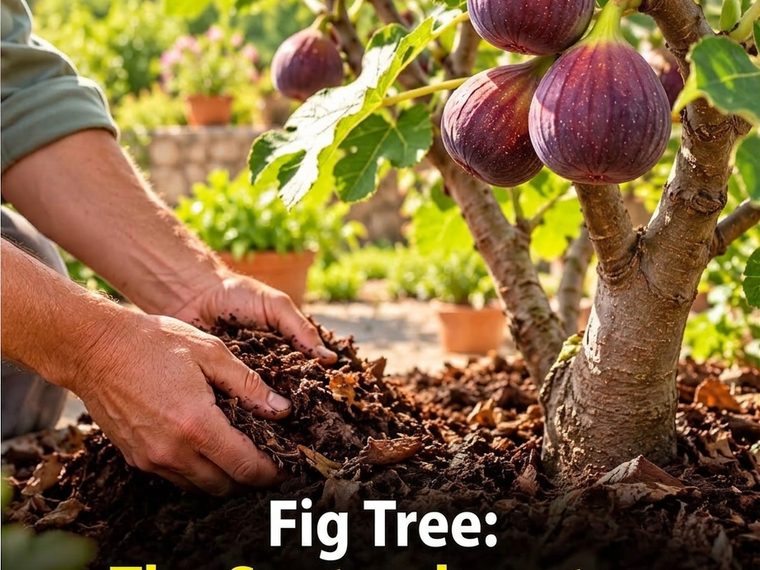
September may look like the end of the fig season, especially when the last fruits are ripening and the days are beginning to get shorter. But for your fig tree, the work is far from over.
Behind the scenes, the tree is already preparing for the next growing season. It is finishing this year’s fruiting cycle, storing energy, strengthening its branches, and, depending on the variety, preserving the wood that may contribute to next year’s crop.
That is why what you do in September can influence the health and productivity of your fig tree in the future.
The good news is that you do not need complicated treatments. A few simple gardening habits—careful watering, sensible pruning, soil care, mulching, and preparation for winter—can help your tree enter the colder months in good condition.
Why September Is So Important for a Fig Tree
A fig tree does not simply stop growing when summer ends.
Depending on the variety and climate, the tree may still be:
- Ripening its final fruits
- Producing new leaves and shoots
- Building energy reserves
- Preparing for winter dormancy
- Maintaining structures that may produce fruit the following year
This is particularly important because some fig varieties produce part of their crop on older wood from the previous season.
That means cutting away too much of the wrong wood can potentially reduce next year’s production.
September is therefore a good month to observe your tree rather than aggressively prune it.
1. Start by Inspecting Your Fig Tree Carefully
Before doing anything, take a few minutes to examine the entire tree.
Look at:
- The branches
- New shoots
- Leaves
- Remaining figs
- Damaged branches
- Dead wood
- Signs of disease
- The soil around the trunk
This simple inspection can tell you a lot about how your tree has performed during the growing season.
A healthy fig tree should generally have vigorous growth appropriate to its conditions, healthy-looking foliage, and fruit development consistent with its variety and climate.
2. Don’t Rush to Prune in September
One of the biggest mistakes gardeners can make is assuming that September is automatically the perfect time for a major pruning session.
For many fig trees, heavy pruning at this time of year is unnecessary.
A strong pruning can encourage new growth at a time when the tree should gradually be preparing for cooler weather.
More importantly, depending on the variety, you may accidentally remove branches that could contribute to next year’s crop.
What can you remove?
Lightly remove:
- Clearly dead branches
- Broken branches
- Severely damaged wood
- Obviously diseased material
- Branches creating an immediate safety problem
For major structural pruning, it is usually better to wait for the appropriate dormant period for your climate and variety.
3. Understand How Your Fig Tree Produces Fruit
This is one of the most important things to understand before pruning.
Some fig varieties can produce a first crop, often called breba, on wood that grew during the previous season.
They may then produce a main crop on the current season’s growth.
Other varieties have different fruiting habits.
This means that two fig trees can respond very differently to exactly the same pruning technique.
Before removing large branches, try to identify your variety and understand whether it produces fruit on old wood, new growth, or both.
4. Don’t Automatically Remove Every Small Green Fig
In September, you may see small green figs that appear to be doing very little.
It can be tempting to remove them.
But don’t automatically assume that every small fig is useless.
Their ability to mature depends on:
- The variety
- Your local climate
- How much warm weather remains
- Sun exposure
- Water availability
- The timing of fruit development
In a warm climate with a long autumn, some late figs may still have time to develop.
In a region where temperatures fall quickly, however, late fruit may never reach full maturity.
5. Keep Giving the Tree Enough Water—But Don’t Overwater
September watering should depend on the weather and soil conditions rather than a rigid schedule.
A mature fig tree can tolerate periods of dry weather, but prolonged drought can still stress the tree.
Pay particular attention if September remains:
- Hot
- Very dry
- Windy
- Rain-free for extended periods
Check the soil before watering.
If the soil is already moist several centimeters below the surface, additional water may not be necessary.
The goal is to maintain reasonable moisture without keeping the soil constantly saturated.
6. Fig Trees in Containers Need Extra Attention
A fig tree growing in a pot is different from one planted in the ground.
A container holds a limited amount of soil, so it can dry out more quickly.
During warm September weather, check the moisture level regularly.
At the same time, make sure the container has adequate drainage.
Waterlogged soil can damage roots and create problems just as surely as severe drought can.
7. Don’t Remove Healthy Green Leaves Too Early
As autumn approaches, some leaves will naturally begin to change and fall.
That is part of the tree’s normal seasonal cycle.
Healthy green leaves are still useful because they allow the tree to photosynthesize and continue producing and storing energy.
For that reason, there is usually no benefit in stripping healthy foliage from the tree simply because September has arrived.
Let the tree naturally transition toward dormancy.
8. Be Careful With Fertilizer in September
TO CONTINUE READING THE ARTICLE PLEASE SEE PAGE 2