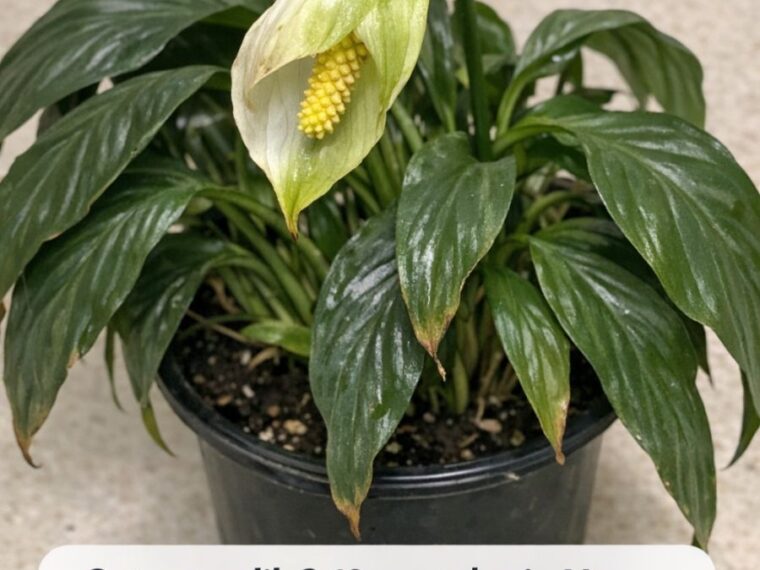
Peace lilies are famous for their elegant white blooms, deep green leaves, and ability to brighten any indoor space. But many plant owners become frustrated when their peace lily suddenly stops flowering, even though the plant still looks healthy.
What most people do not realize is that May is one of the most critical months for peace lily care. This is when the plant enters its active growing season, and the way you care for it now can determine whether it blooms beautifully for months — or refuses to flower at all.
If your peace lily has stopped blooming or you want to encourage more flowers this year, these 10 essential May tasks can completely transform your plant.
1. Move It to Brighter Indirect Light
This is the biggest secret to getting peace lilies to bloom consistently.
Many people keep peace lilies in dark corners because they survive in low light. But surviving and blooming are two very different things.
What Peace Lilies Need:
- Bright indirect sunlight
- Near an east-facing window
- Filtered light from a south-facing room
Avoid harsh direct afternoon sun, which can scorch the leaves.
Signs Your Plant Needs More Light:
- No flowers
- Slow growth
- Small pale leaves
- Weak stems
Without enough light, your peace lily will focus only on survival instead of producing blooms.
2. Deep Clean the Leaves
Peace lily leaves collect dust quickly, especially indoors.
Dust blocks sunlight and reduces photosynthesis, which weakens the plant’s ability to produce flowers.
How to Clean Them:
- Use a damp microfiber cloth
- Wipe both sides gently
- Support large leaves while cleaning
You will often notice a healthier shine and stronger growth within days.
3. Check the Roots Before Problems Start
May is the ideal time to inspect the roots because the plant is actively growing.
Carefully remove the plant from its pot and look for:
- Firm white or cream-colored roots
- Healthy root density
- Signs of rot or mushiness
- Root crowding
Peace lilies prefer slightly snug roots, but severely root-bound plants may stop blooming entirely.
4. Repot If the Plant Is Severely Root-Bound
If roots are circling tightly around the entire pot or pushing upward from the soil, repotting may be necessary.
Best Repotting Tips:
- Choose a pot only 1–2 inches larger
- Always use drainage holes
- Avoid oversized pots
A pot that is too large can hold excess moisture and increase the risk of root rot.
5. Refresh the Soil
Old compacted soil becomes depleted of nutrients and drains poorly.
Peace lilies thrive in rich, airy soil that holds slight moisture while still allowing airflow around the roots.
Ideal Soil Mix:
- Indoor potting soil
- Perlite
- Orchid bark or coco coir
Fresh soil gives the plant the nutrients and oxygen it needs for flower production.
6. Start Feeding the Plant Properly
If you want blooms, your peace lily needs nutrients.
May is the perfect time to begin regular feeding.
Best Fertilizer:
TO CONTINUE READING THE ARTICLE PLEASE SEE PAGE 2