Have you ever wondered why some fruit trees explode with blossoms and produce abundant, juicy fruit, while others struggle year after year? The answer often comes down to one simple but powerful practice: pruning at the right time.
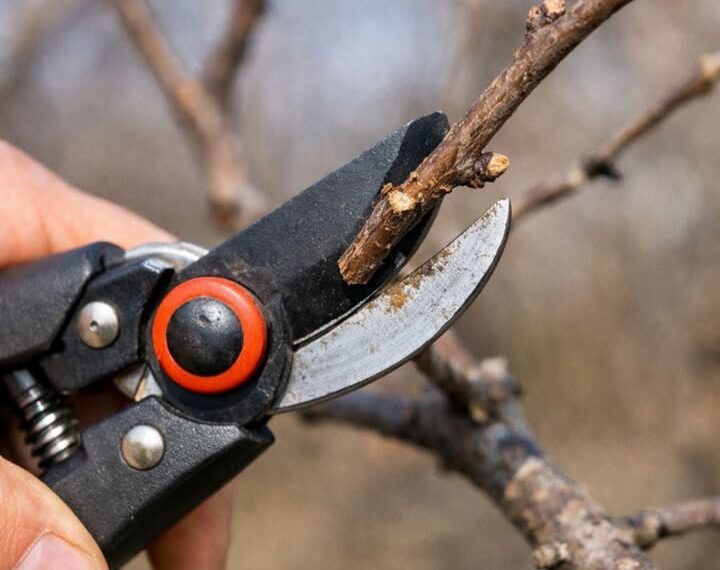
The image above perfectly captures this moment—a clean, precise cut made with sharp pruning shears on a young branch. It may look simple, but that single cut can determine the future health, shape, and productivity of the tree. Pruning isn’t just about cutting branches; it’s about guiding the tree’s energy where it matters most.
When done correctly, pruning encourages stronger growth, improves air circulation, and allows sunlight to reach every part of the tree. The result? More blossoms in spring and more fruit later in the season. But timing is everything. Prune too early or too late, and you could reduce your harvest instead of boosting it.
Understanding Fruit Tree Pruning
What Happens When You Prune a Tree
Pruning is essentially a way of telling your tree where to focus its energy. When you remove certain branches, the tree redirects nutrients and growth hormones to the remaining ones. This leads to stronger, healthier shoots and better fruit development.
Think of it like editing a story. By removing unnecessary parts, you make the final result clearer and more powerful. The same applies to your tree—cutting away weak or overcrowded branches helps it grow more efficiently.
How Pruning Affects Growth and Fruit Production
Pruning directly impacts how a tree grows and produces fruit. Without pruning, trees can become dense and tangled, blocking sunlight and airflow. This creates the perfect environment for pests and diseases.
On the other hand, a well-pruned tree has an open structure, allowing sunlight to reach the inner branches. This not only improves fruit quality but also increases the number of blossoms. Over time, this means bigger yields and healthier trees.
When Is the Right Time to Prune Fruit Trees?
Winter Pruning (Dormant Season)
The best time to prune most fruit trees is during late winter or early spring, while the tree is still dormant. During this period, the tree’s energy is stored in its roots, and pruning stimulates vigorous growth when spring arrives.
This is also the easiest time to see the tree’s structure since there are no leaves blocking your view.
Spring and Summer Pruning
Light pruning can also be done during the growing season. This is useful for removing fast-growing shoots or maintaining the tree’s shape. However, heavy pruning during this time can reduce fruit production, so it should be done carefully.
Timing by Tree Type
Different trees have slightly different needs:
| Tree Type | Best Pruning Time |
|---|---|
| Apple & Pear | Late winter |
| Peach & Nectarine | Early spring |
| Cherry & Plum | After harvest |
| Citrus | Late winter to early spring |
Tools You Need for Effective Pruning
Essential Pruning Tools
Using the right tools makes all the difference. The image clearly shows a pair of sharp pruning shears, which are essential for clean cuts.
Recommended tools:
- Hand pruners (for small branches)
- Loppers (for thicker branches)
- Pruning saw (for large limbs)
👉 AFFILIATE LINK – Best Pruning Shears
👉 AFFILIATE LINK – Heavy-Duty Loppers
👉 AFFILIATE LINK – Professional Pruning Saw
Choosing High-Quality Equipment
Cheap tools can damage your trees by making rough cuts. Always choose sharp, durable tools that create clean cuts, allowing the tree to heal quickly and reducing the risk of disease.
Step-by-Step Guide to Pruning Fruit Trees
Step 1: Remove Dead or Diseased Branches
TO CONTINUE READING THE ARTICLE PLEASE SEE PAGE 2