
If you have ever shopped at Aldi, you may have noticed something unusual compared to most grocery stores: you need to insert a coin—usually a quarter or a small refundable deposit—to unlock and use a shopping cart.
For many first-time shoppers, this system can be confusing or even frustrating. However, there is a very practical reason behind it. In fact, this small detail is part of the company’s broader strategy to keep prices low and operations efficient.
Let’s explore the real reasons why Aldi uses this system and how it benefits both the store and its customers.
How the Aldi Shopping Cart System Works
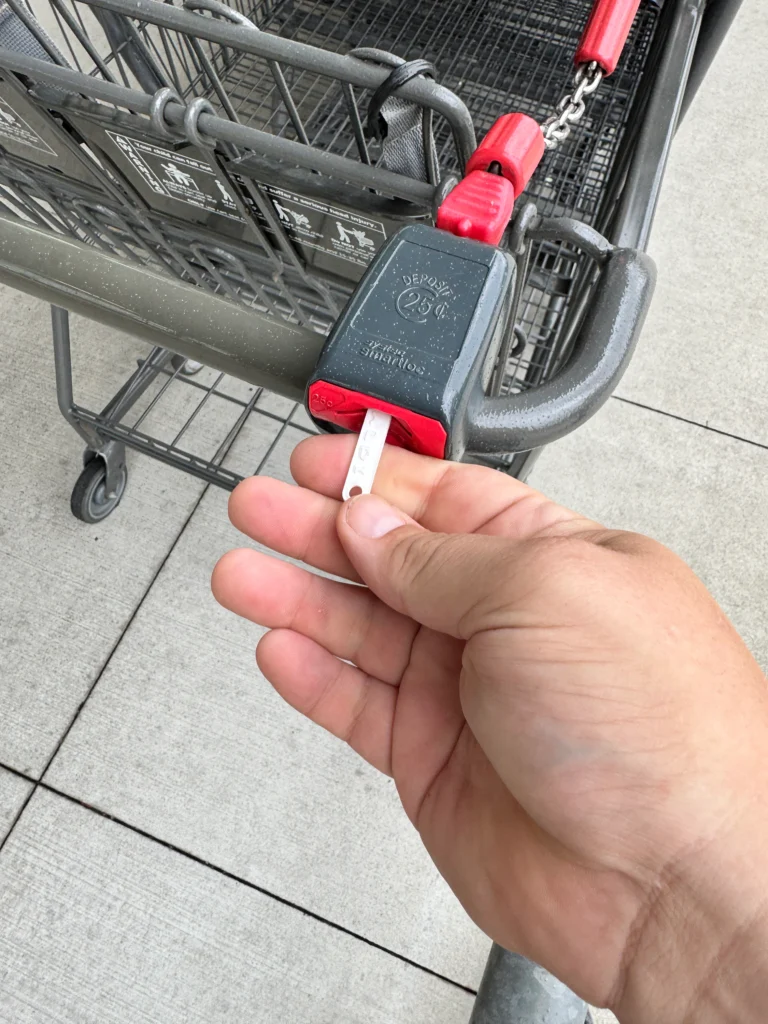
At Aldi stores, shopping carts are connected together in a row with a small locking mechanism. To release a cart, you insert a coin or token into the slot.
Once inserted, the cart unlocks and you can use it normally while shopping. When you finish and return the cart to the cart station, inserting the chain from another cart releases your coin so you can take it back.
In other words, the coin is not a fee—it is simply a refundable deposit that encourages customers to return their carts.
The Main Reason: Reducing Labor Costs
One of the biggest reasons Aldi uses this system is to reduce labor costs.
In many traditional supermarkets, employees must regularly go outside to collect shopping carts left in parking lots and return them to the store. This task can take a significant amount of staff time each day.
By requiring customers to return their carts themselves in order to get their coin back, Aldi greatly reduces the need for employees to perform this task.
This allows the store to operate with fewer staff members, which is part of Aldi’s famous low-cost business model.
Lower Costs Mean Lower Prices
Because Aldi spends less on staffing and operations, it can pass those savings on to customers.
This is one of the key strategies that has allowed the company to become one of the most successful discount grocery chains in the world.
Founded in Germany, Aldi now operates thousands of stores across Europe, the United States, and many other countries. Its business model focuses on efficiency, simplicity, and cost control.
The shopping cart deposit system may seem small, but it is just one example of the many ways Aldi keeps expenses low.
Keeping Parking Lots Organized
Another advantage of this system is that it helps keep parking lots cleaner and safer.
In many grocery store parking lots, shopping carts are often left scattered across parking spaces. This can create several problems:
- carts blocking parking spots
- carts rolling into cars and causing damage
- cluttered and messy parking areas
Because Aldi customers want to retrieve their deposit, they are much more likely to return their carts to the designated area.
As a result, Aldi parking lots tend to have far fewer loose carts than other supermarkets.
Encouraging Responsibility and Efficiency
The coin system also encourages a small sense of responsibility among shoppers.
Customers quickly learn that returning the cart is the easiest way to get their money back. This creates a simple self-regulating system where shoppers help maintain order without the need for extra staff.
In many cases, shoppers even offer their cart to another customer entering the store, who may hand them a coin in exchange. This small interaction often creates a friendly and efficient experience.
A Smart Example of Aldi’s Business Philosophy
The shopping cart deposit system perfectly reflects Aldi’s overall philosophy:
TO CONTINUE READING THE ARTICLE PLEASE SEE PAGE 2