Step 1: Choose healthy cuttings
Select 10–15 cm (4–6 inch) cuttings from fresh herb branches. Make sure they are:
- Green
- Firm
- Disease-free
Remove the lower leaves so they don’t rot in the water.
Step 2: Place the cuttings in water
Use:
- Glass jars
- Recycled cups
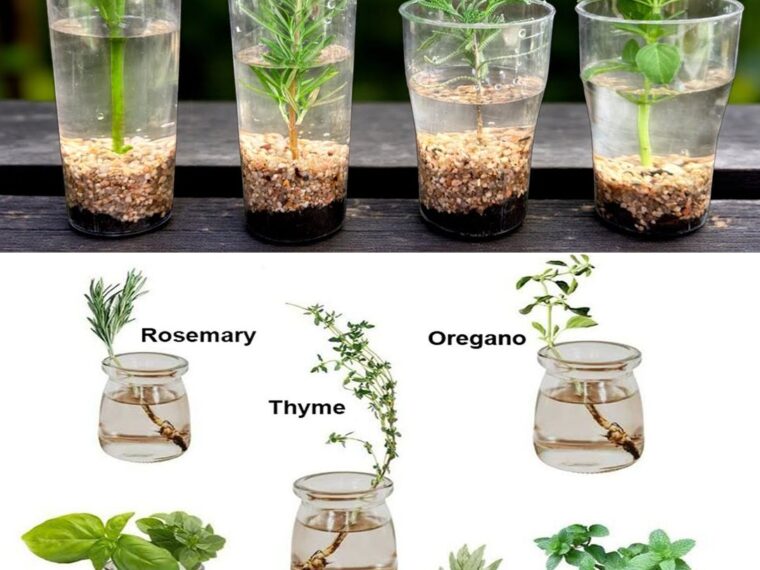
- Transparent containers (as shown in the image)
Fill them with:
- Clean, room-temperature water
- Optional: a few pebbles at the bottom to support the stem
Ensure that only the stem sits in water—leaves must stay dry.
Step 3: Provide proper light
Place your herb jars:
- Near a bright window
- Away from direct harsh sunlight
- In a spot with stable temperature
Indirect light is ideal for rooting and growth.
Step 4: Change the water regularly
To keep roots healthy:
- Replace water every 3–5 days
- Rinse the jar to prevent algae buildup
- Trim the stem ends if they darken
Clean water = strong plant roots.
Step 5: Watch roots grow!
Most herbs develop roots within:
- Basil & Mint: 1–2 weeks
- Thyme & Oregano: 2–3 weeks
- Rosemary & Sage: 3–4 weeks (they take longer)
Once roots reach 2–5 cm, you can:
- Keep the plant in water permanently
- Or transfer it to soil if you prefer traditional gardening
🌿 Tips for Success
✔ Use filtered or rested tap water
This reduces chlorine exposure.
✔ Avoid placing herbs near heat sources
Ovens, heaters, and radiators cause water to evaporate quickly.
✔ Don’t overcrowd jars
Each cutting needs room to breathe and grow.
✔ Add a drop of liquid fertilizer monthly
Because water alone has fewer nutrients than soil.
🌱 Benefits of Harvesting Fresh Herbs
Growing herbs in water means:
- Constant access to fresh flavors
- Healthier meals
- Zero waste compared to store-bought packaged herbs
- Enjoyment of nature indoors
You can snip leaves directly from your jars whenever you need them.
🌿 A Beautiful and Practical Indoor Garden
The image perfectly shows how simple materials—small glass jars, fresh cuttings, and clear water—can transform into a thriving indoor herb garden. Whether you want rosemary for roasted dishes, mint for tea, basil for salads, or thyme for soups, everything is within reach.
With minimal effort, you’ll enjoy fresh greens all year long, even in the smallest living spaces.